NYC Commercial Door Installation Code: Self-Closing Doors for Fire Safety Compliance
As a commercial property owner, facility manager, or building operator in New York City, ensuring your building meets strict fire safety standards is not optional—it’s a legal requirement that protects lives and property. At the heart of these requirements lies the proper installation and maintenance of self-closing fire doors. Understanding the NYC commercial door installation code is essential to avoid hefty fines, failed inspections, and potential liability.
This comprehensive guide explores the critical NYC Fire Code §FC 703 and Building Code Chapter 7 requirements, the distinction between self-closing and automatic-closing doors, recent updates through Local Law 11, FDNY inspection criteria, and practical guidance on when to retrofit existing doors. Whether you manage a multi-family residential building, office tower, retail space, or mixed-use property, this article provides the actionable insights you need to achieve and maintain compliance.
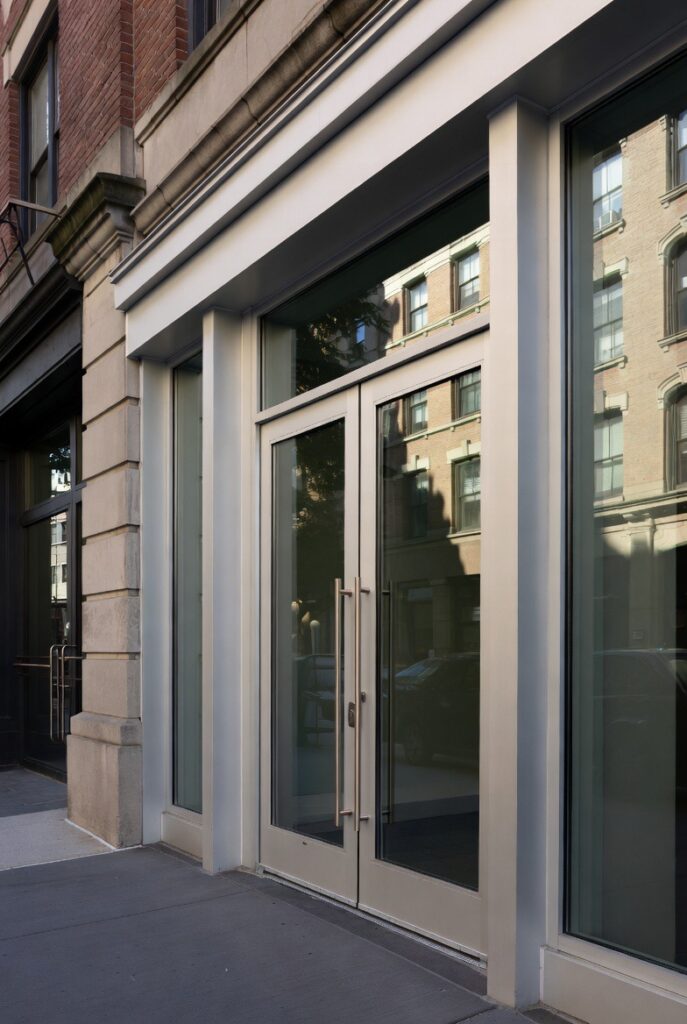
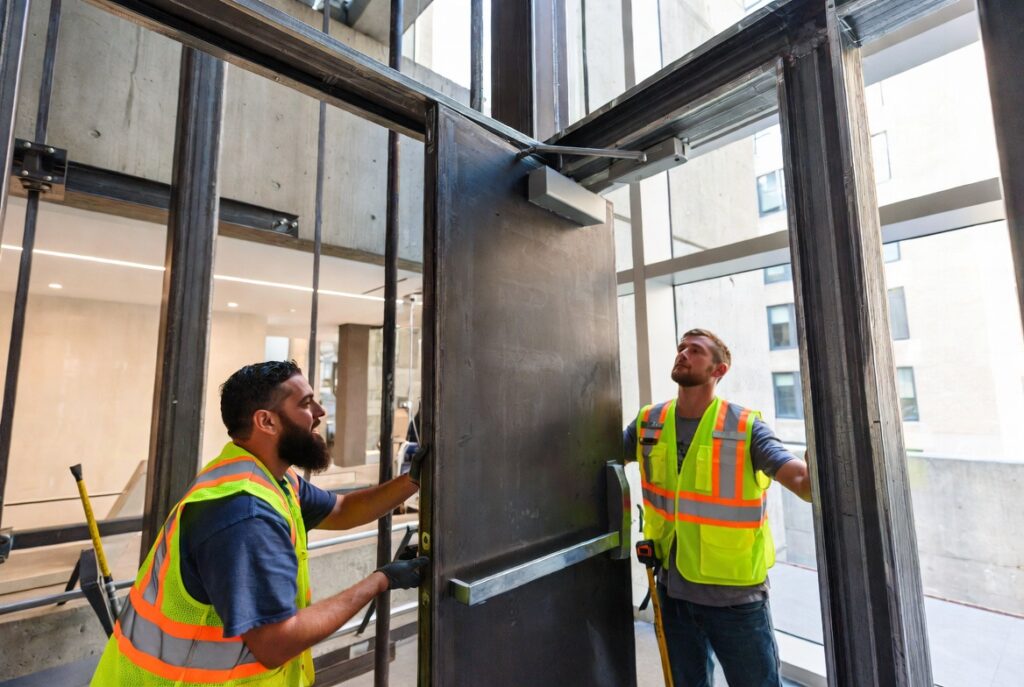
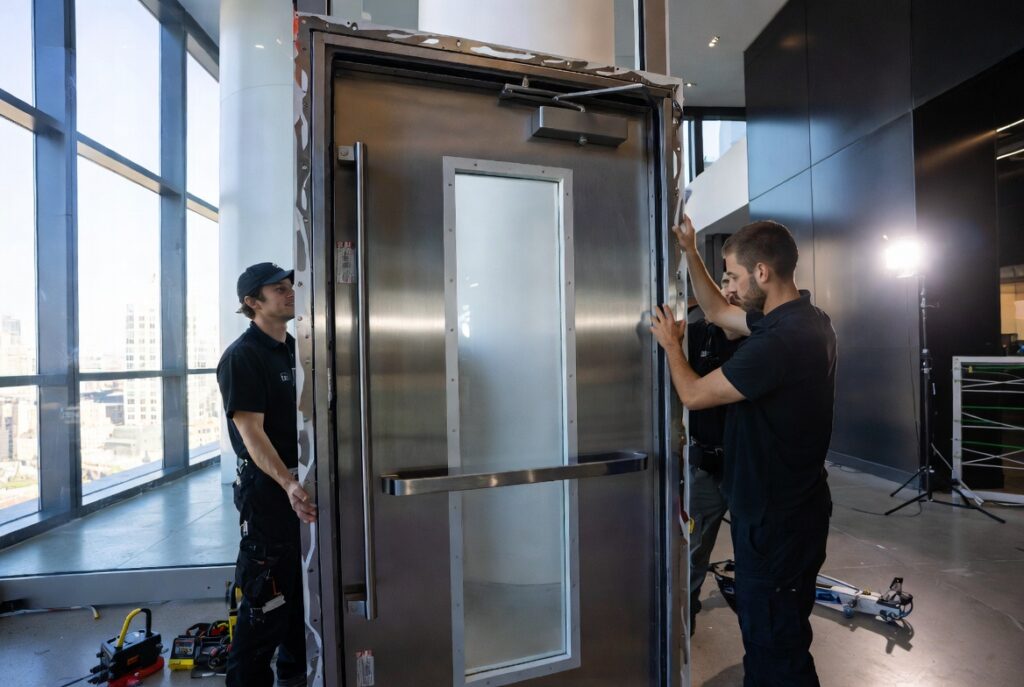
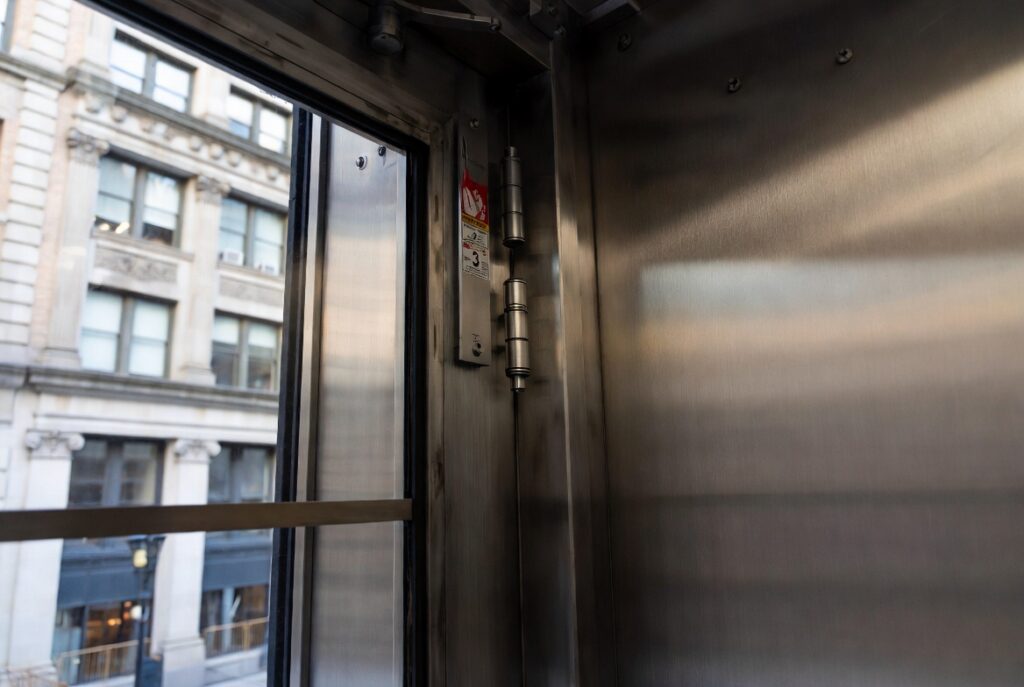
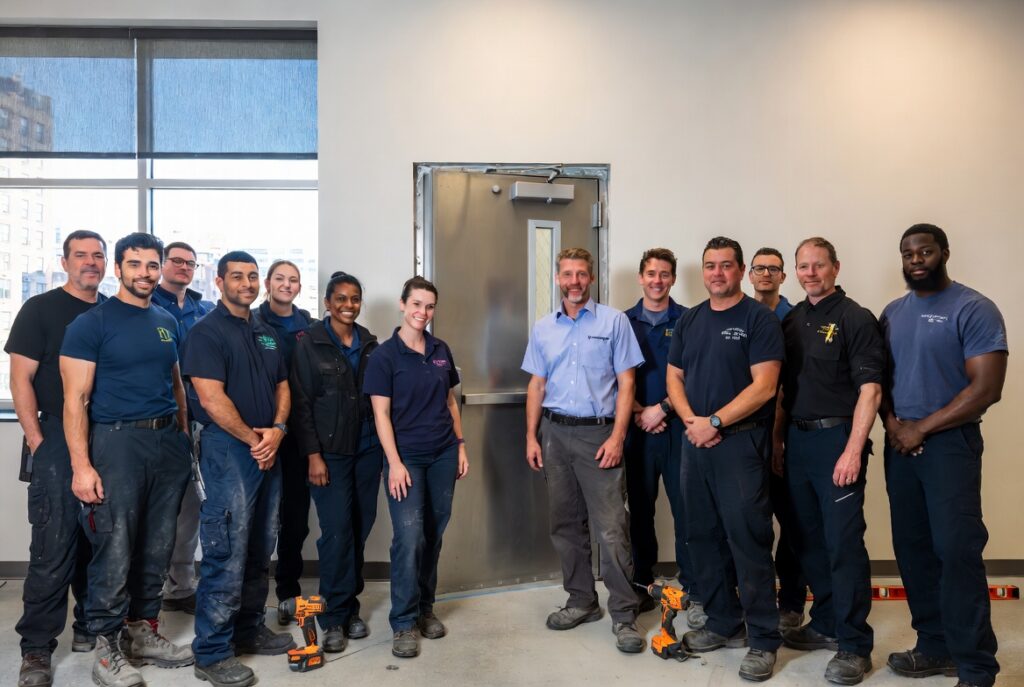
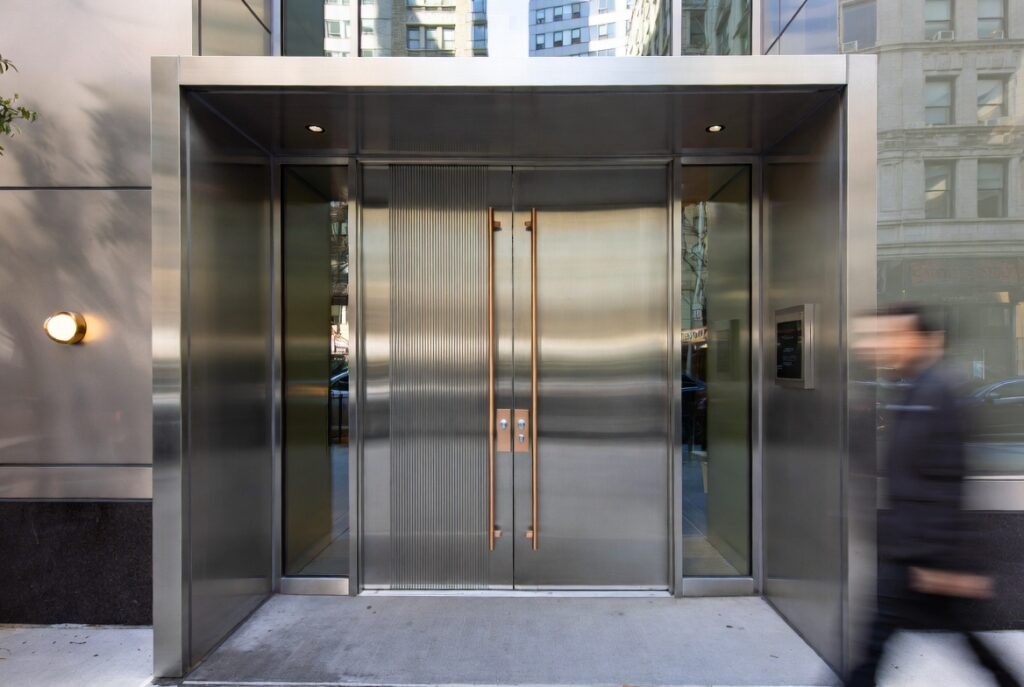
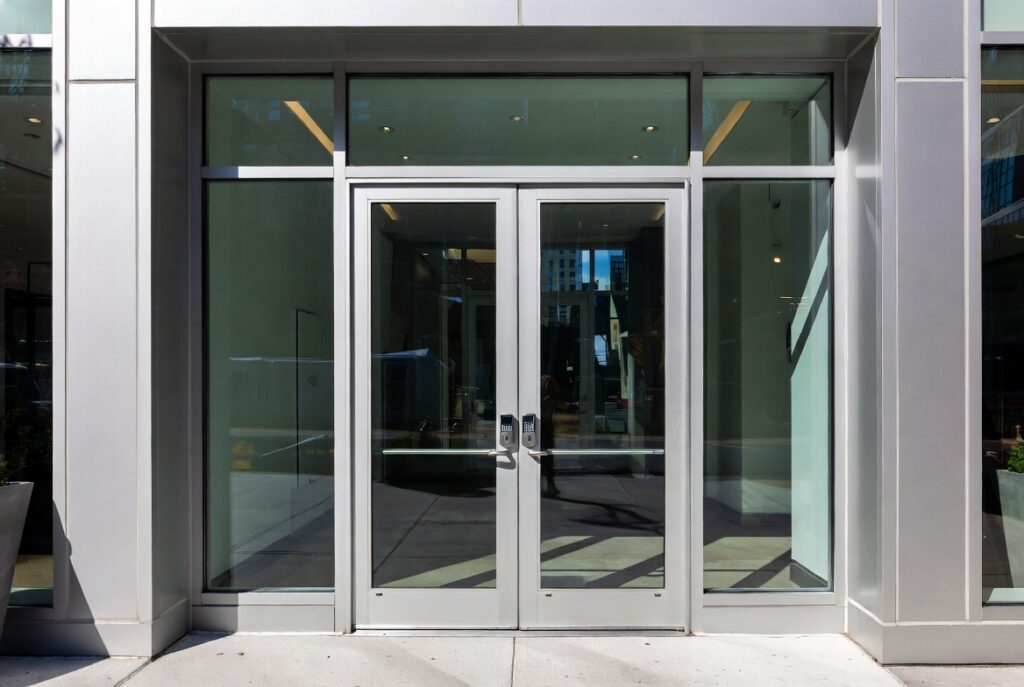
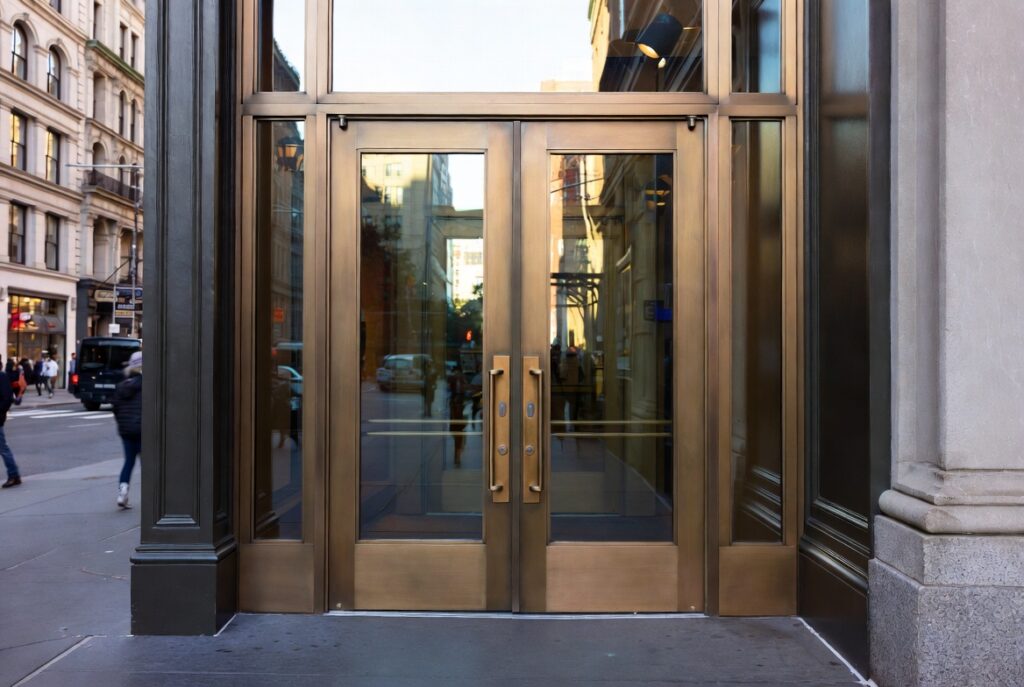
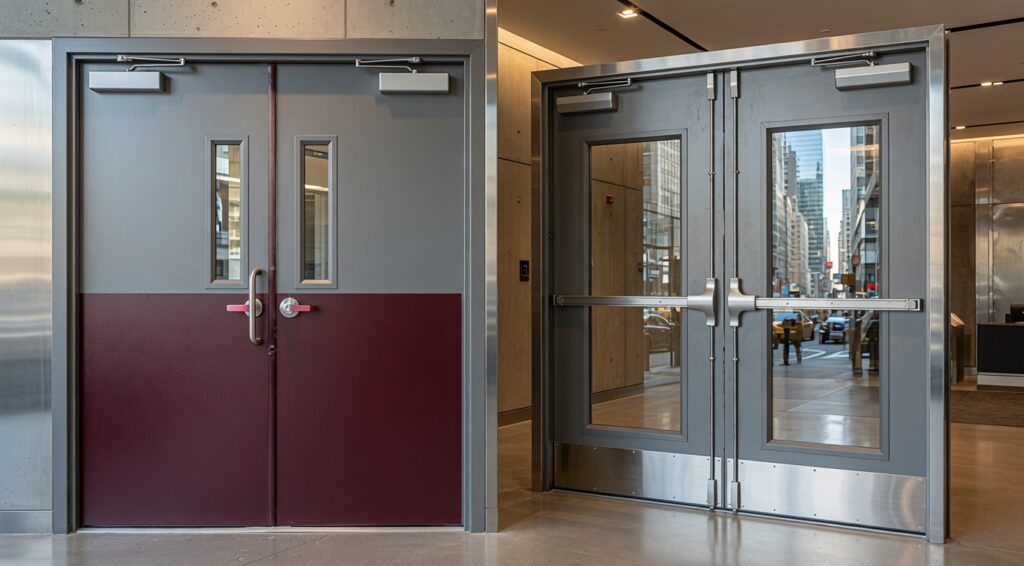
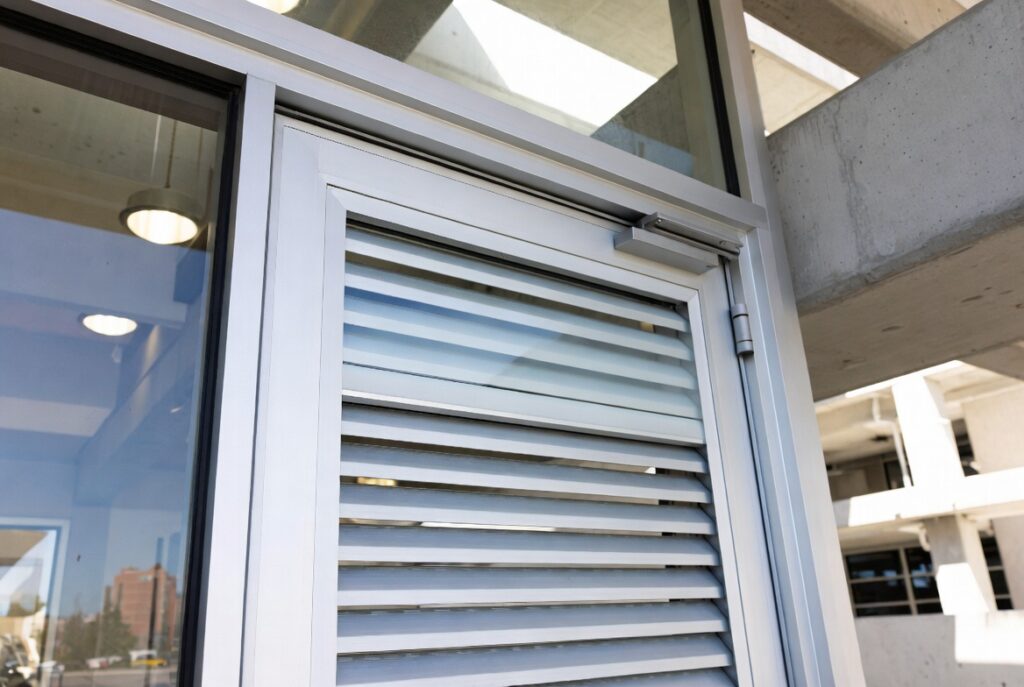
Image Grid 1
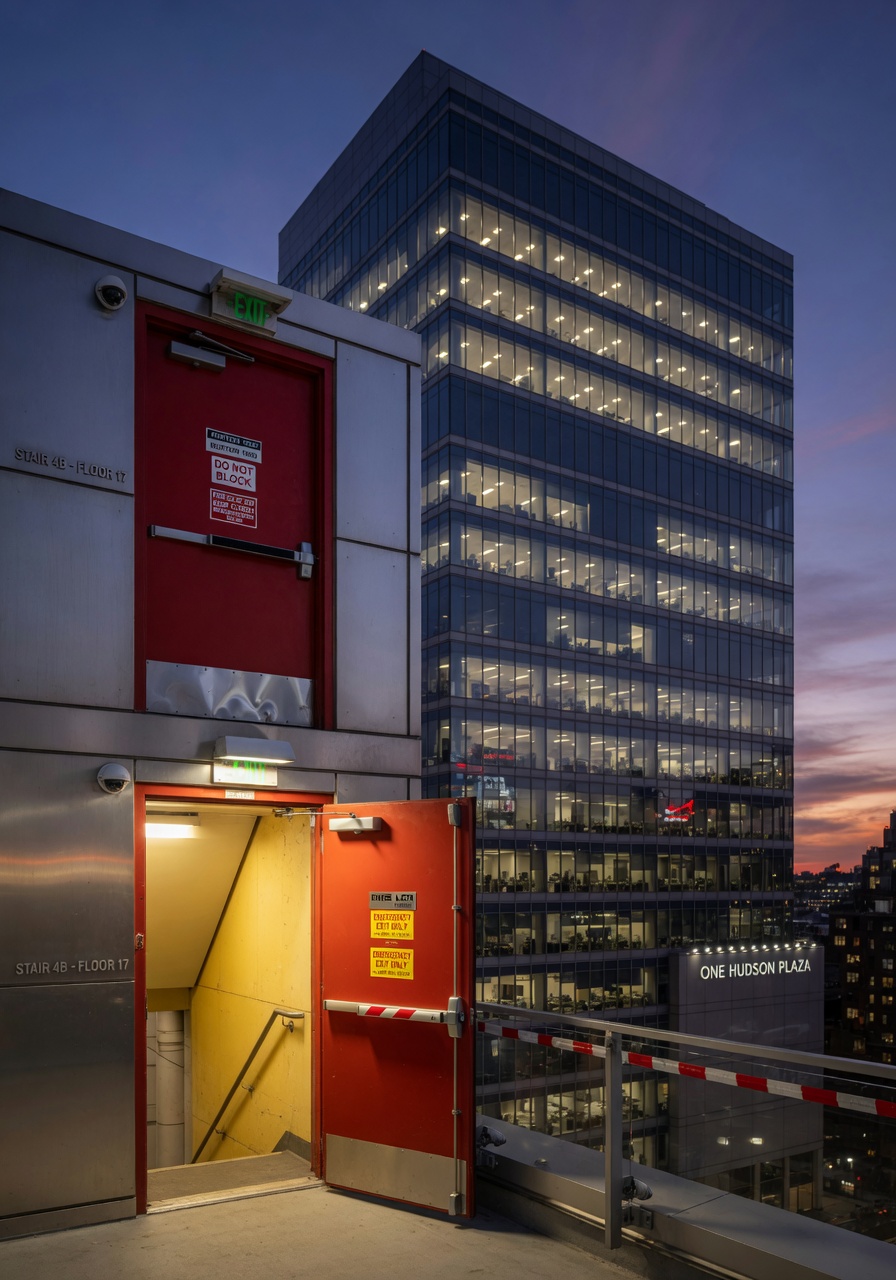
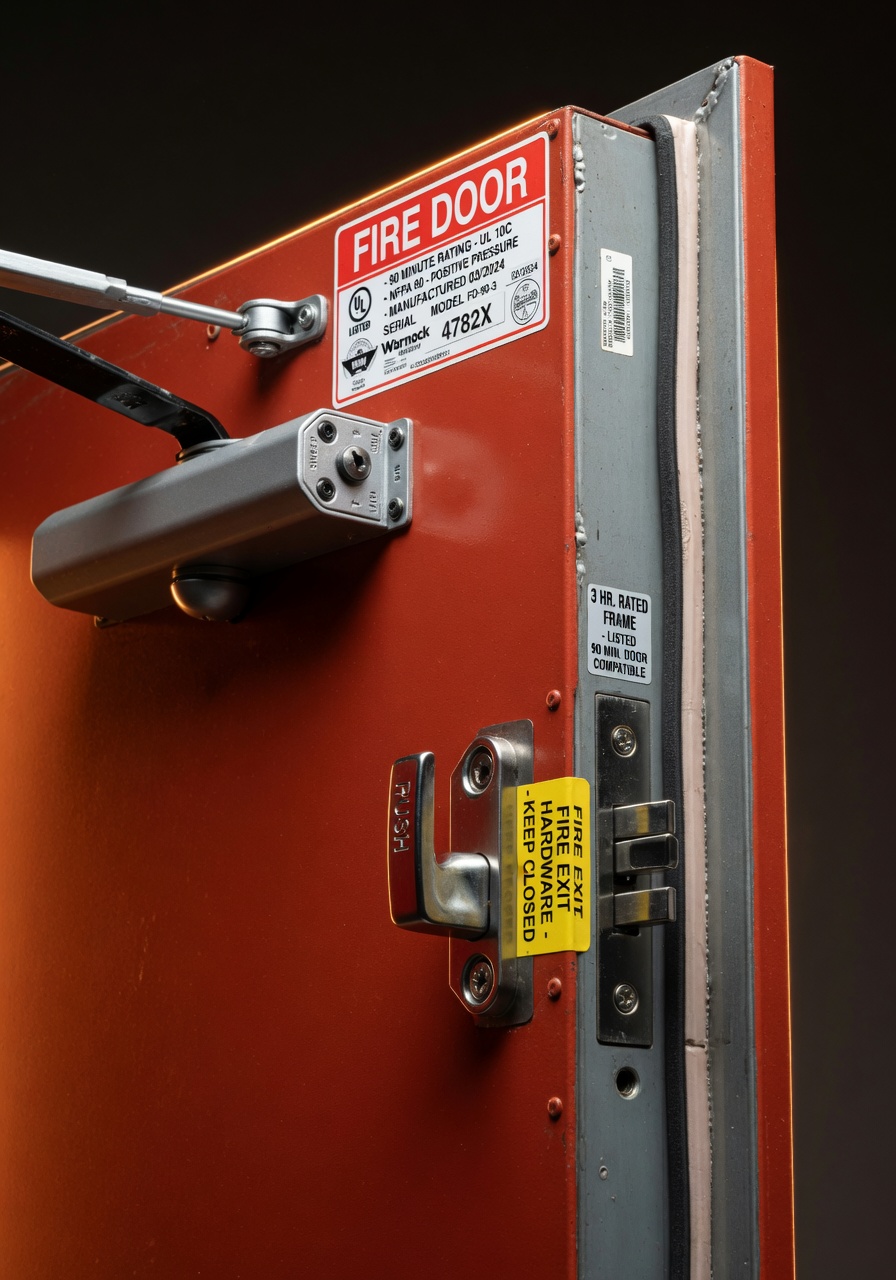
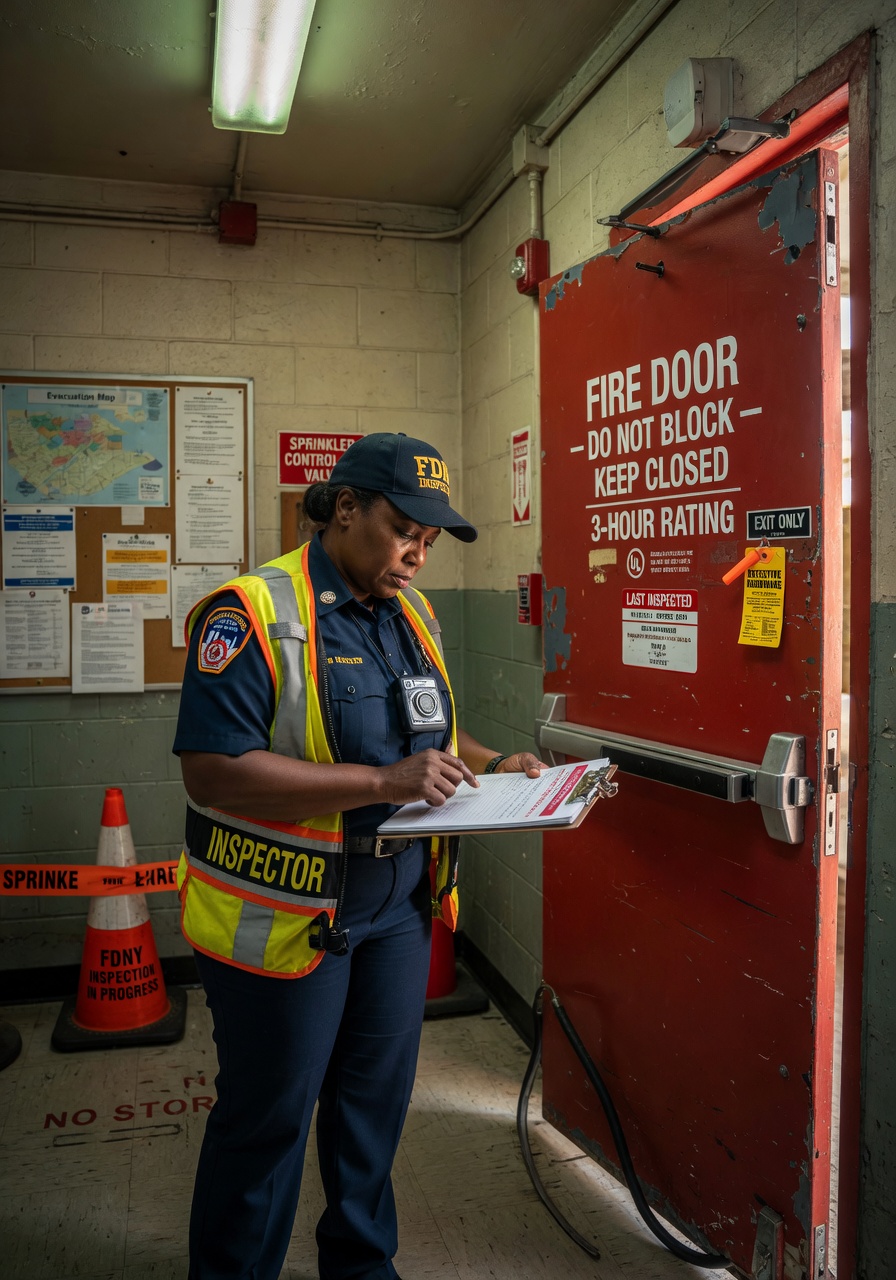
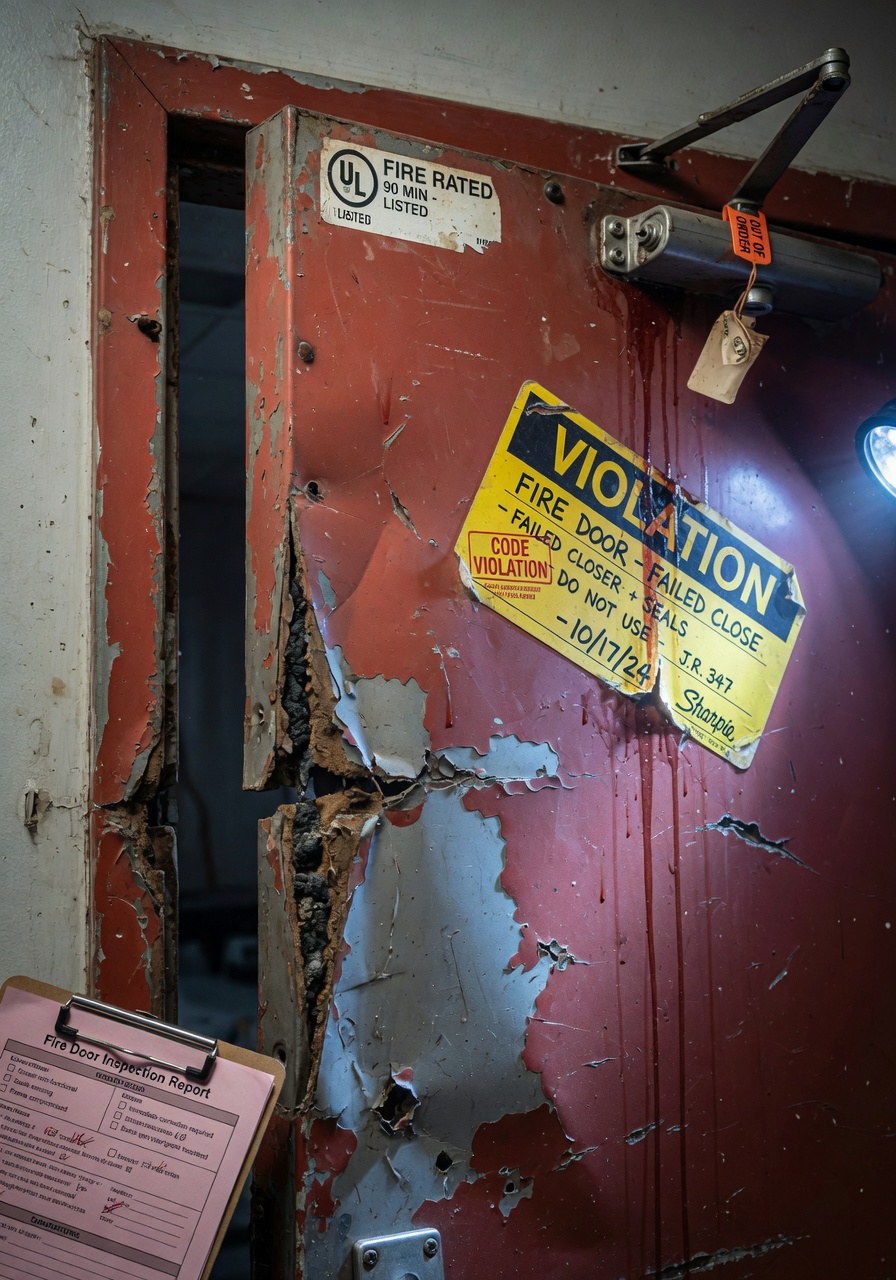
Understanding the Regulatory Framework: NYC Fire Code and Building Code
New York City maintains one of the most stringent fire safety regulatory environments in the United States. Two primary documents govern commercial door requirements: the New York City Fire Code and the New York City Building Code.
NYC Fire Code §FC 703: Fire-Resistance Ratings and Fire Protection Systems
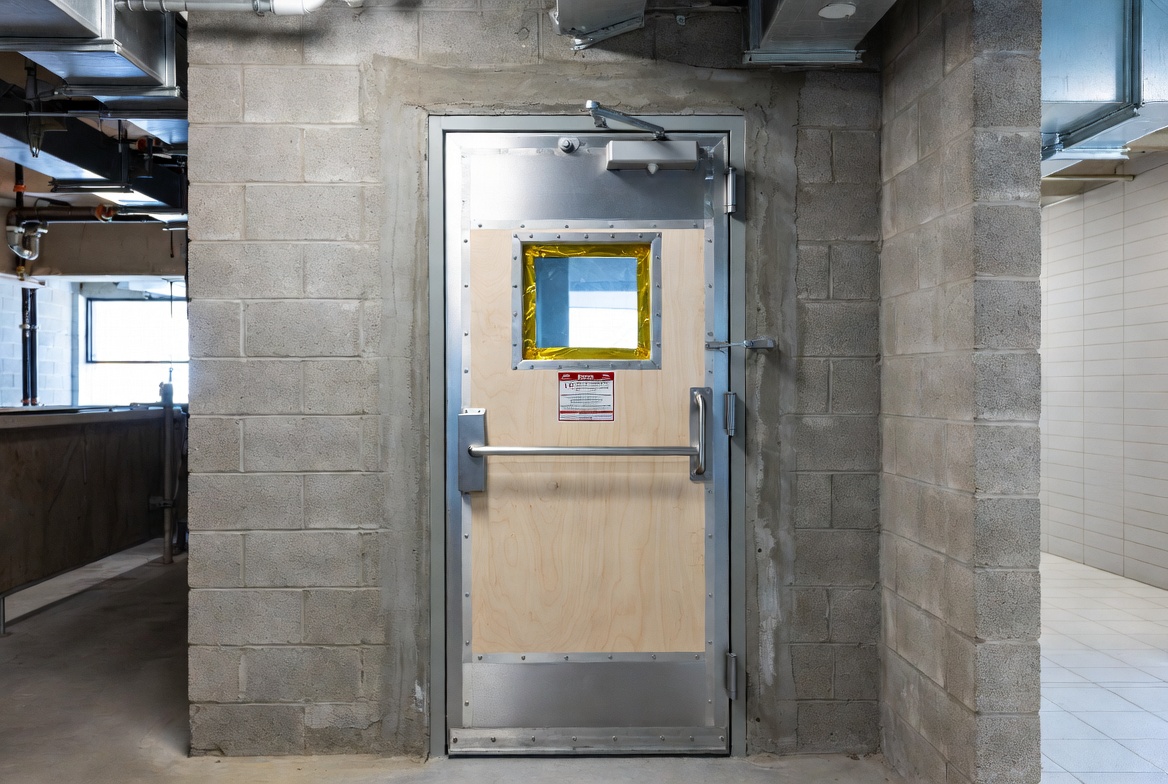
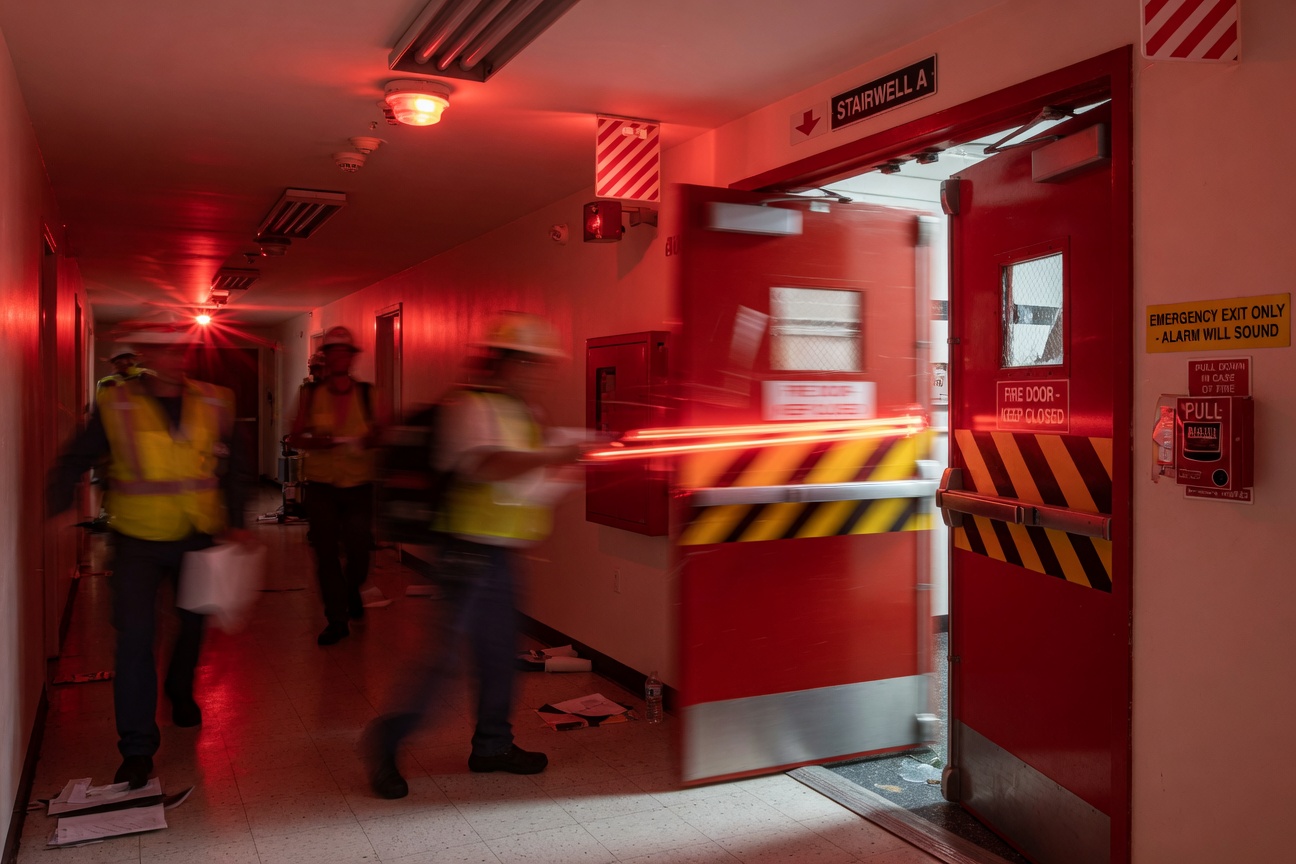
Fire Code §FC 703 specifically addresses fire-resistance ratings and the maintenance of fire protection systems. This section mandates that required fire doors must be maintained in proper working order at all times. The code requires that openings in fire-resistance-rated construction must be protected by approved fire doors that are self-closing or automatic-closing.
Key requirements under §FC 703 include:
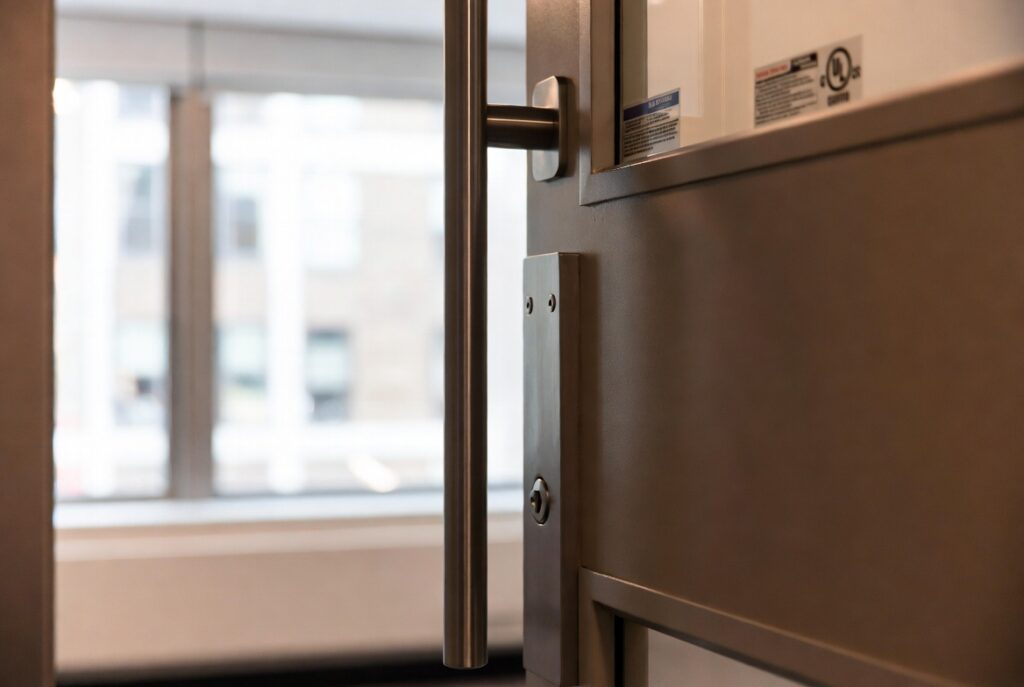
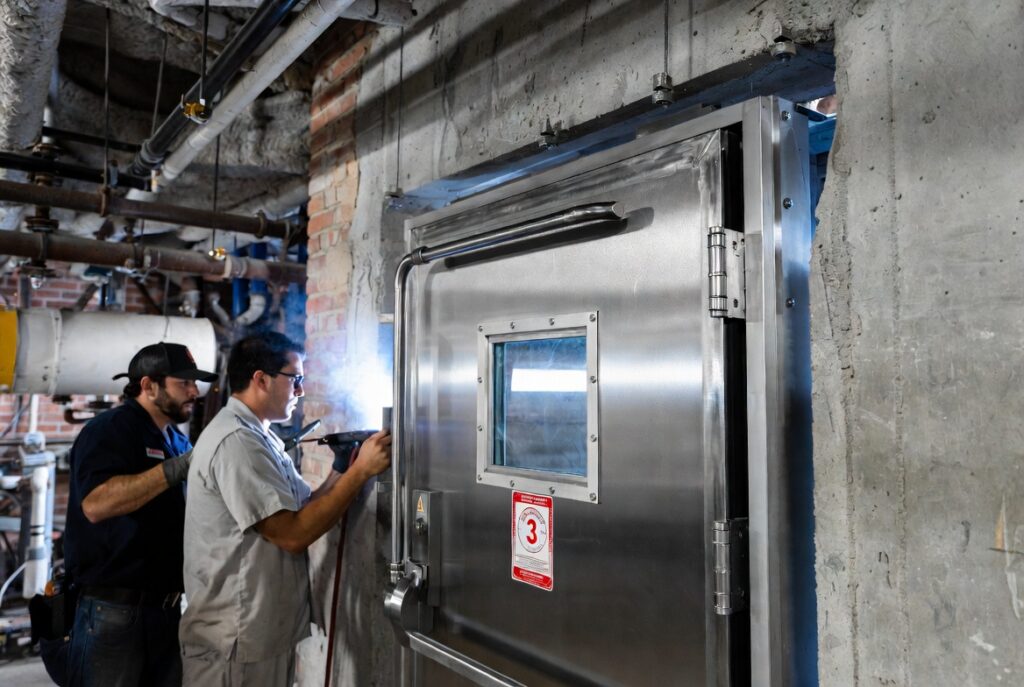
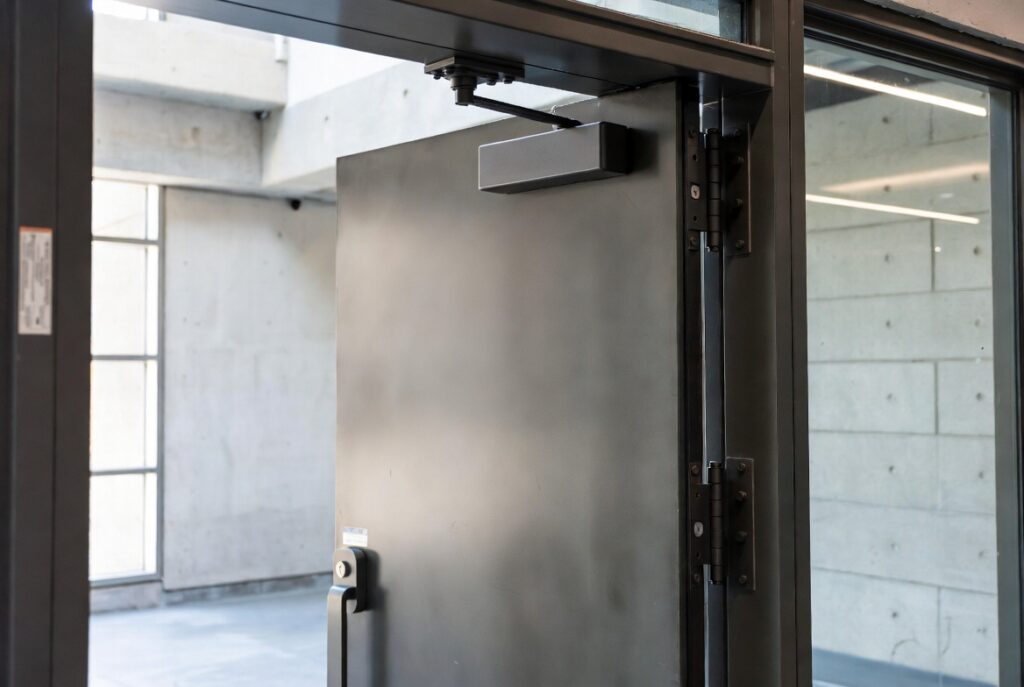
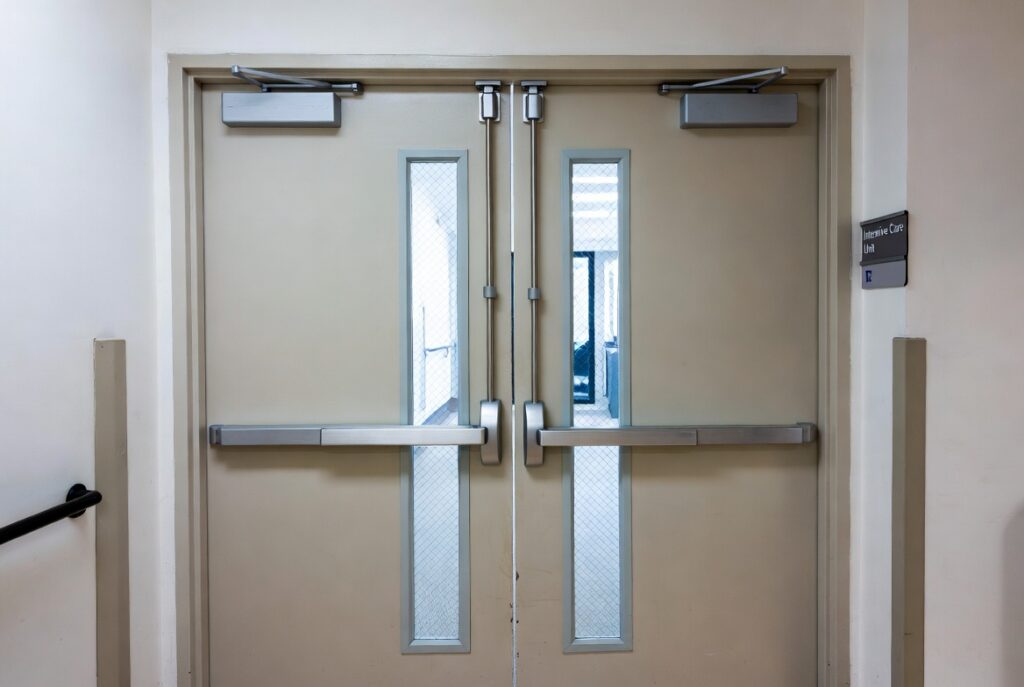
Image Grid 2
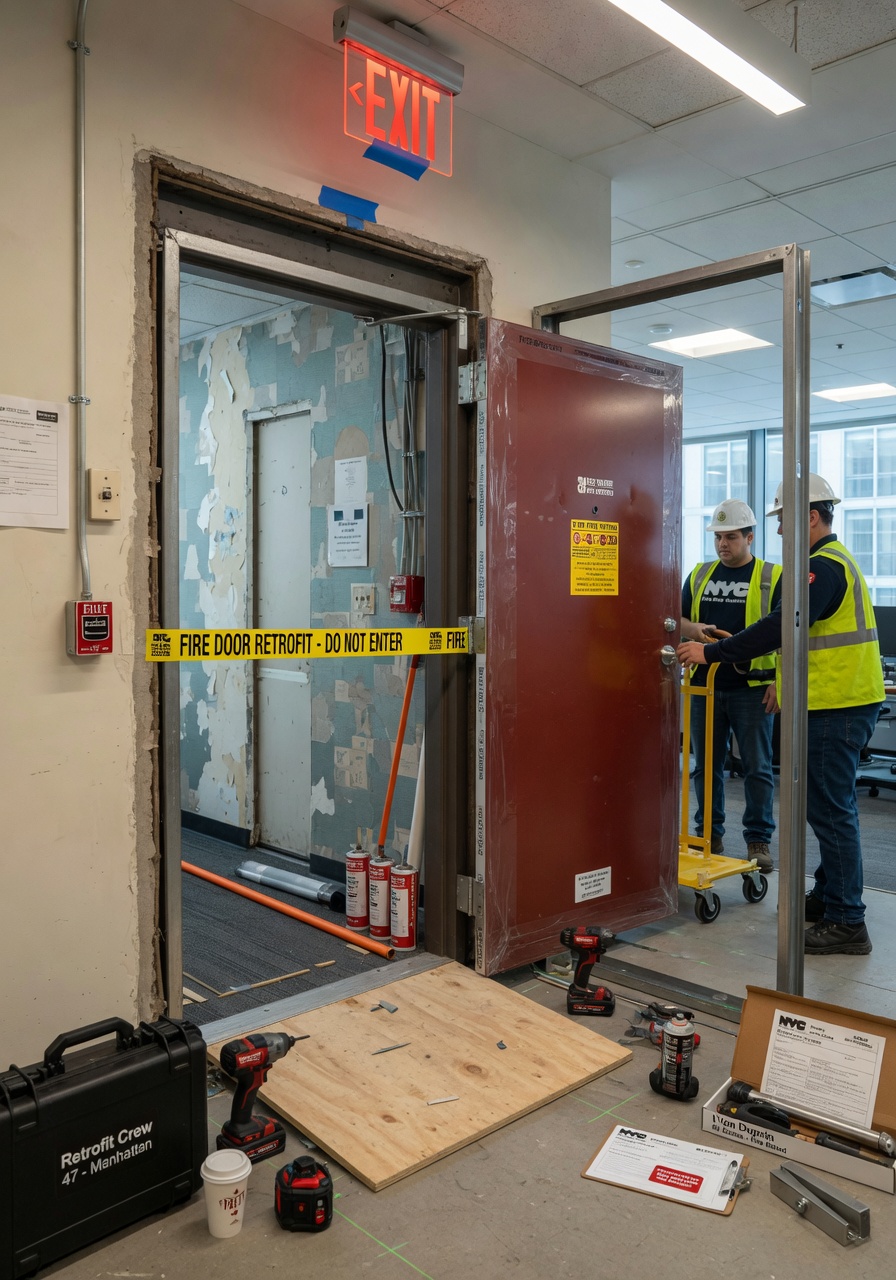
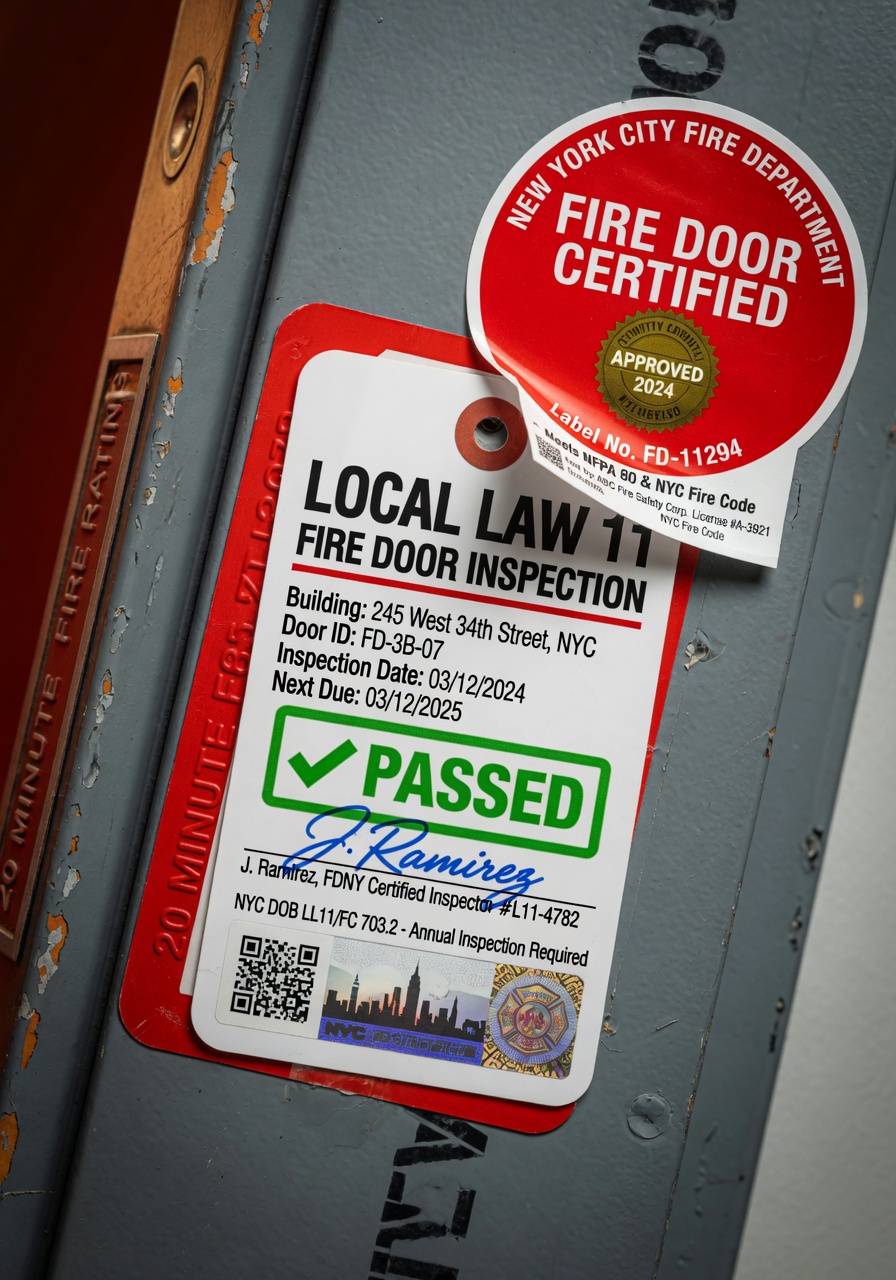
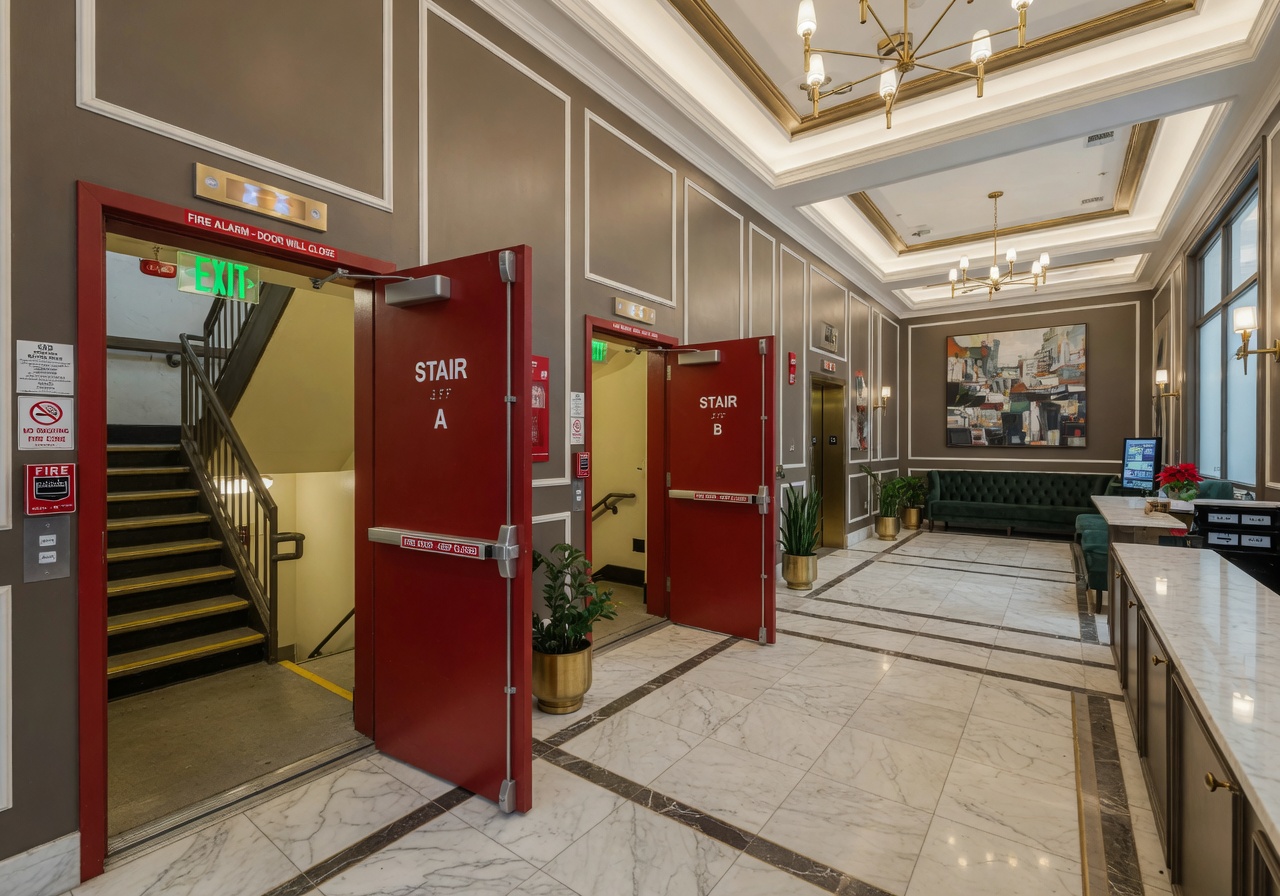
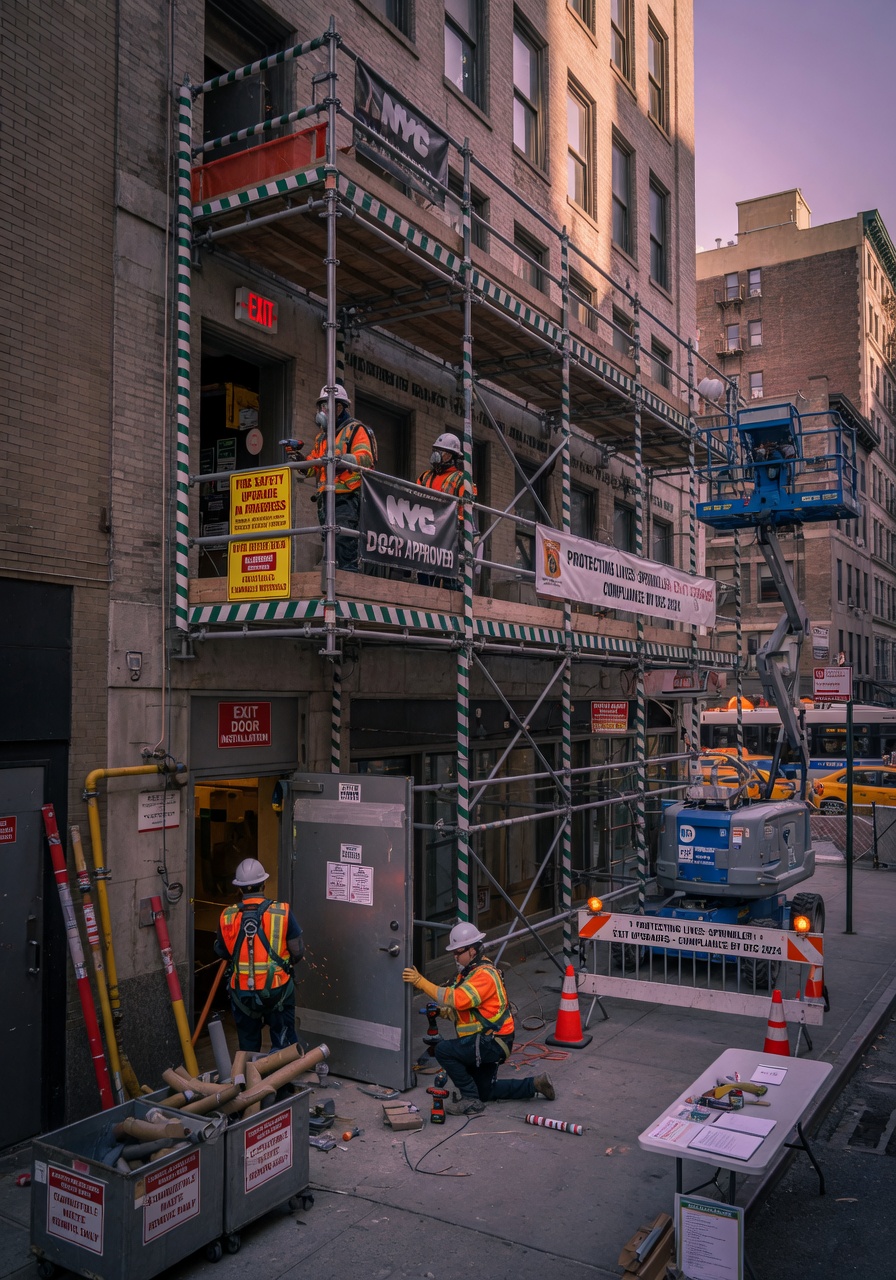
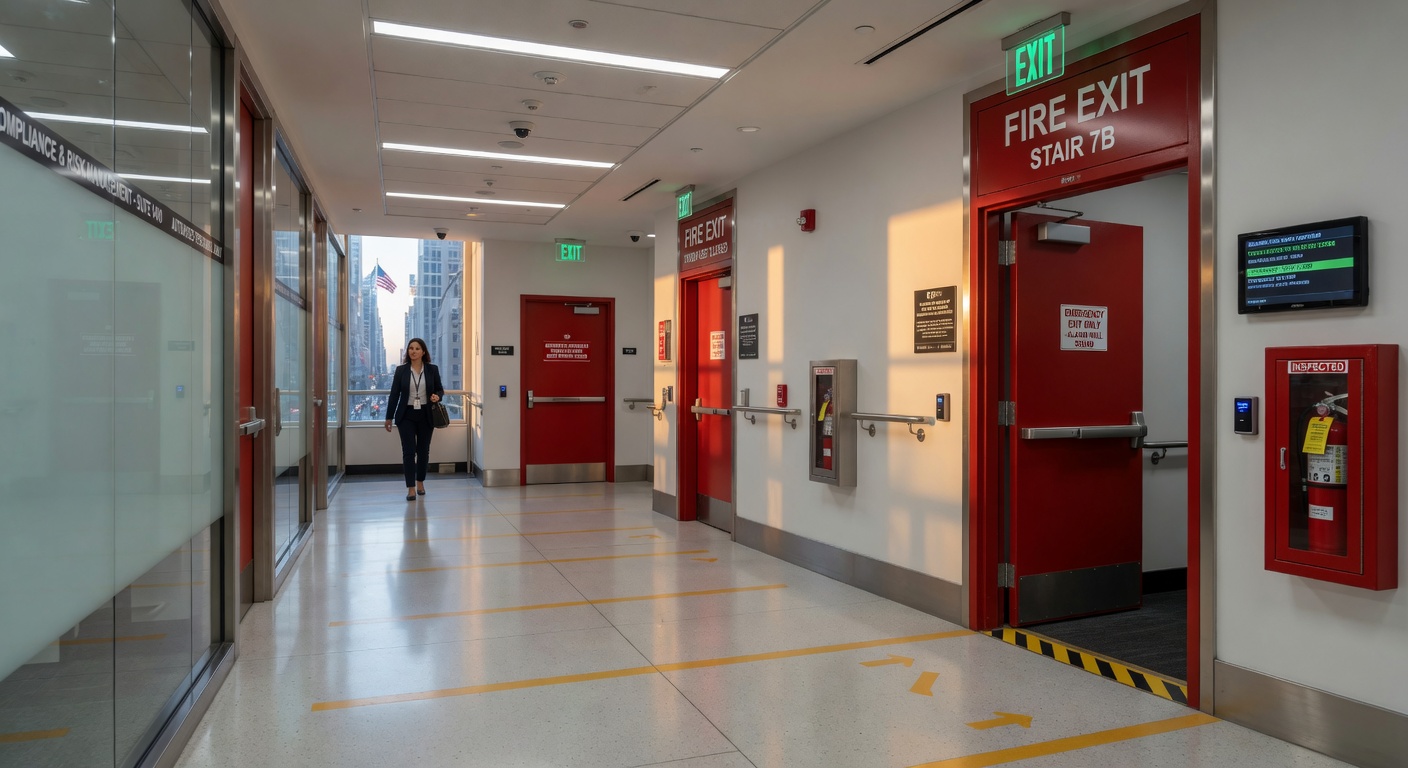
- Fire doors must close completely and latch properly when released
- Self-closing devices must be properly installed and maintained
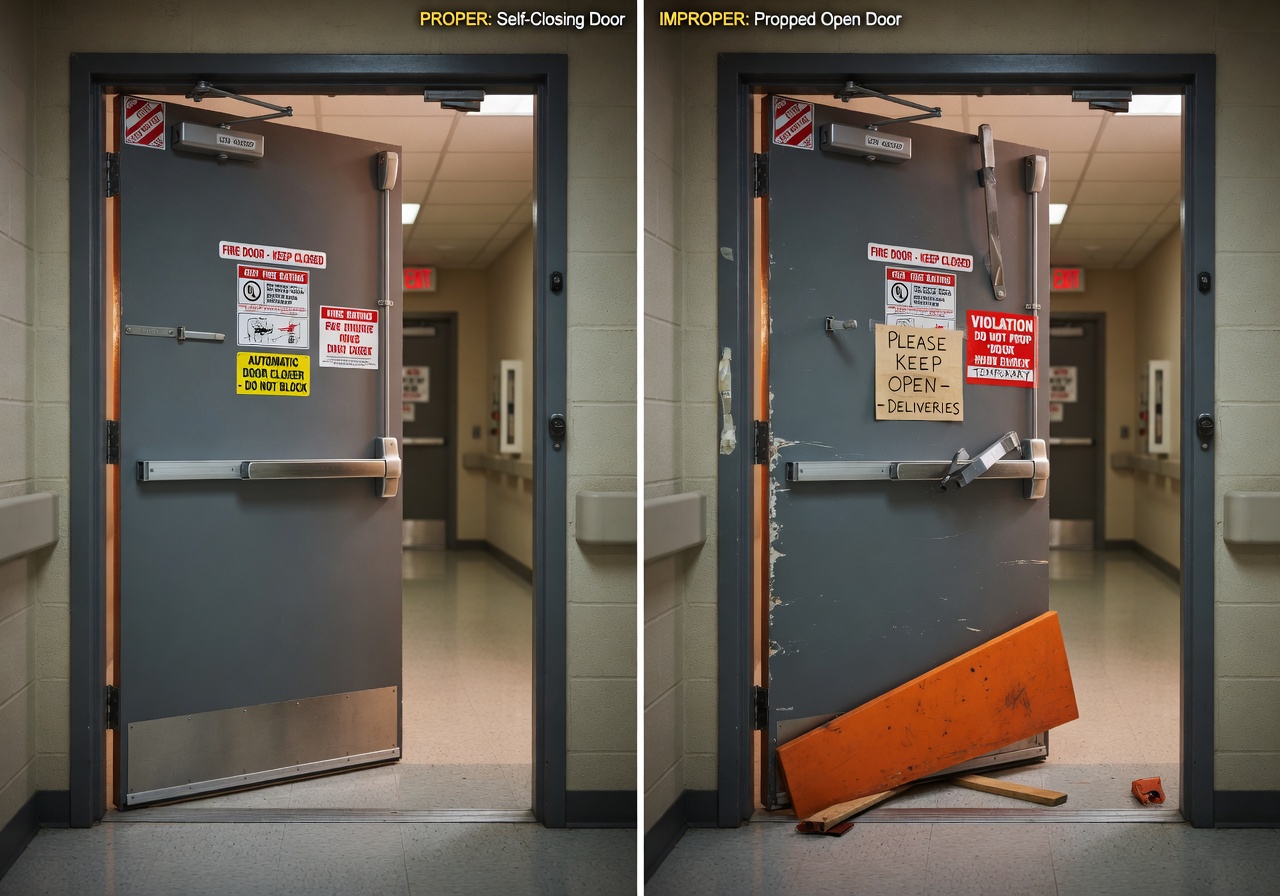
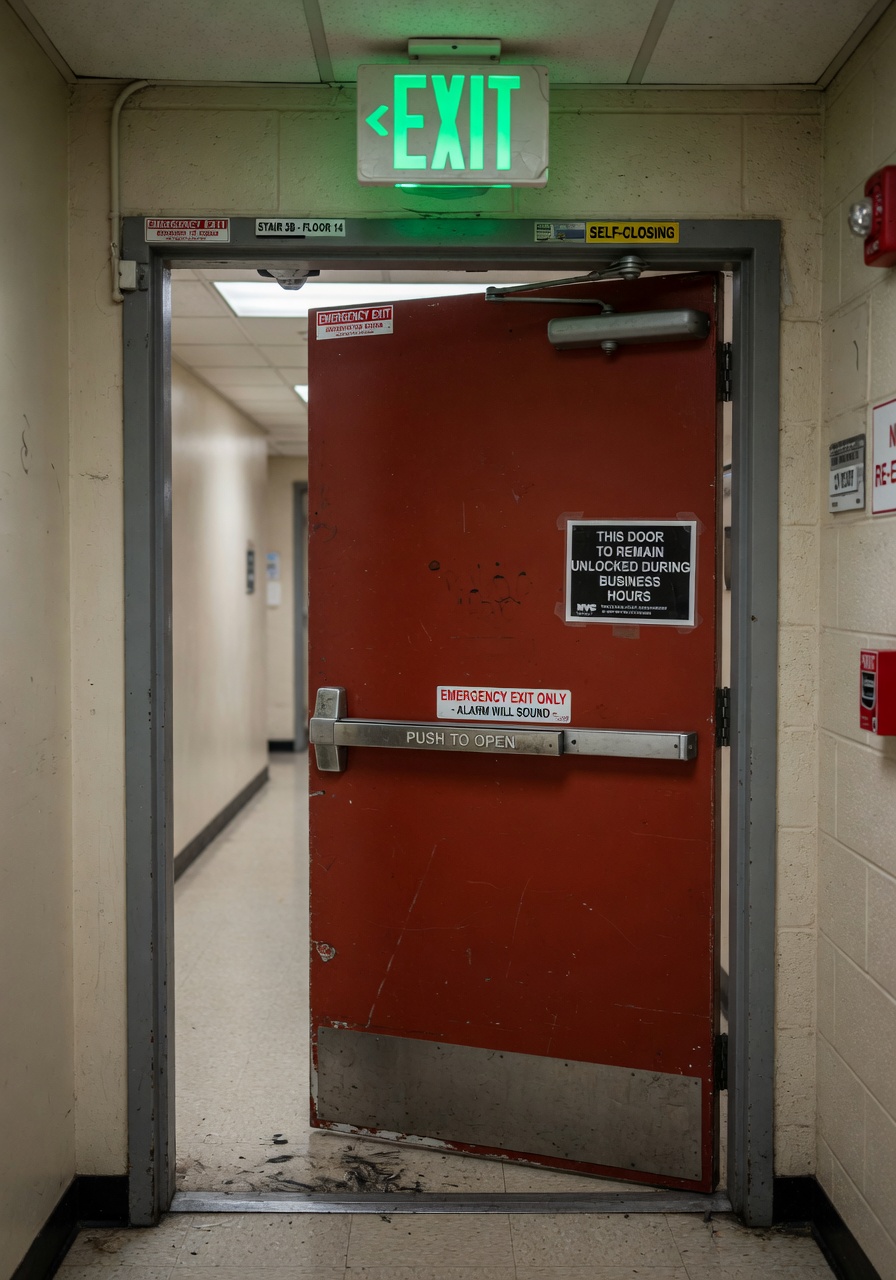
- Doors must not be held open by wedges, blocks, or unauthorized devices
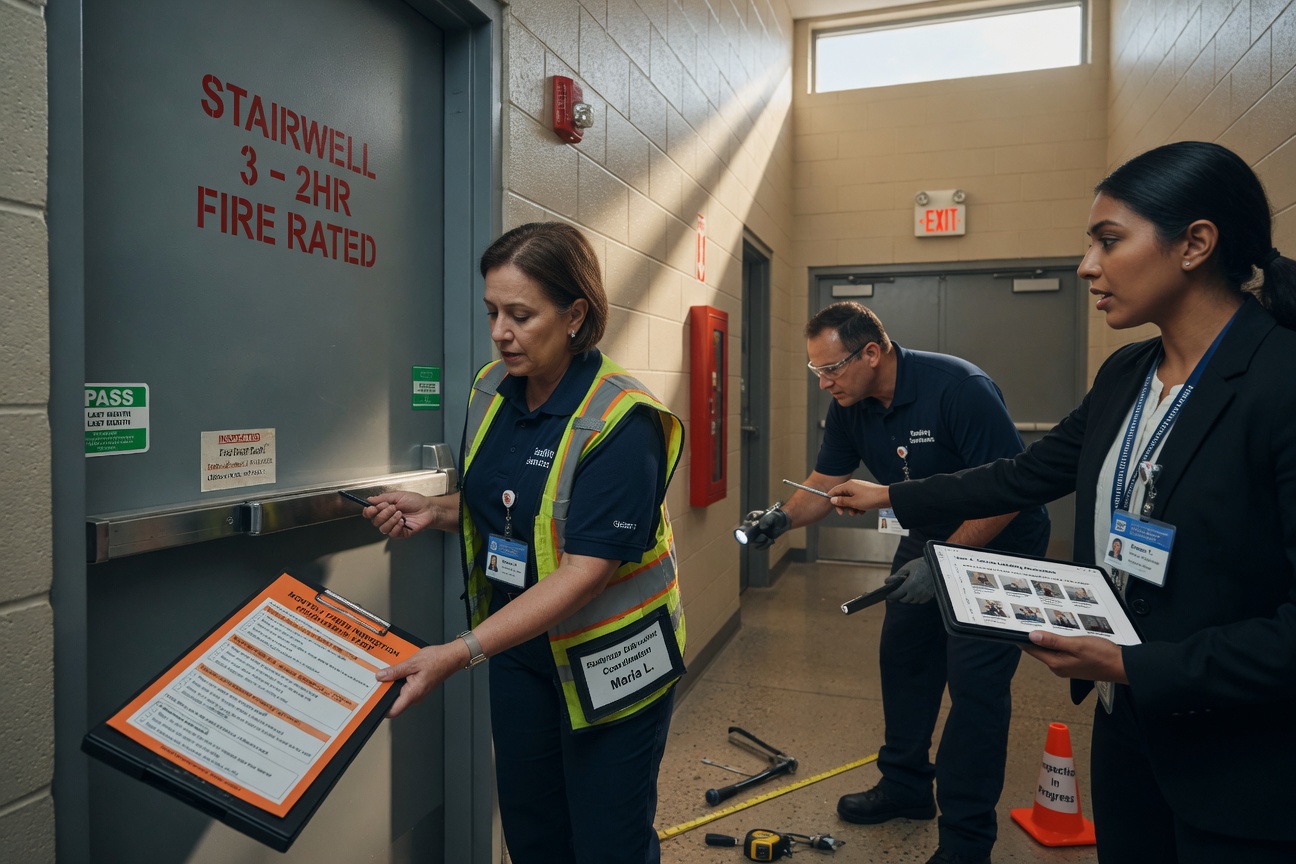
- Fire door assemblies must be inspected annually by a qualified professional
- Records of inspections and repairs must be maintained on-site
NYC Building Code Chapter 7: Fire and Smoke Protection Features
Chapter 7 of the NYC Building Code provides detailed technical requirements for fire and smoke protection features in both new construction and existing buildings. This chapter establishes the standards for fire door assemblies, including material specifications, fire-resistance ratings, and installation requirements.
The code specifies different fire-protection ratings based on the location and function of the door. For example, stairwell doors in high-rise buildings typically require a 90-minute or 3-hour rating, while corridor doors may require 20-minute or 45-minute ratings depending on the building classification.
Self-Closing vs. Automatic-Closing Doors: Critical Distinctions
One of the most common areas of confusion in NYC commercial door installation code compliance involves the difference between self-closing and automatic-closing doors.
What Are Self-Closing Doors?
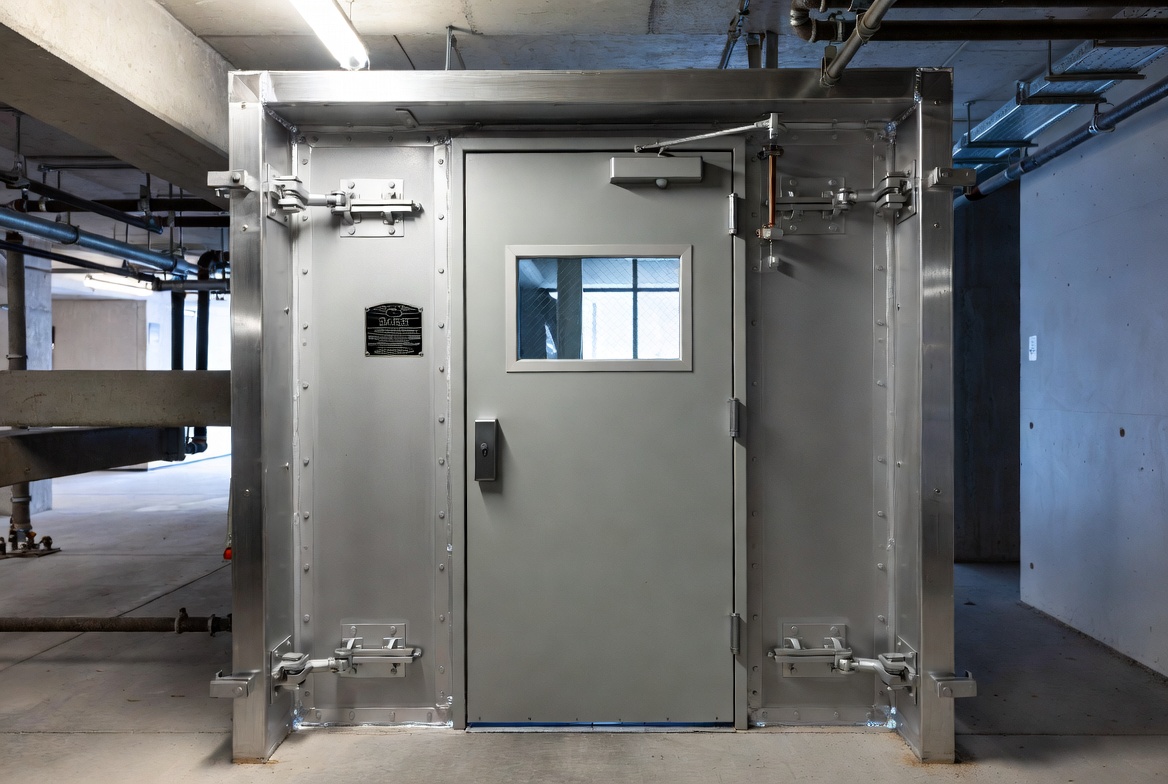
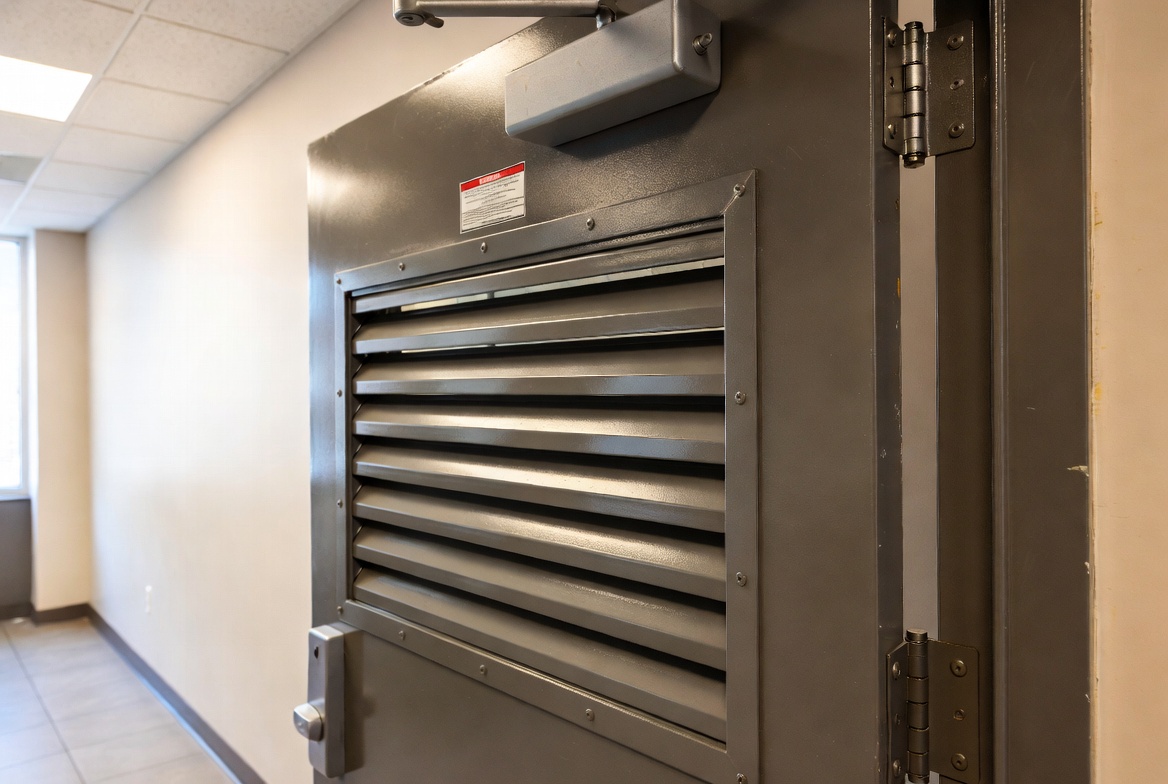
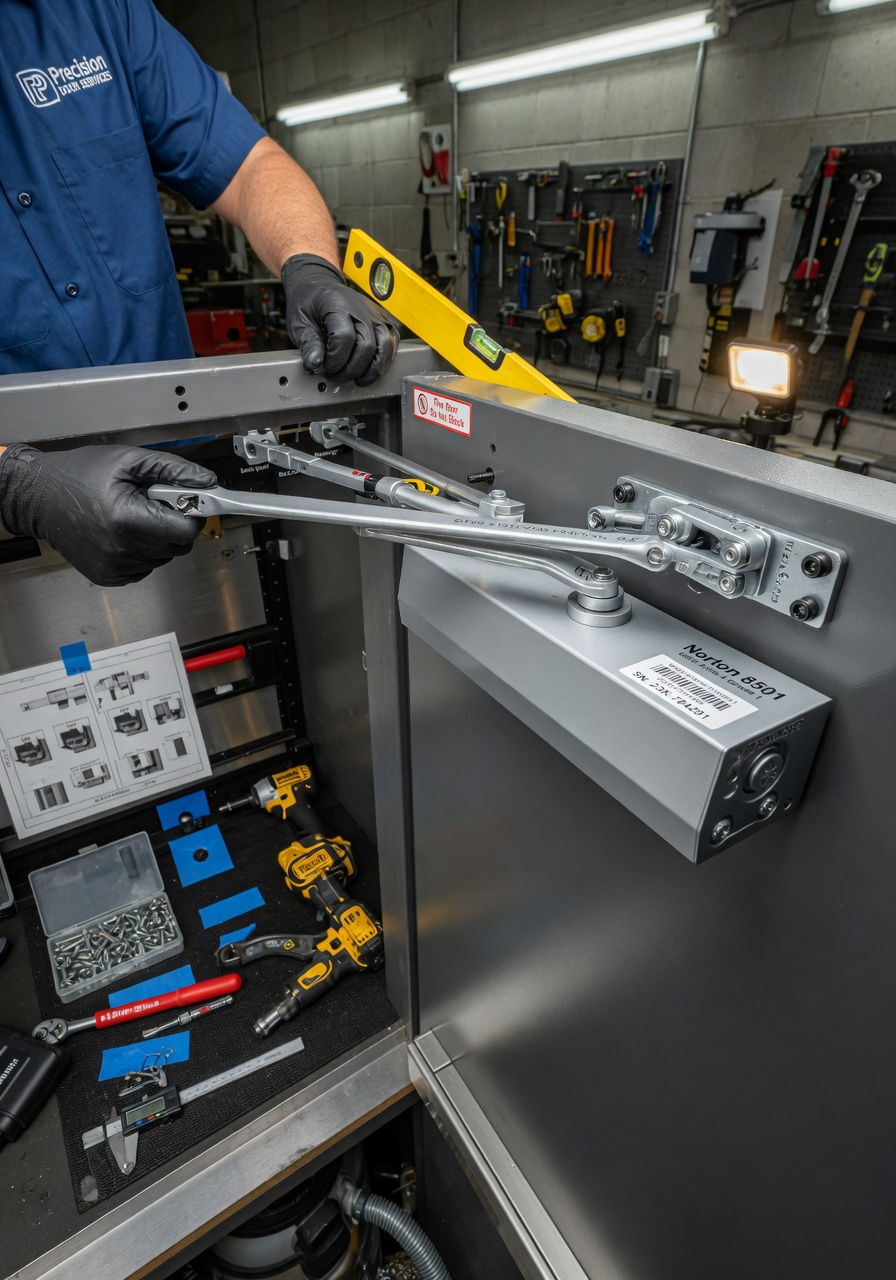
Self-closing doors are equipped with devices that automatically return the door to the closed position after it has been opened. These doors use mechanical spring hinges or door closers that provide continuous closing force. Self-closing doors are the standard requirement for most fire-rated openings in commercial buildings throughout New York City.
Self-closing mechanisms must be adjusted to ensure the door closes slowly enough to allow safe passage while closing firmly enough to engage the latch and create a proper seal.
What Are Automatic-Closing Doors?
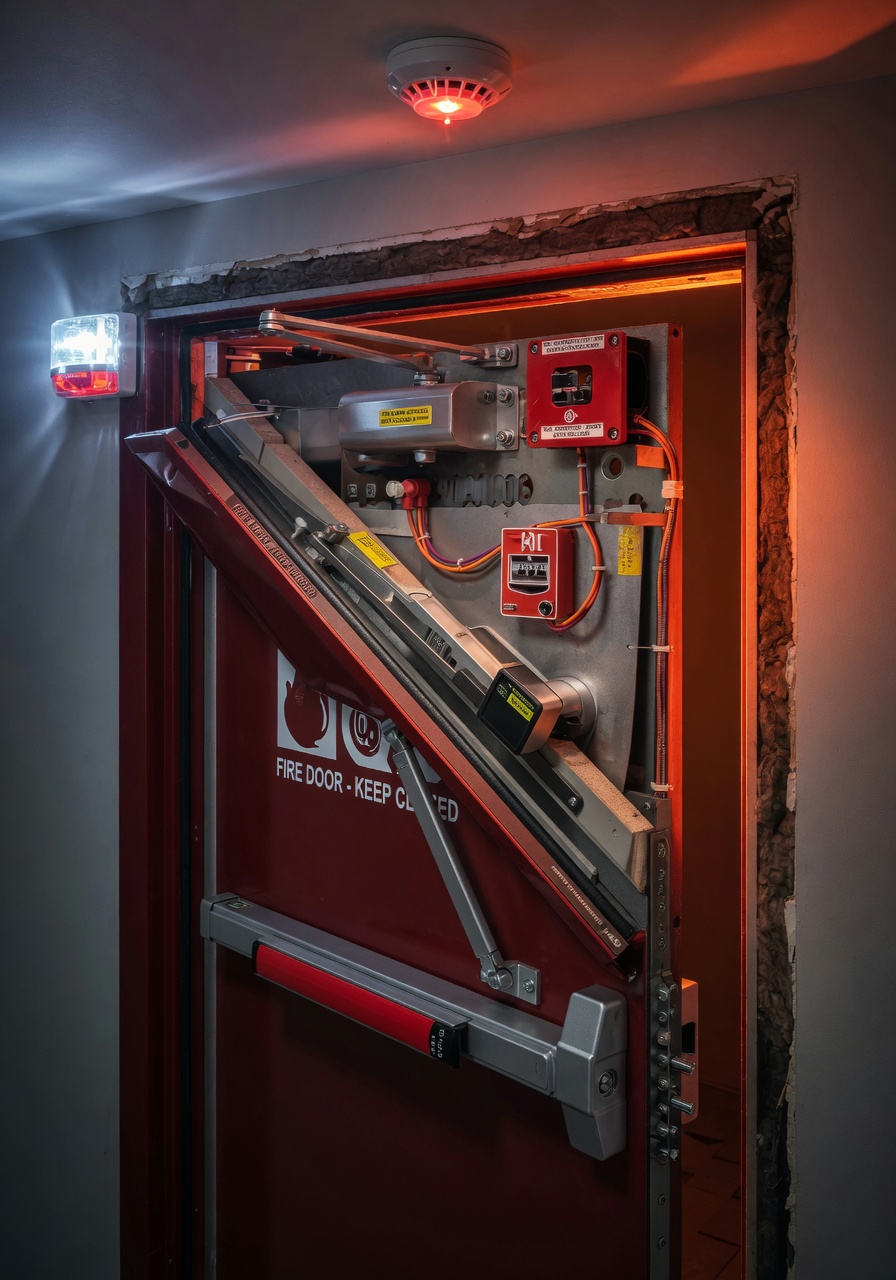
Automatic-closing doors remain open under normal conditions but close automatically when activated by a fire alarm, smoke detector, or building-wide fire protection system. These doors typically use electromagnetic hold-open devices that release when signaled by the fire alarm system.
Automatic-closing doors are often found in corridors, elevator lobbies, and areas where frequent access is required but fire compartmentation must be maintained during an emergency.
Code Requirements for Each Type
According to both the Fire Code and Building Code, self-closing doors are generally preferred for most applications. Automatic-closing doors are permitted only when specifically allowed by the code and when properly integrated with the building’s fire alarm and sprinkler systems.
The choice between self-closing and automatic-closing doors often depends on the specific occupancy classification, building height, and the location of the opening within the building’s fire-resistance-rated construction.
Local Law 11 and Recent Updates Affecting Commercial Buildings
Local Law 11 of 2016 introduced significant changes to New York City’s fire safety requirements, particularly affecting multi-family residential and commercial buildings. This legislation strengthened requirements for fire door maintenance and inspection.
Key Provisions of Local Law 11
Local Law 11 mandates annual inspections of all fire doors in buildings with three or more dwelling units. These inspections must be conducted by qualified professionals and must include a comprehensive evaluation of each door’s closing mechanism, latching hardware, hinges, and overall condition.
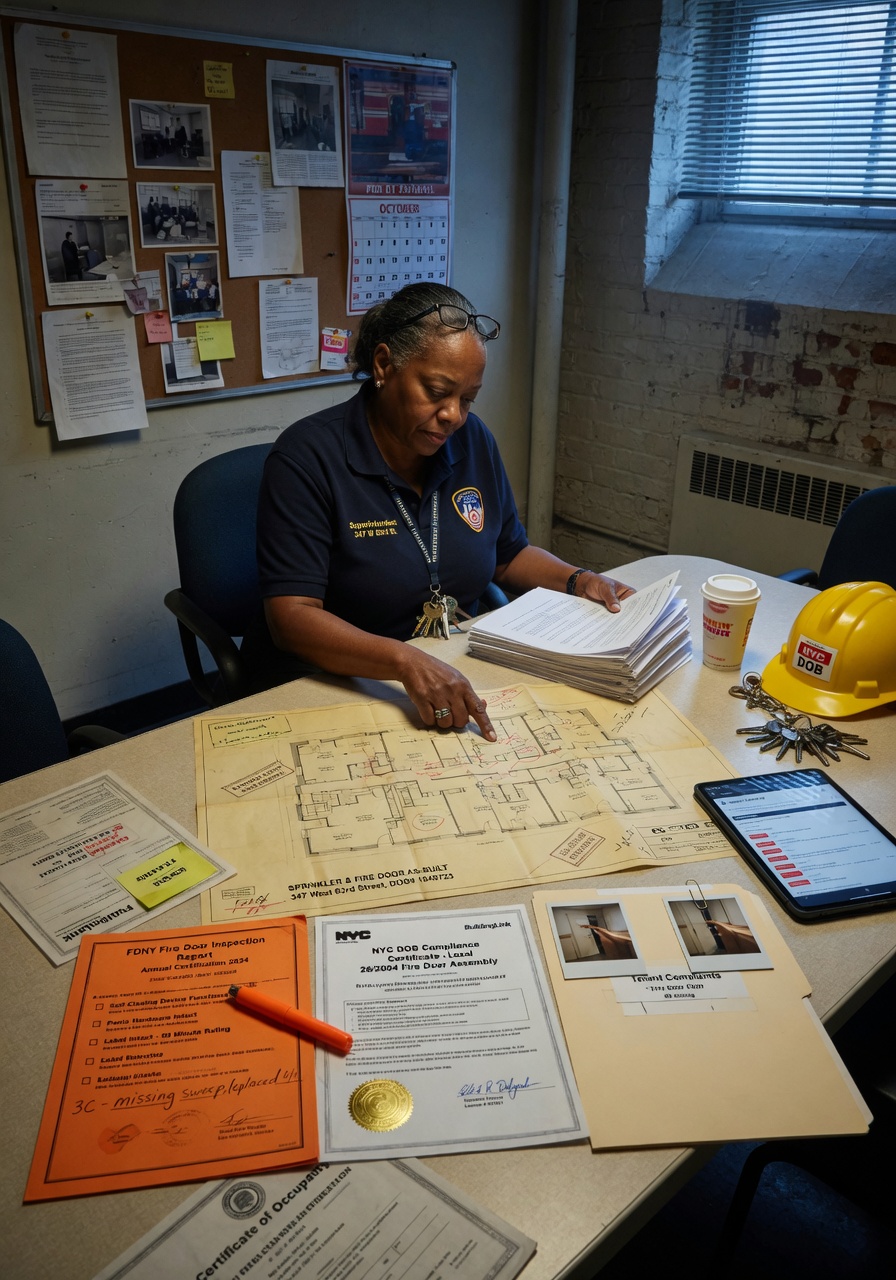
The law also requires building owners to maintain detailed records of all inspections, repairs, and replacements. These records must be available for review by FDNY inspectors and must be retained for at least six years.
Recent Code Updates and Amendments
In recent years, the NYC Department of Buildings and Fire Department have continued to refine fire door requirements. Notable updates include:
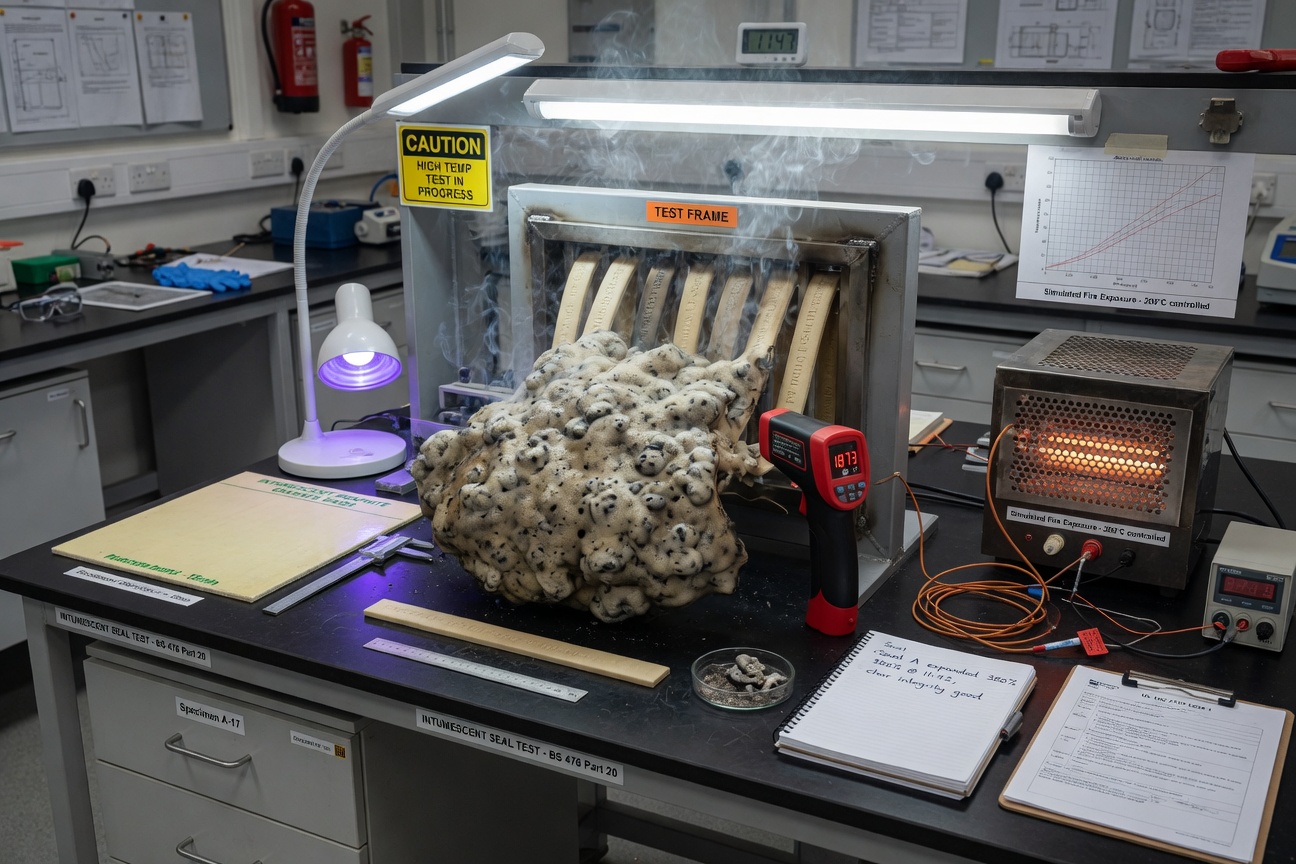
- Enhanced requirements for smoke seals and intumescent materials
- More stringent standards for door closer force and closing speed
- Updated guidelines for acceptable repair methods
- Expanded requirements for documentation and record-keeping
- Additional training and certification requirements for fire door inspectors
FDNY Inspection Criteria for Commercial Fire Doors
The Fire Department of New York (FDNY) conducts regular inspections of commercial and multi-family buildings to ensure compliance with fire safety regulations. Understanding what inspectors look for can help building operators prepare for these visits and maintain continuous compliance.
Critical Inspection Points
During an FDNY inspection, fire safety personnel will evaluate several key aspects of your fire door assemblies:
- Proper operation of self-closing devices
- Positive latching of door hardware
- Condition of door frames and seals
- Absence of unauthorized hold-open devices
- Integrity of fire-rated labels and certifications
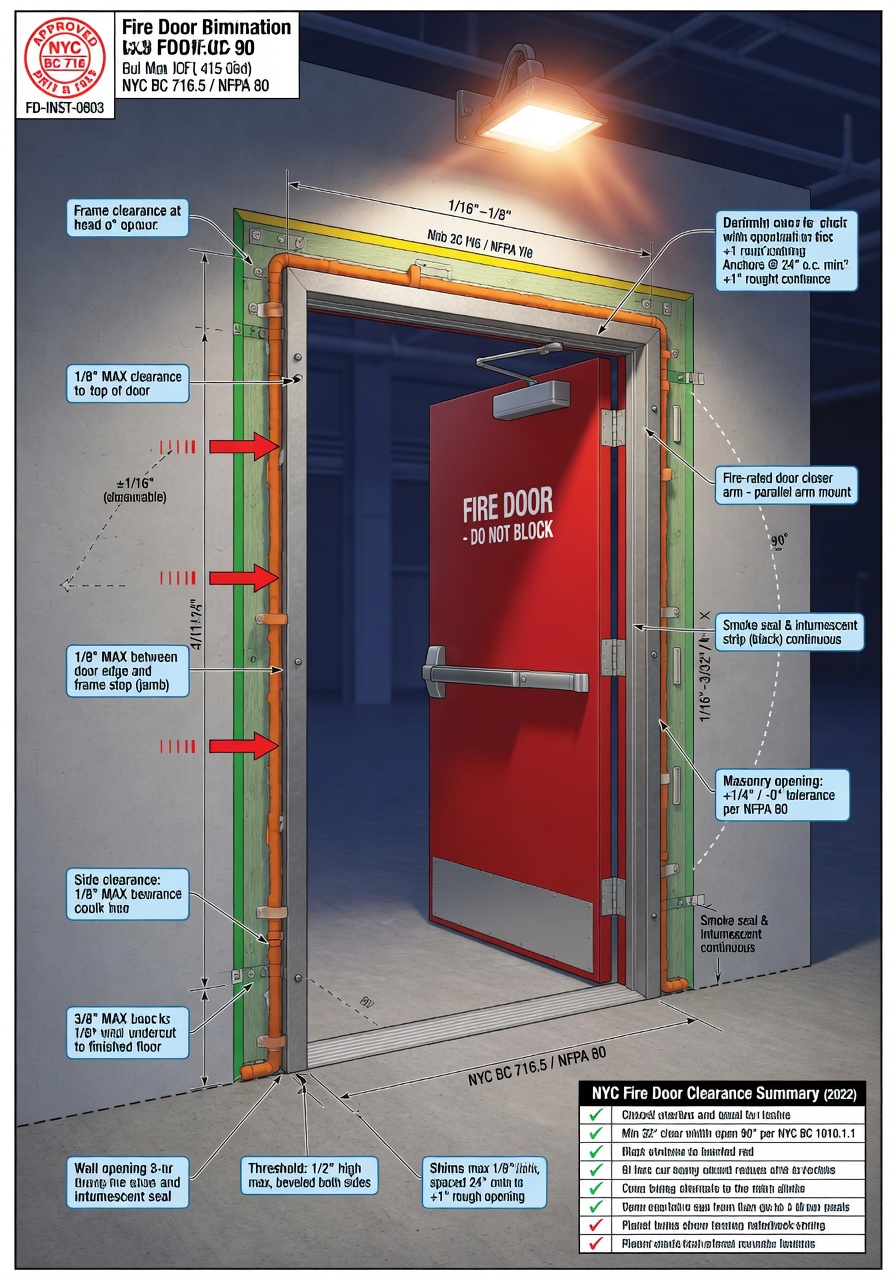
- Clearance gaps around the door perimeter
- Condition of hinges and pivot points
Common Violations and Red Flags
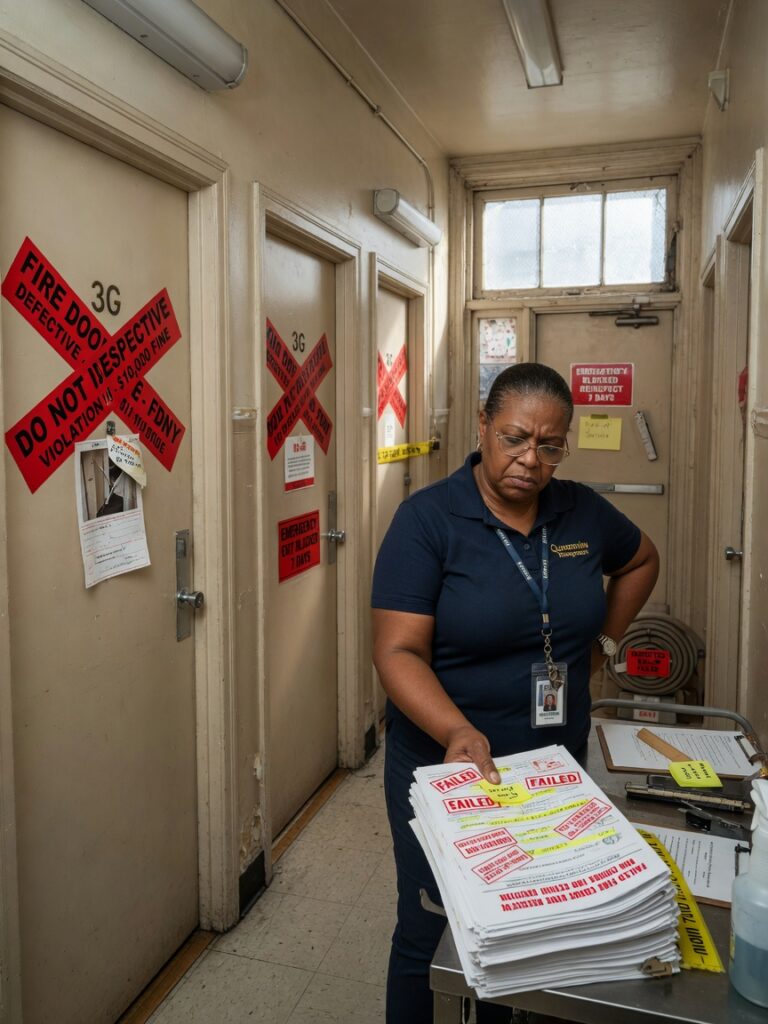
FDNY inspectors frequently cite the following violations:
- Doors that do not close and latch properly from all positions
- Missing or damaged door closers
- Doors propped open with furniture, wedges, or hooks
- Damaged or missing intumescent seals
- Improperly adjusted closing speed
- Expired or missing inspection tags
Penalties for Non-Compliance with NYC Commercial Door Installation Code
Non-compliance with NYC fire door regulations can result in significant financial and legal consequences. The NYC Department of Buildings and FDNY have authority to issue violations with escalating penalties based on severity and frequency.
Civil Penalties and Fines
Current penalty structures include:
- Immediately hazardous violations: up to $15,000 per violation
- Hazardous violations: $2,000 to $10,000 per violation
- General violations: $1,000 to $5,000 per violation
Multiple doors in violation within the same building can result in cumulative penalties that quickly reach six figures.
Additional Consequences
Beyond financial penalties, non-compliance can lead to:
- Stop-work orders
- Certificate of Occupancy revocation
- Increased insurance premiums
- Potential criminal charges in cases of willful negligence
- Liability in the event of fire-related injuries or fatalities
When to Retrofit Existing Commercial Doors
Many building owners face the challenge of bringing older structures into compliance with current NYC commercial door installation code requirements. Knowing when to repair versus when to replace is crucial for effective budget management.
Signs Your Doors Need Immediate Attention
Consider retrofitting when you observe:
- Doors that fail to close completely or consistently
- Visible damage to the door, frame, or hardware
- Missing or illegible fire-rating labels
- Excessive clearance gaps exceeding code allowances
- Outdated or malfunctioning closing devices
- Evidence of previous improper repairs
Retrofit Options and Best Practices
When retrofitting, property owners have several options:
- Door Closer Replacement: Often the most cost-effective solution when the door and frame remain in good condition.
- Hardware Upgrades: Replacing hinges, latches, and panic hardware to meet current standards.
- Frame Modifications: Adjusting or replacing frames to ensure proper clearances and fire ratings.
- Complete Door Assembly Replacement: Necessary when the existing door or frame cannot meet current fire-resistance requirements.
Best Practices for NYC Commercial Door Installation and Maintenance
Proper installation and ongoing maintenance are the foundation of fire safety compliance. Following industry best practices helps ensure your doors perform as designed during an emergency.
Professional Installation Requirements
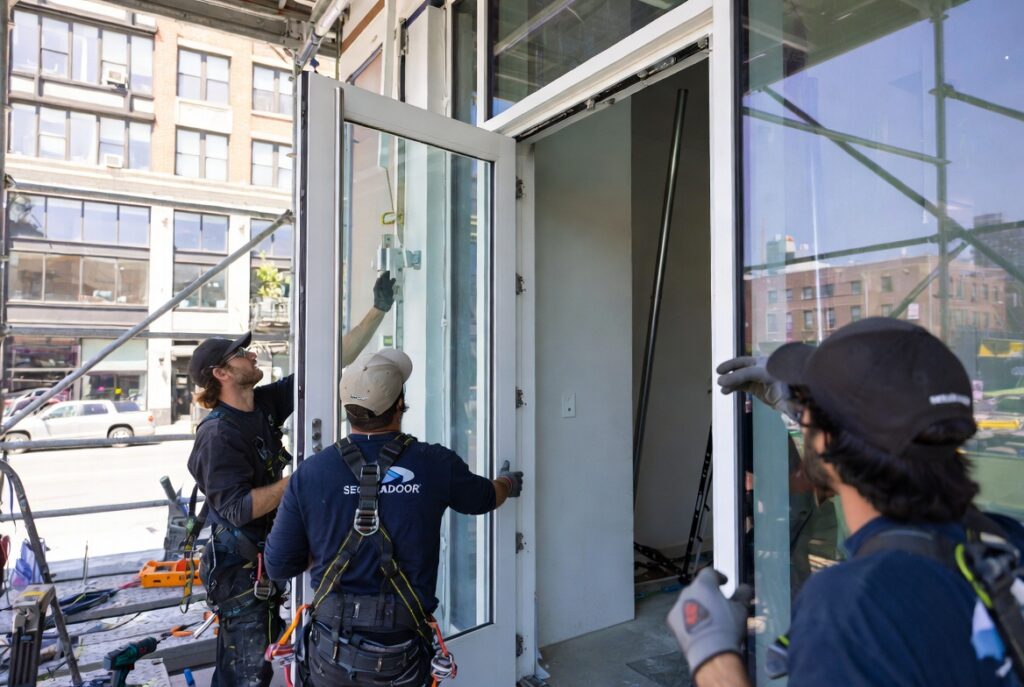
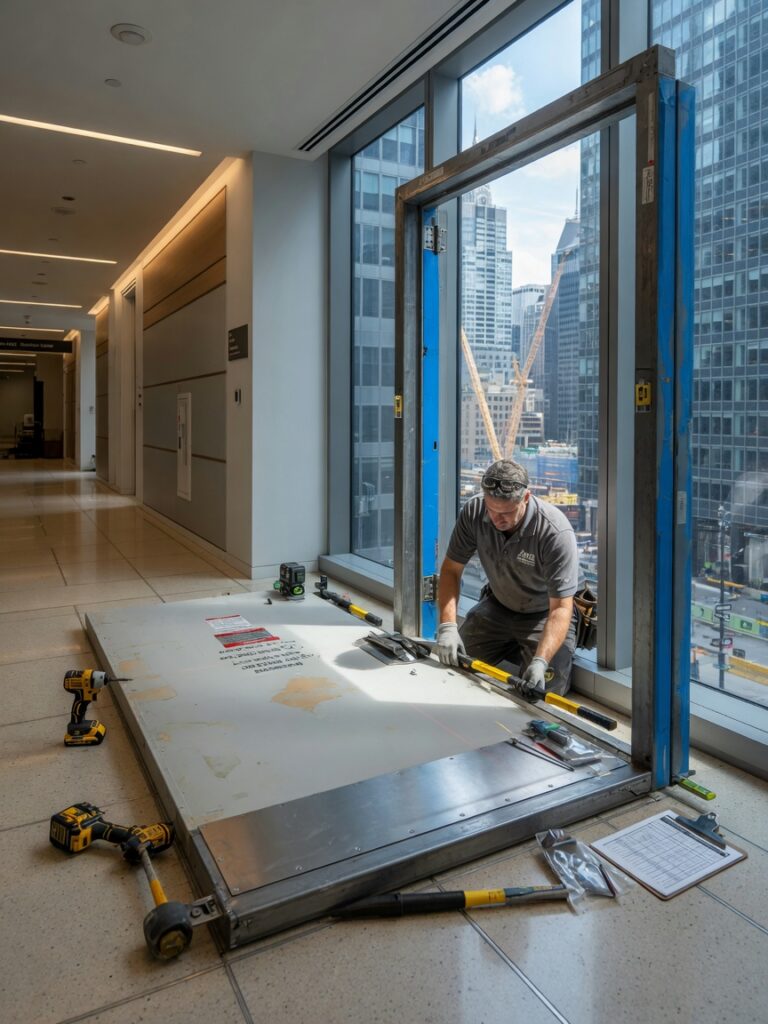
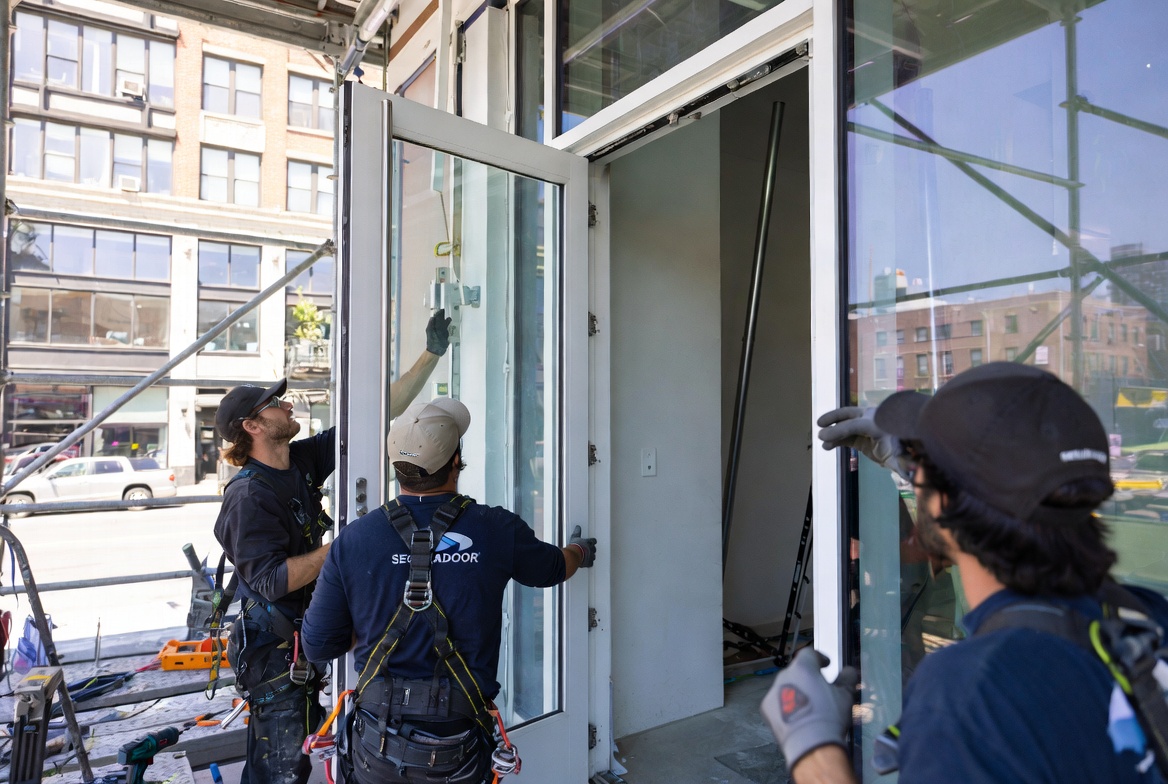
All commercial fire door installations in New York City should be performed by licensed and experienced professionals familiar with local code requirements. Proper installation includes:
- Precise alignment of door and frame
- Correct installation of listed fire door hardware
- Proper adjustment of closing devices
- Verification of required clearances and tolerances
- Documentation of installation details and certifications
Ongoing Maintenance Program
Implementing a comprehensive maintenance program is essential for long-term compliance. This should include:
- Monthly visual inspections by building staff
- Annual professional inspections as required by Local Law 11
- Immediate repair of any identified deficiencies
- Documentation of all maintenance activities
- Staff training on proper door operation and reporting procedures
Working with Qualified Fire Door Professionals in NYC
Selecting the right partner for your fire door needs is crucial. Look for companies that specialize in NYC commercial door installation with extensive experience in code compliance, particularly those familiar with the unique requirements of the five boroughs.
Qualified professionals should offer comprehensive services including:
- Code compliance assessments
- Professional installation of fire-rated door assemblies
- Annual inspection and certification services
- Emergency repair capabilities
- Detailed documentation and record-keeping support
Conclusion: Prioritizing Fire Safety Through Code Compliance
Compliance with NYC commercial door installation code requirements, particularly regarding self-closing doors, represents a fundamental responsibility for building owners, facility managers, and operators. These requirements exist not merely to satisfy regulatory demands but to provide critical protection for building occupants, first responders, and property assets.
By understanding the specific requirements of Fire Code §FC 703, Building Code Chapter 7, and Local Law 11, and by maintaining a proactive approach to fire door maintenance and retrofitting, you can ensure your building meets the highest standards of fire safety.
At SecuraDoor.com, we specialize in helping NYC commercial property owners navigate these complex requirements. Our team of certified professionals provides expert installation, inspection, and maintenance services designed to ensure full compliance while maximizing the safety and value of your property.
Don’t wait for an FDNY violation or, worse, a fire emergency to highlight deficiencies in your building’s fire door systems. Contact the fire door specialists at SecuraDoor.com today to schedule a comprehensive assessment of your commercial door assemblies and develop a plan to achieve and maintain full compliance with all applicable NYC codes.
Your building’s safety—and your peace of mind—depends on it.