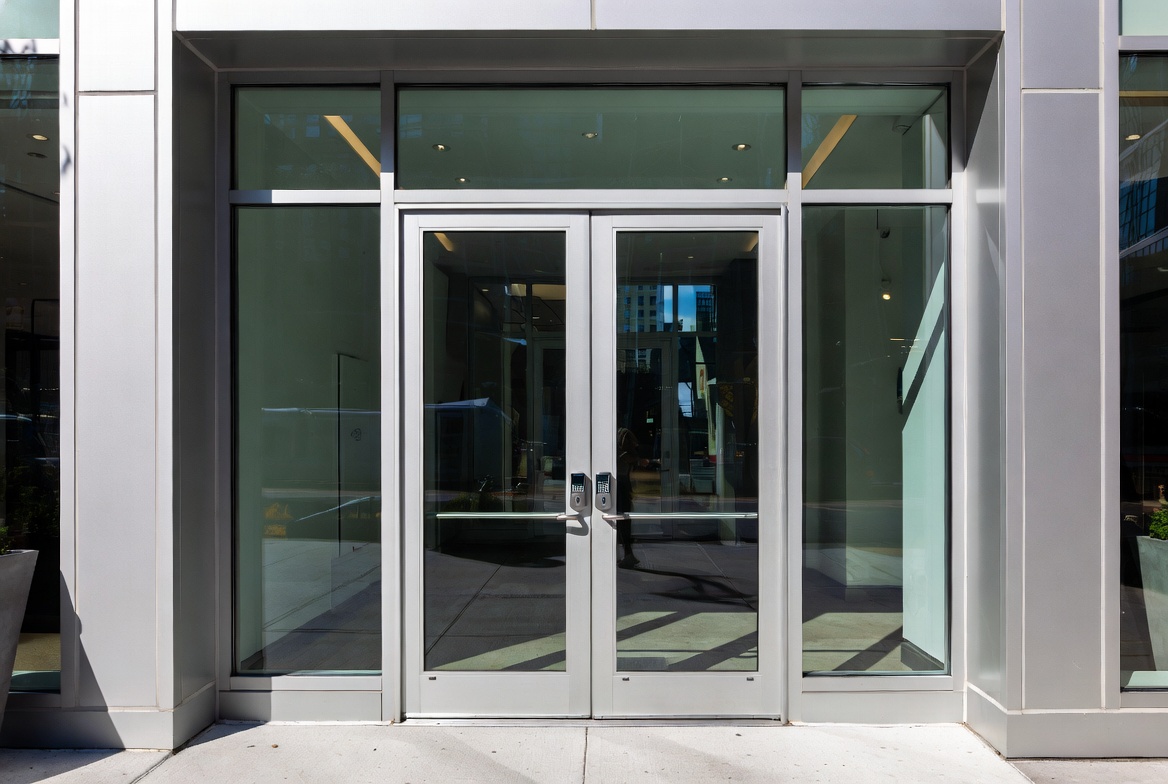
NYC Commercial Door Code Requirements Explained 2026
As a business owner in New York City, staying compliant with building codes is not optional—it’s essential for safety, legal protection, and operational continuity. The NYC commercial door code landscape continues to evolve, with 2026 bringing heightened enforcement of fire safety, accessibility, energy efficiency, and security standards. This definitive guide consolidates every major requirement, enforcement timeline, violation penalties, and self-audit steps into one authoritative resource.
Whether you manage retail stores, office buildings, warehouses, or mixed-use properties, understanding these regulations helps prevent expensive fines while identifying opportunities where door upgrades deliver tangible benefits in security, energy savings, and tenant experience.
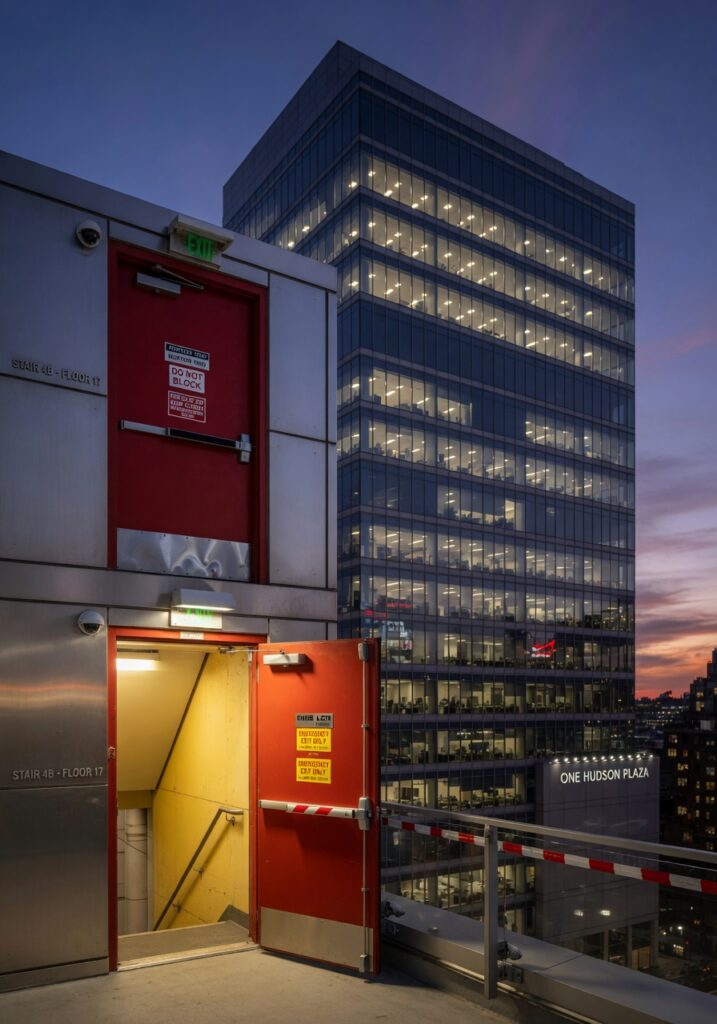
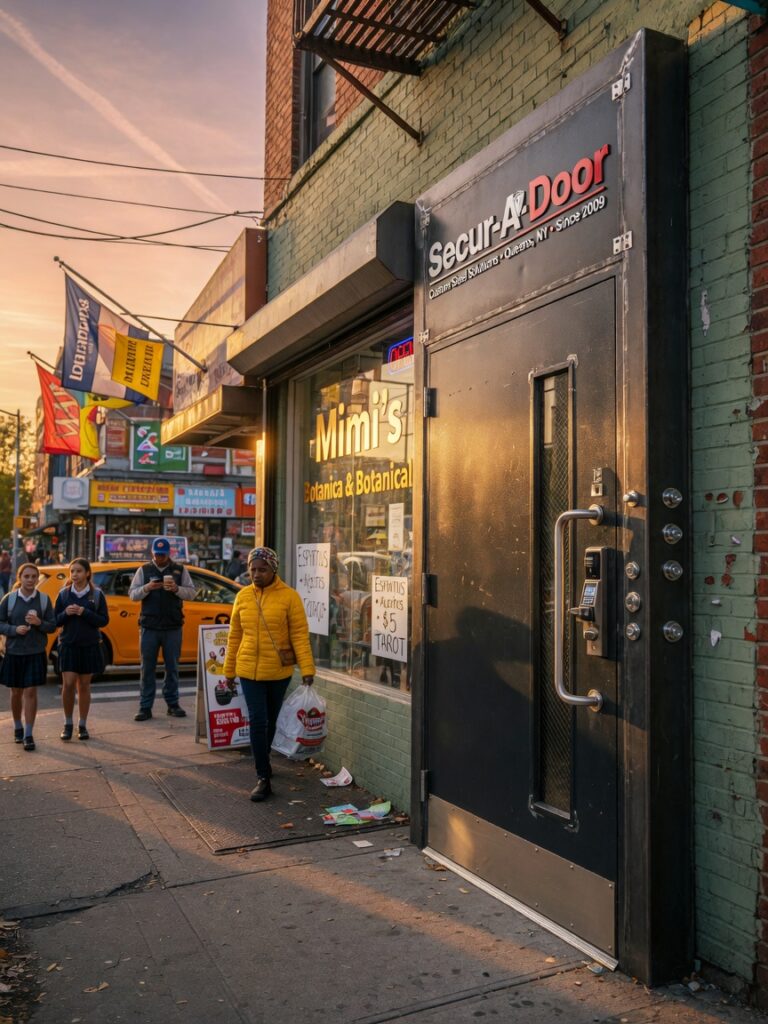
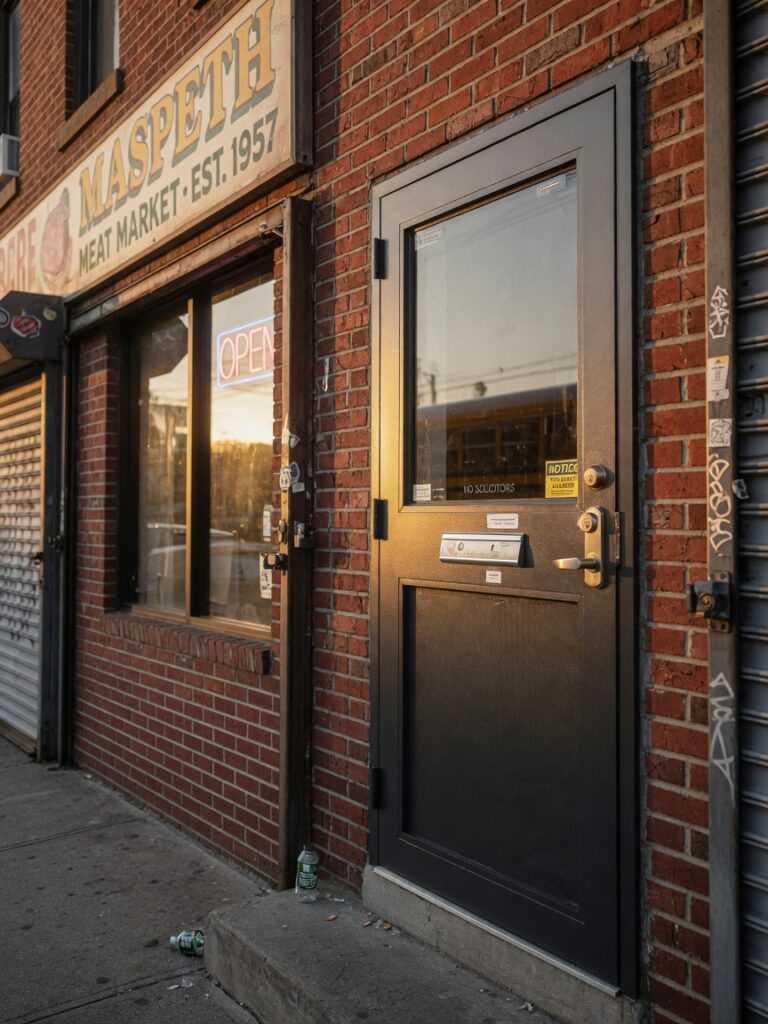
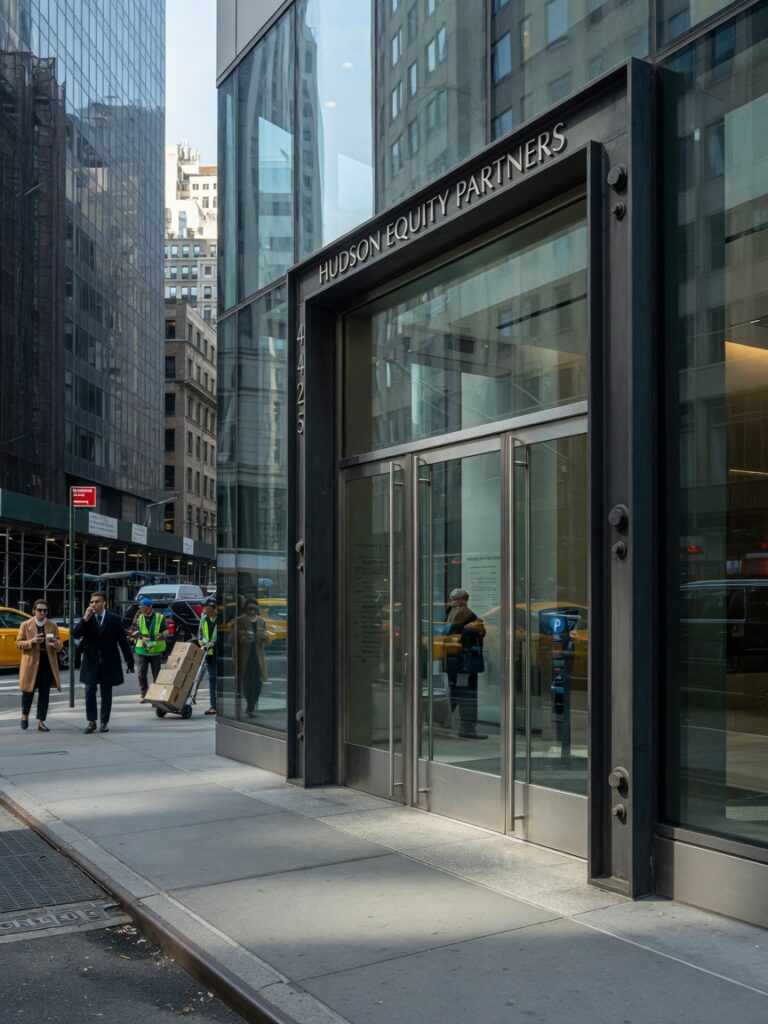
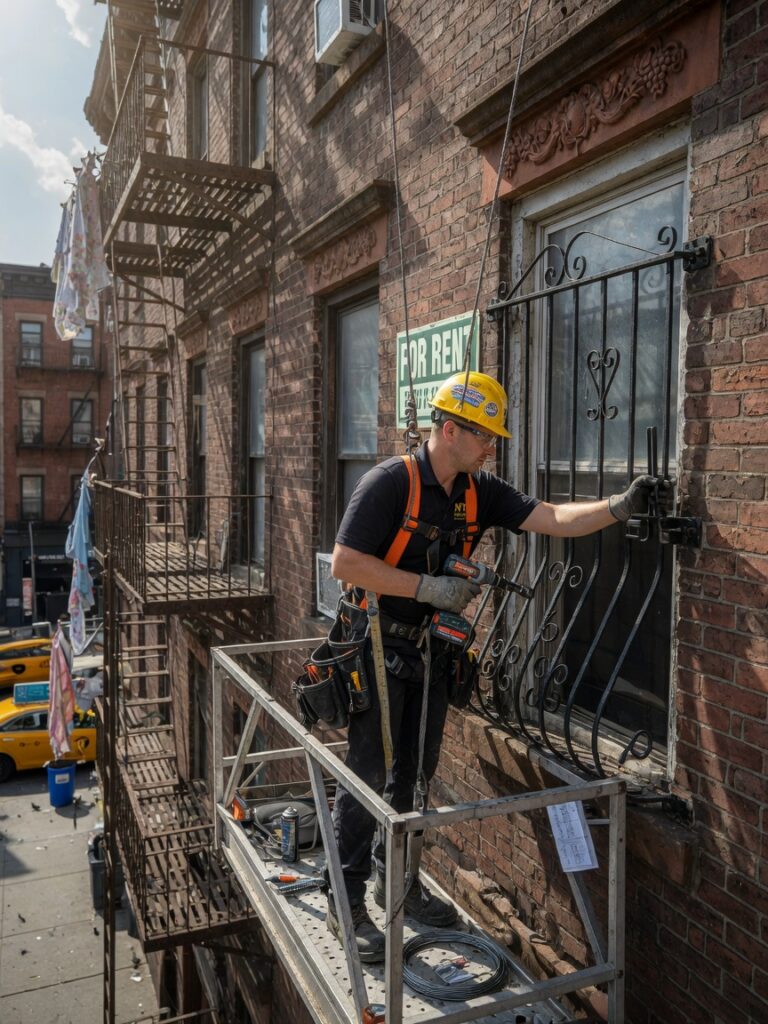
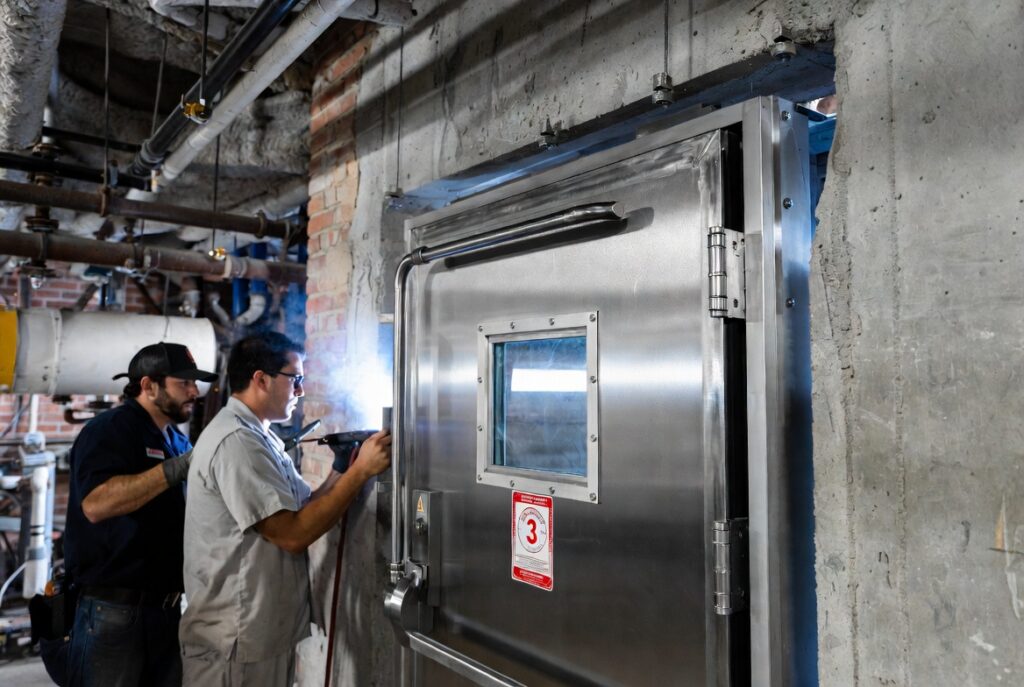
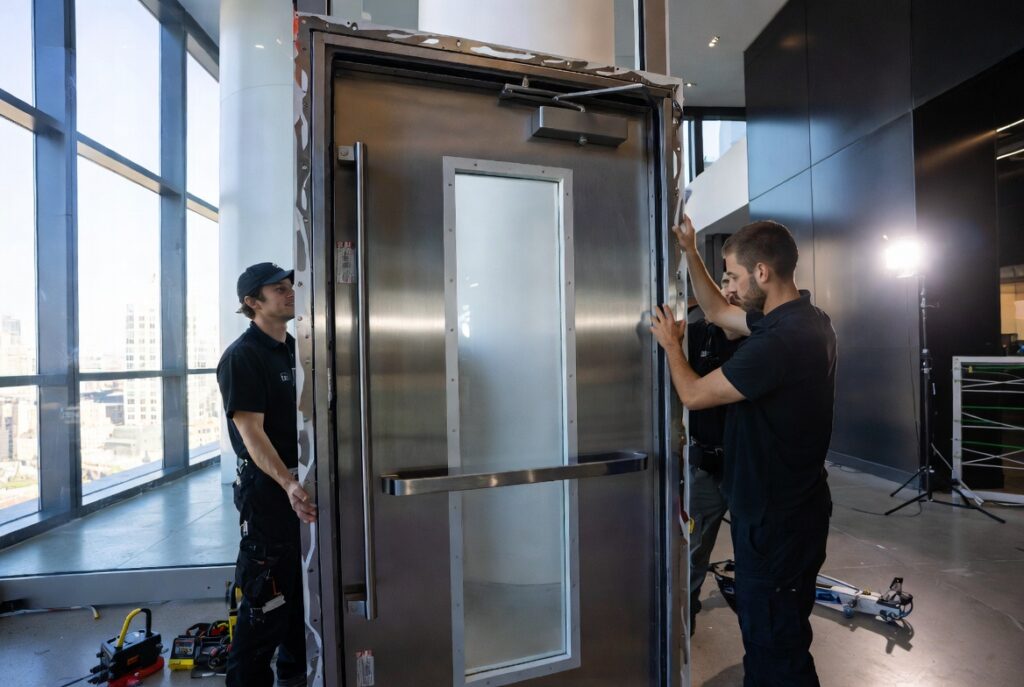
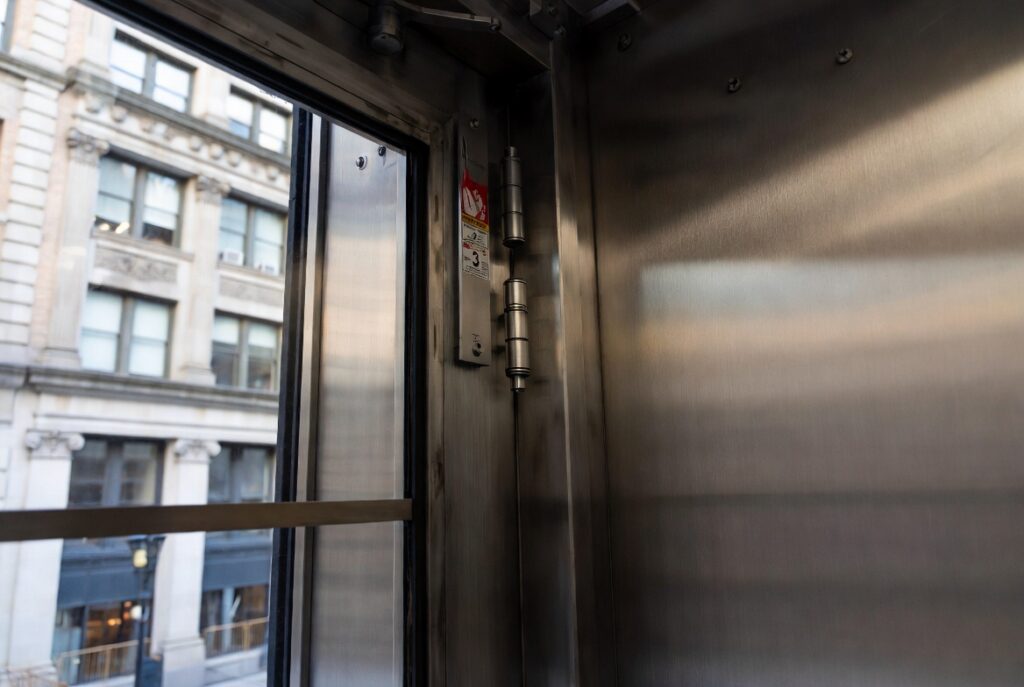
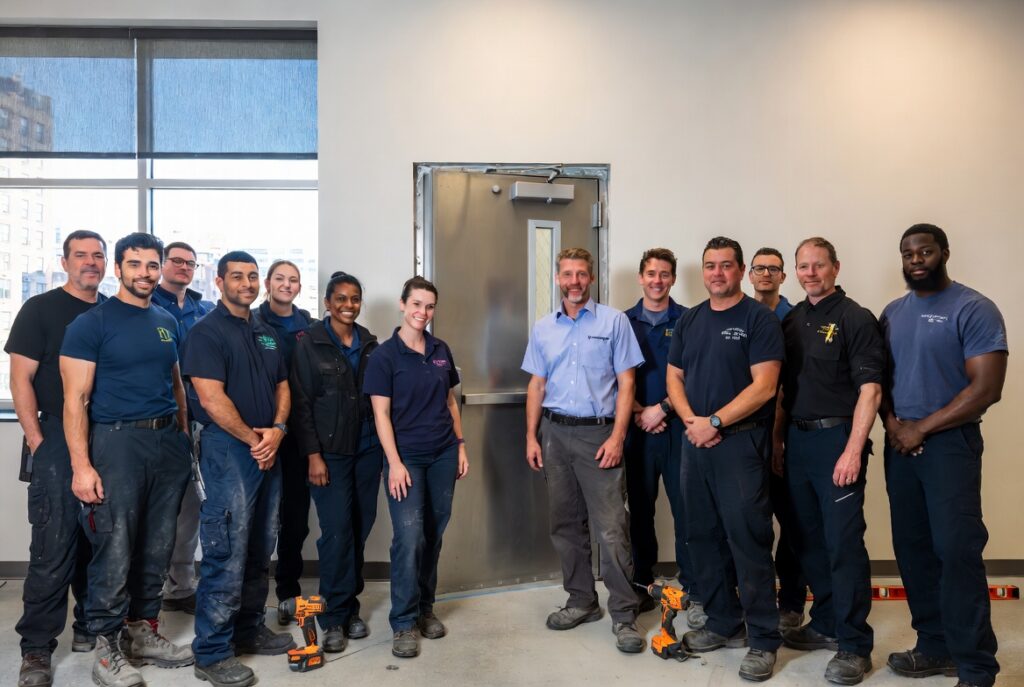
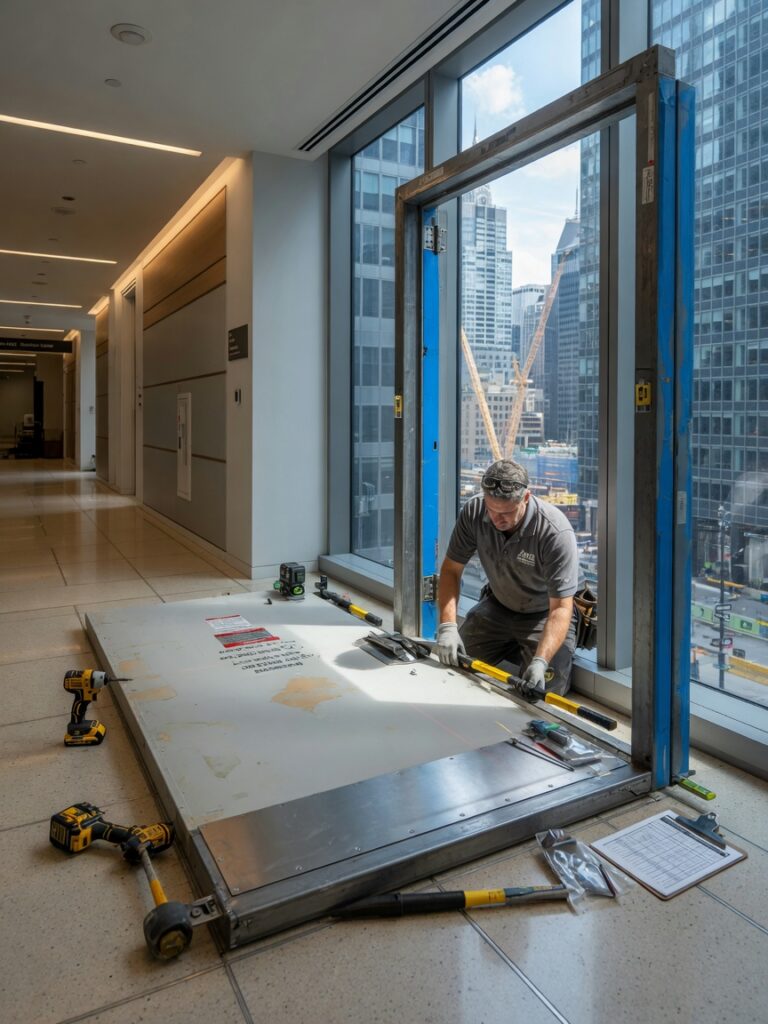
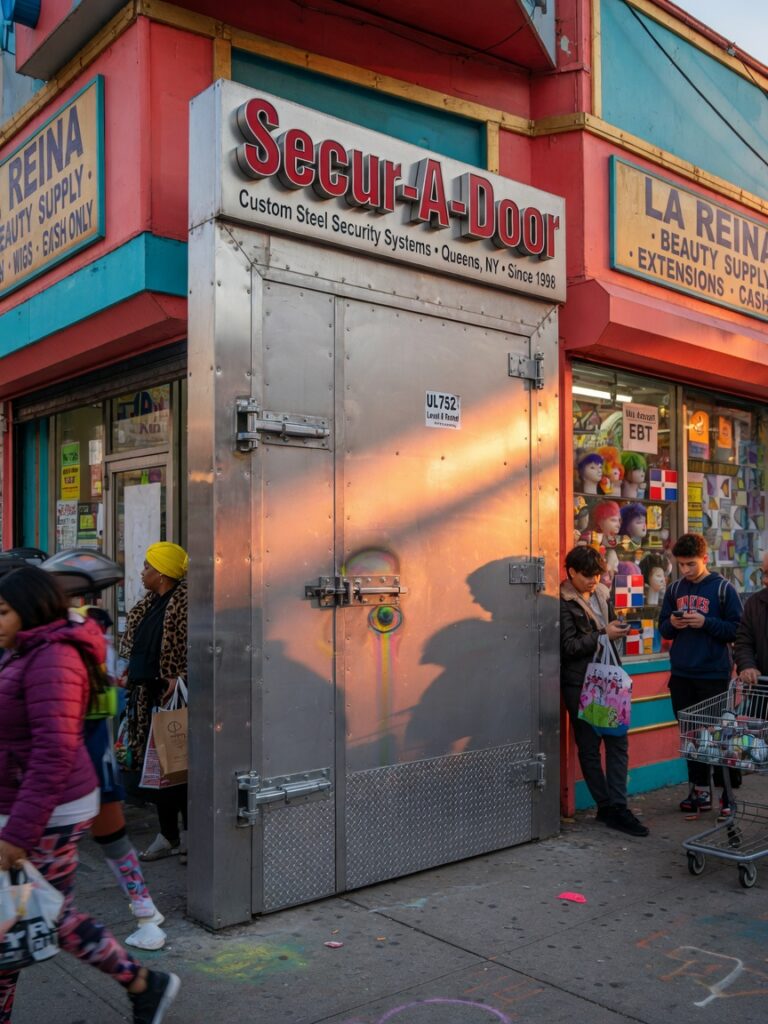
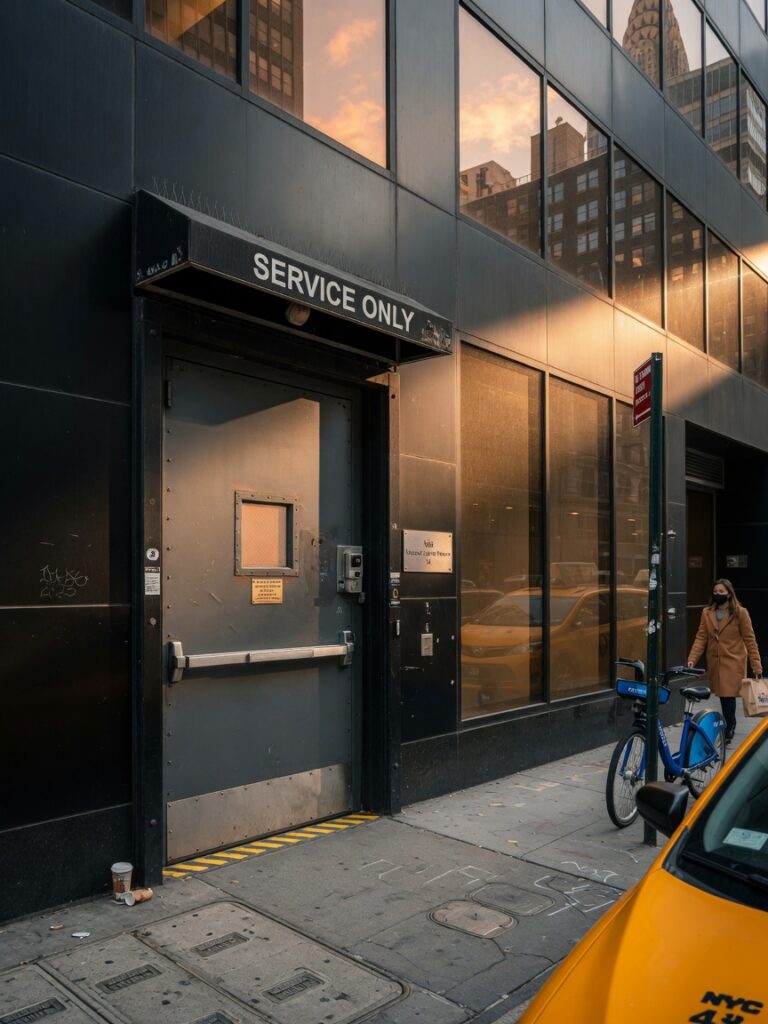
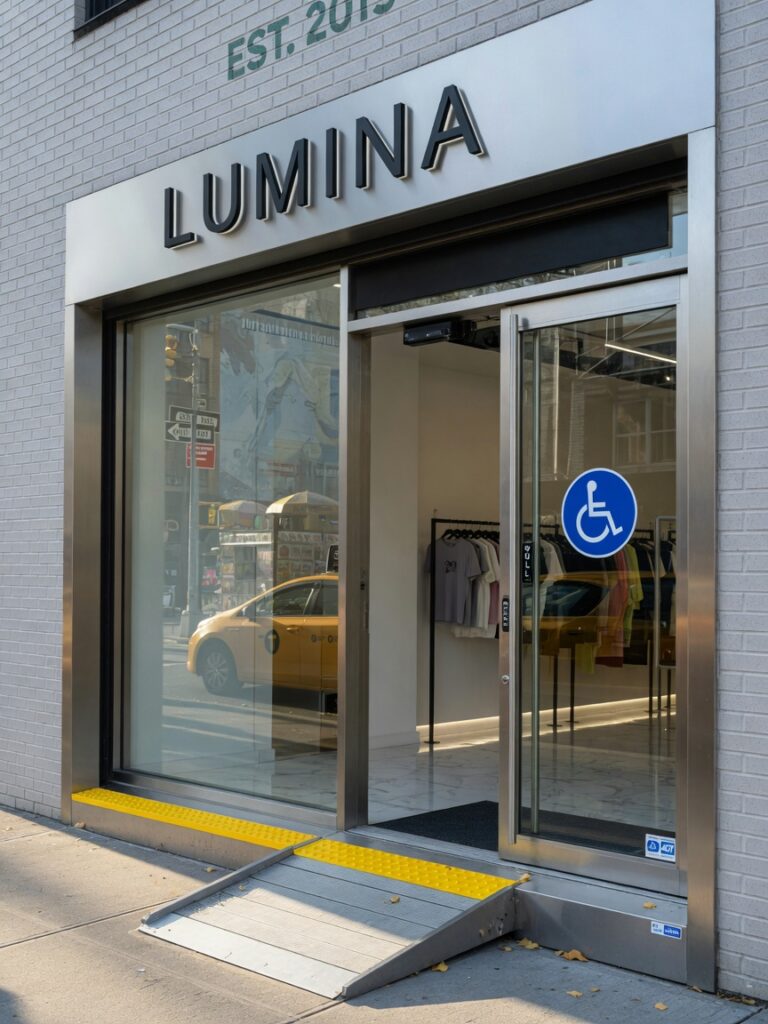
Image Grid 1
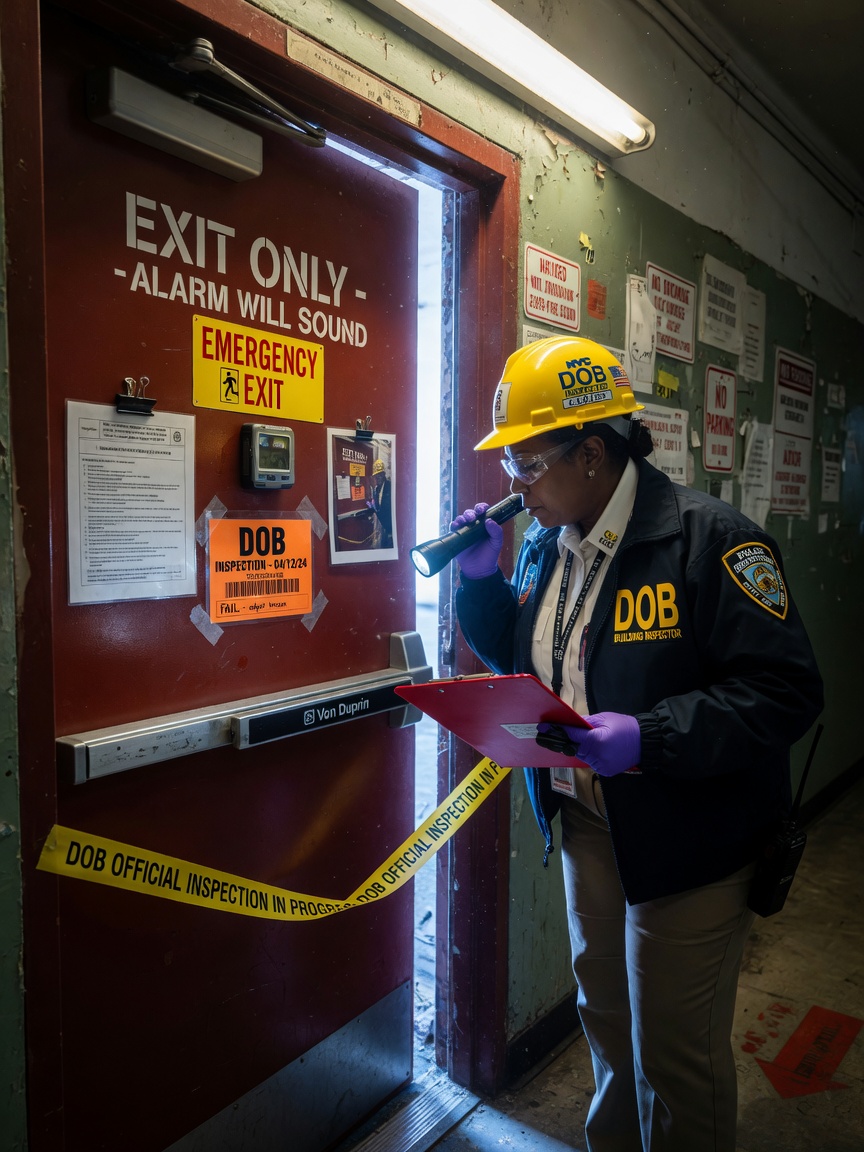
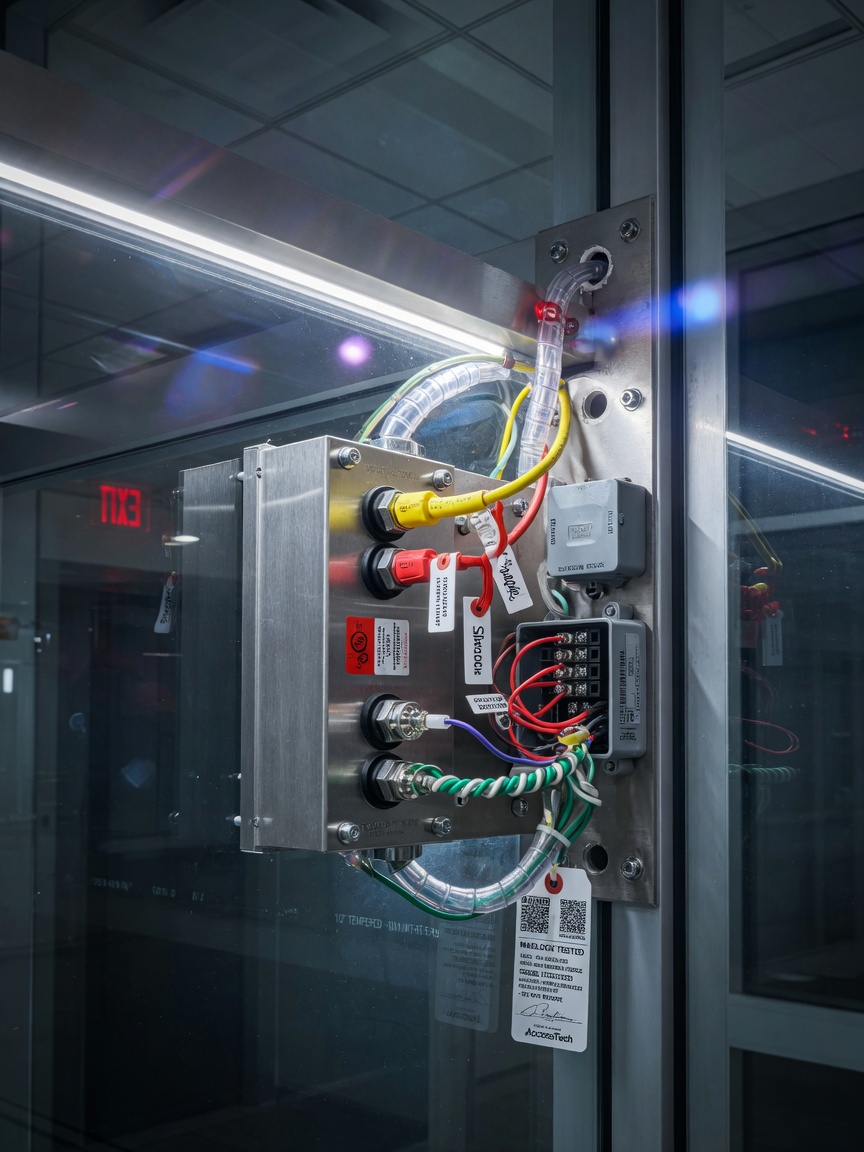
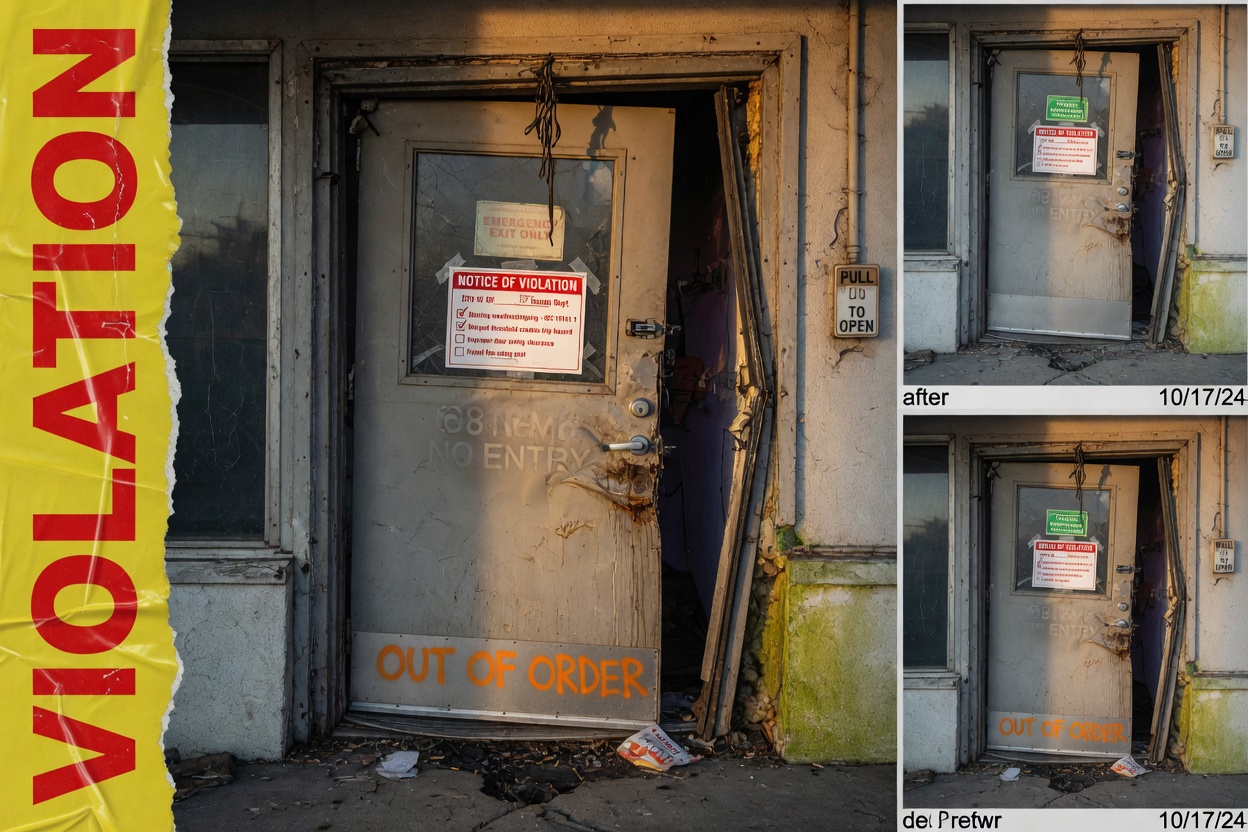
Why NYC Commercial Door Codes Matter in 2026
New York City maintains some of the strictest building codes in the United States. Commercial doors serve as critical control points for fire containment, emergency egress, accessibility, and building security. Local Law 75 and updates to the NYC Building Code, Fire Code, and Accessibility Code create a complex compliance environment that many property managers find challenging to navigate.
Non-compliance can result in stop-work orders, substantial fines, insurance complications, and increased liability. Conversely, proactive compliance often yields improved energy performance, enhanced security, and smoother inspections.
Key NYC Commercial Door Code Categories
1. Fire Safety Requirements
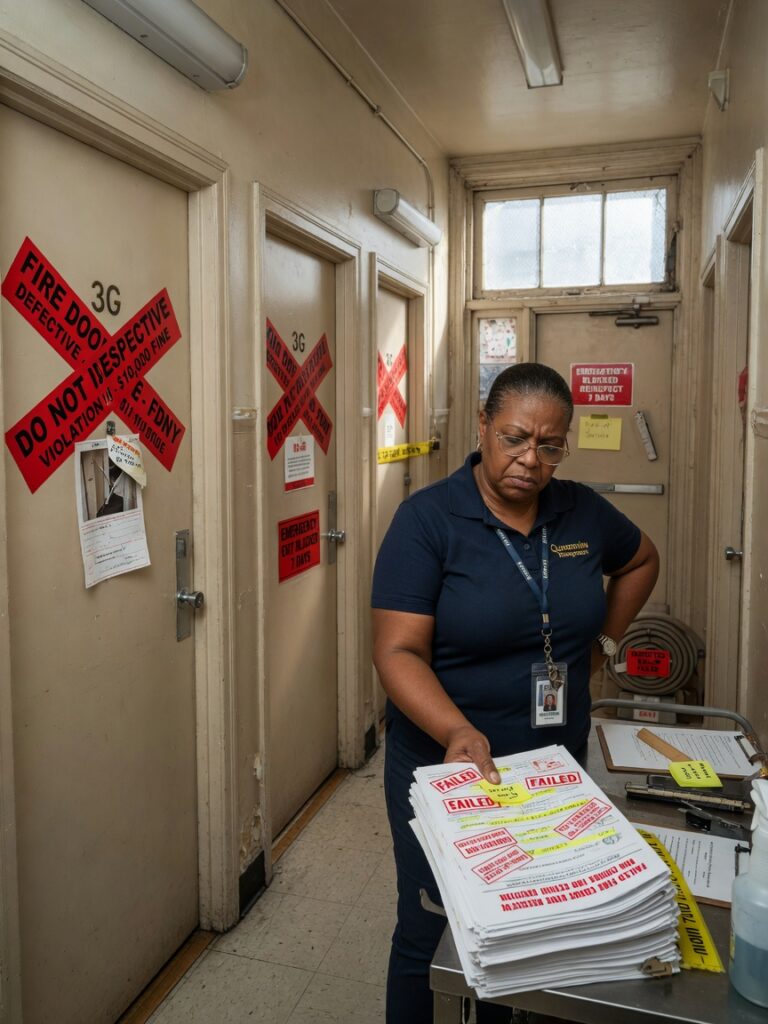
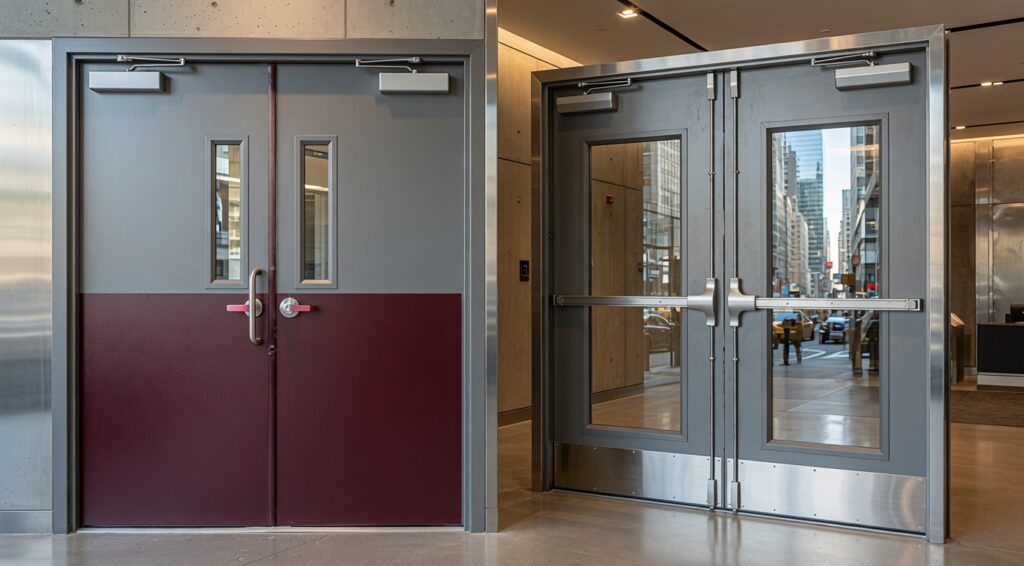
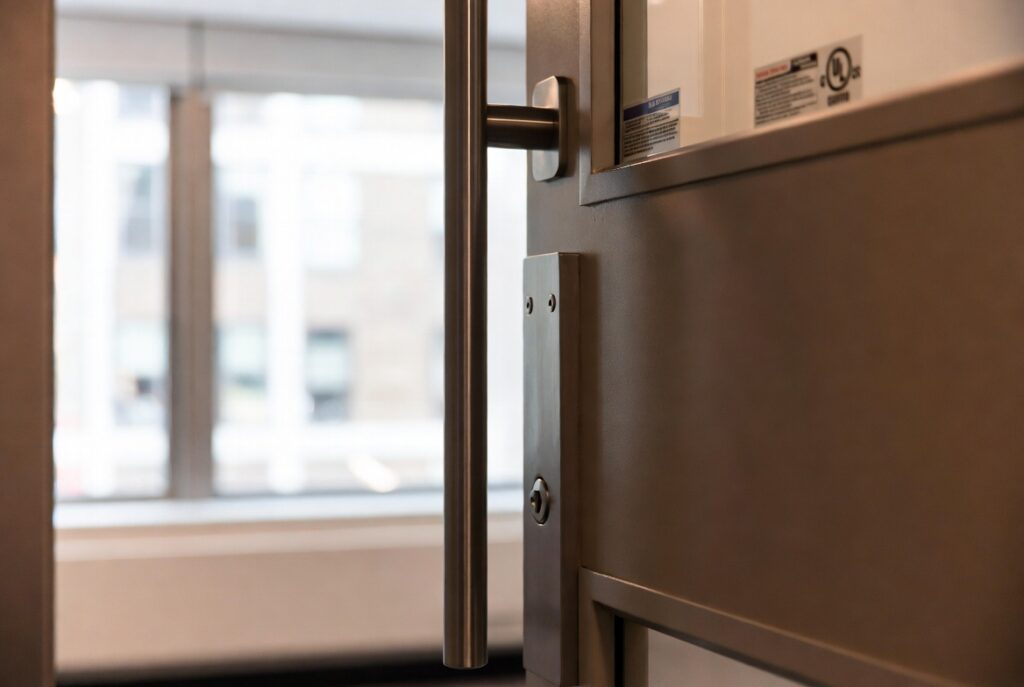
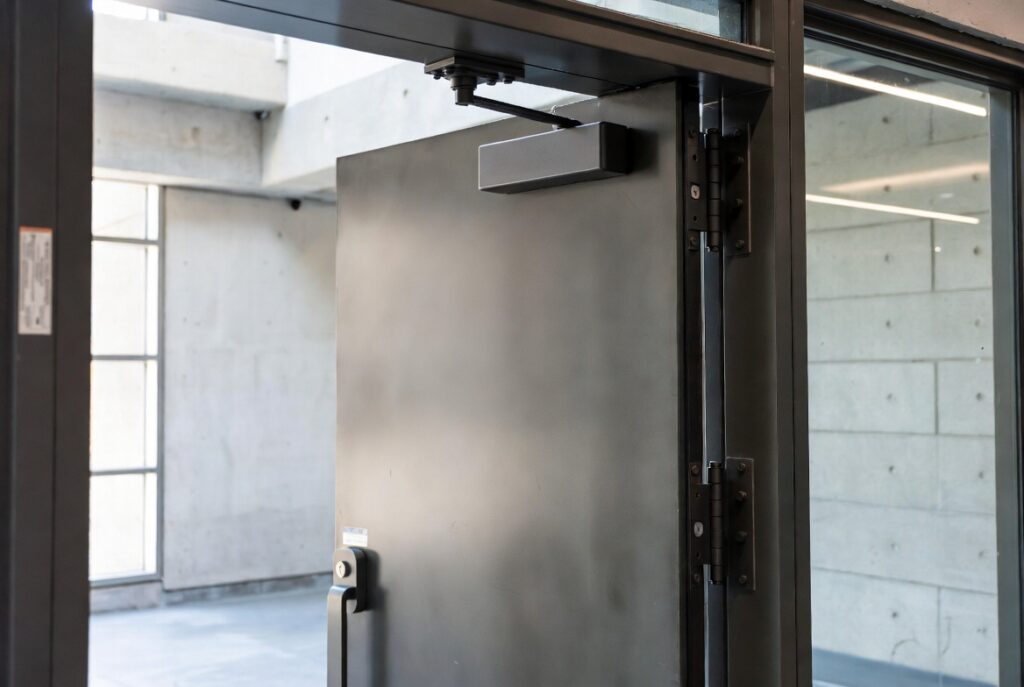
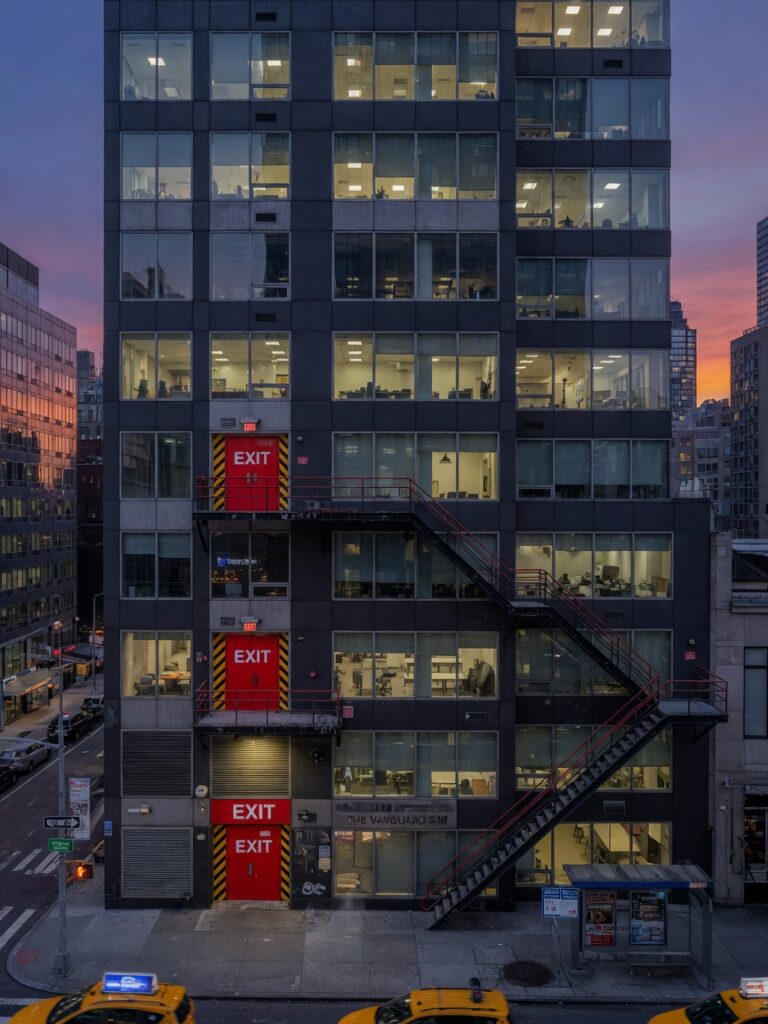
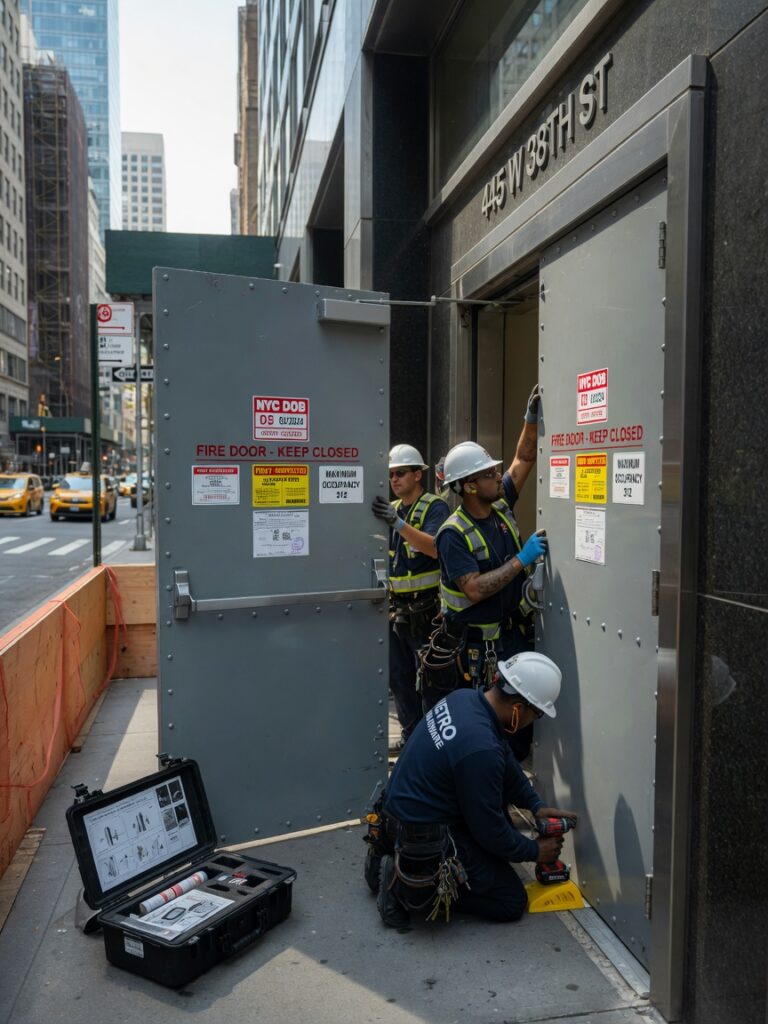
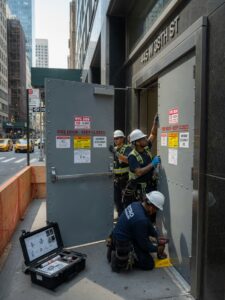
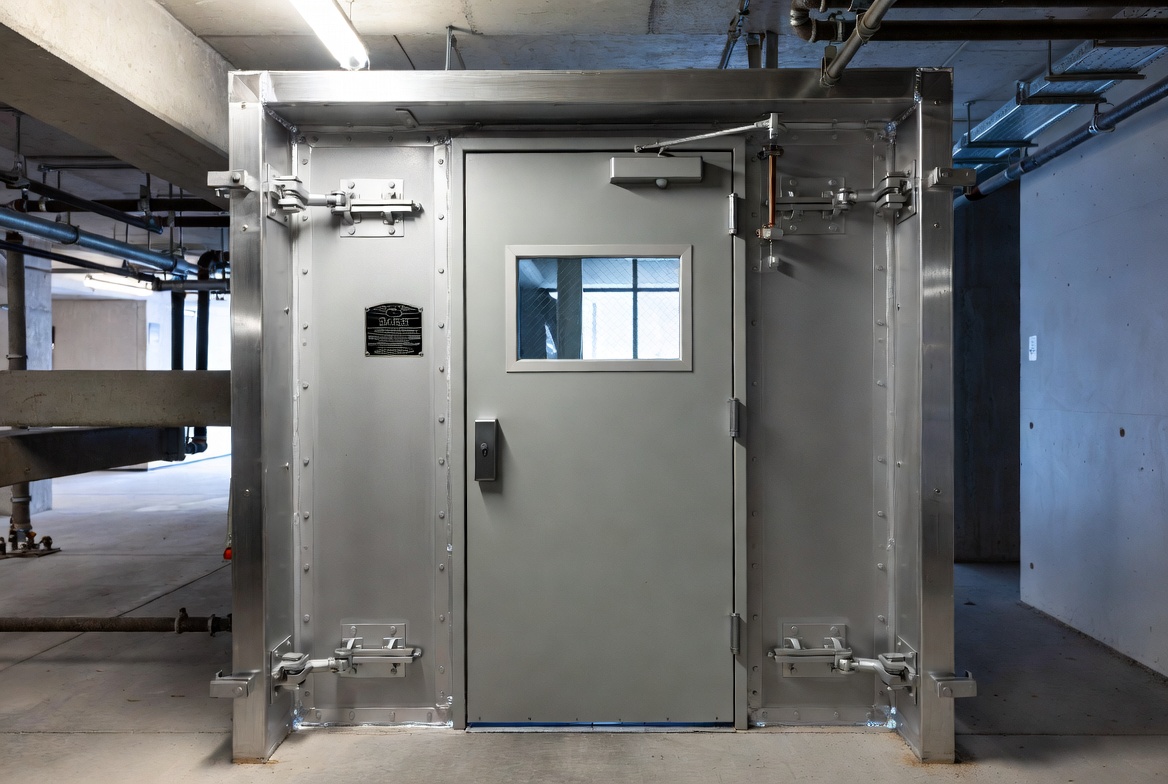
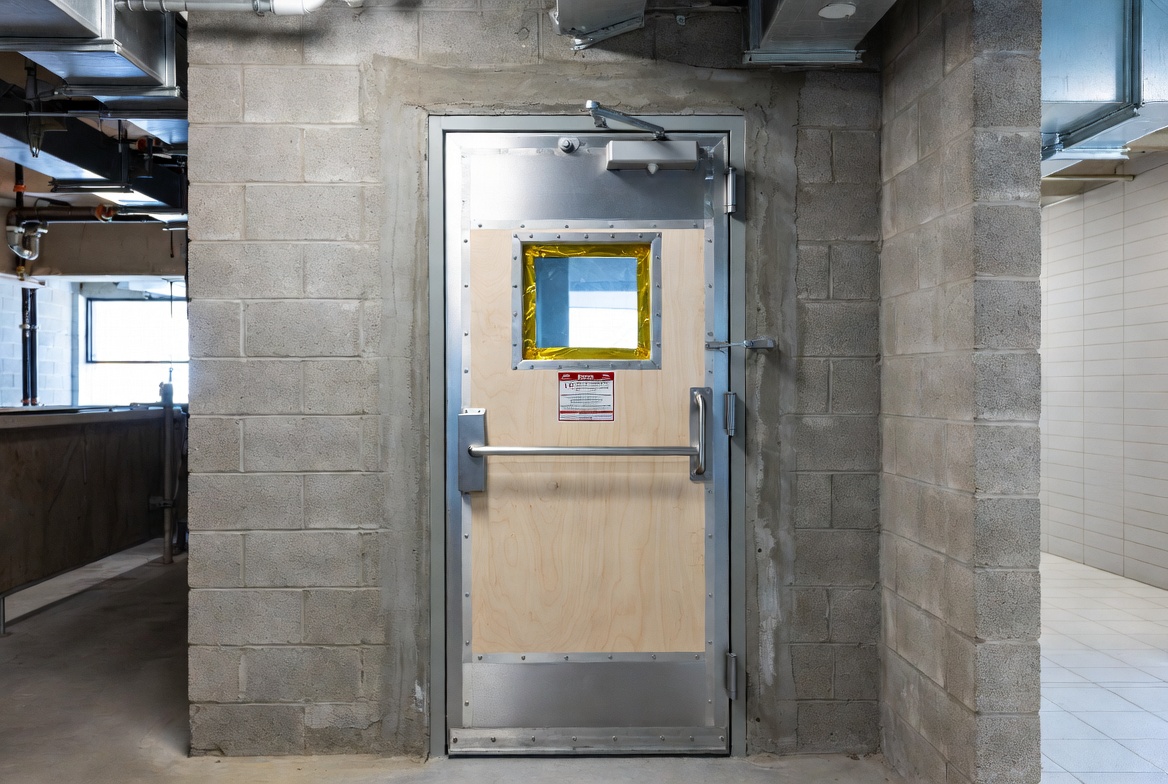
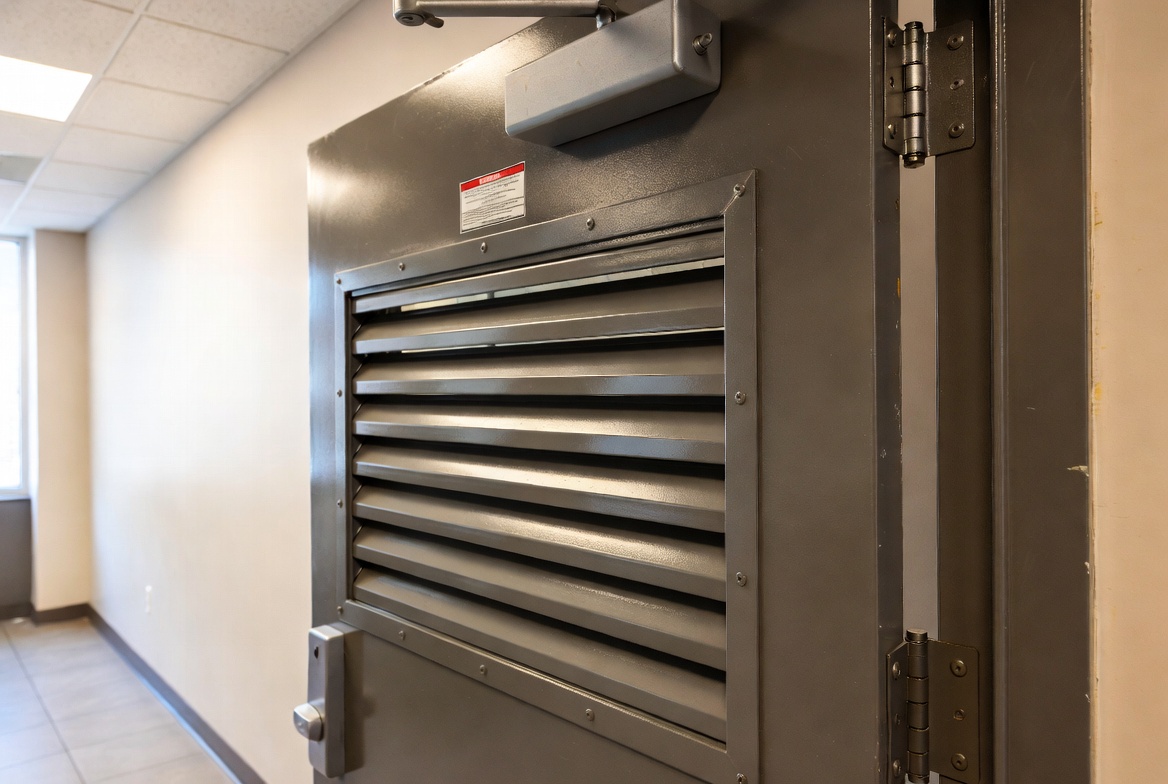
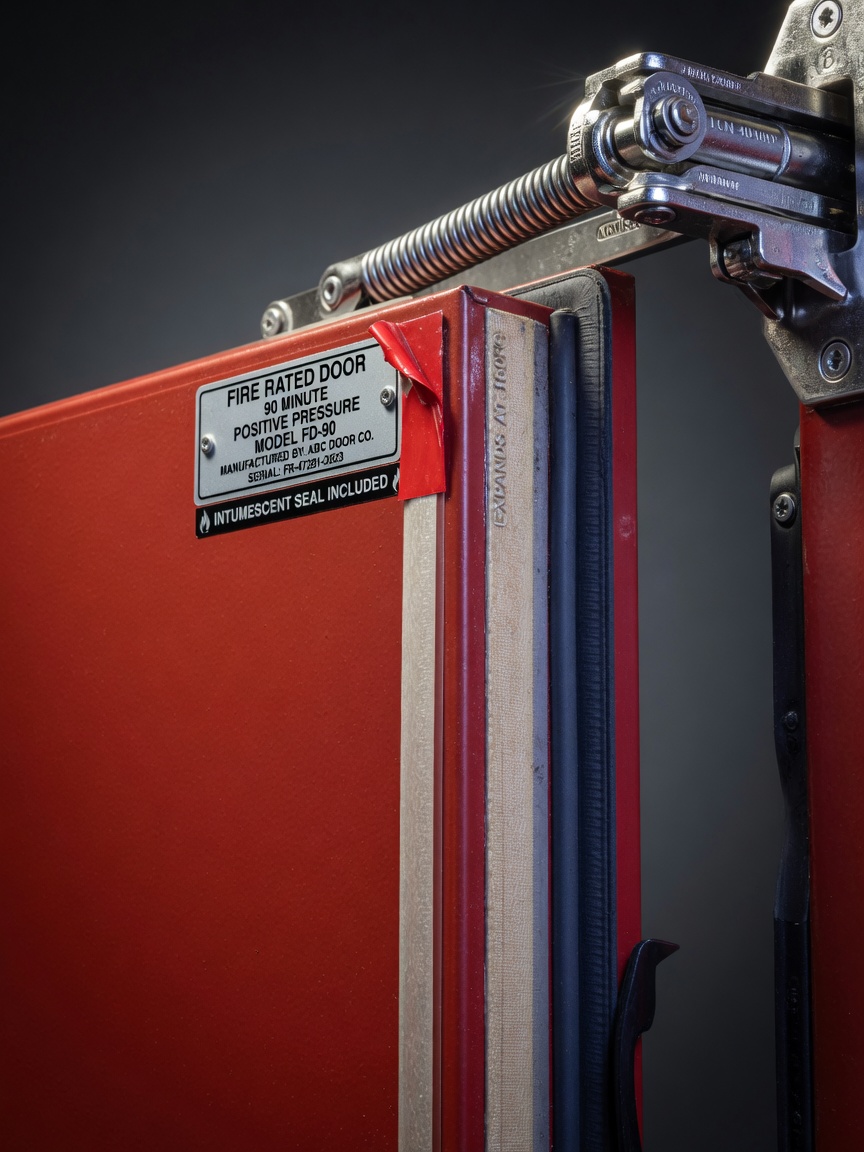
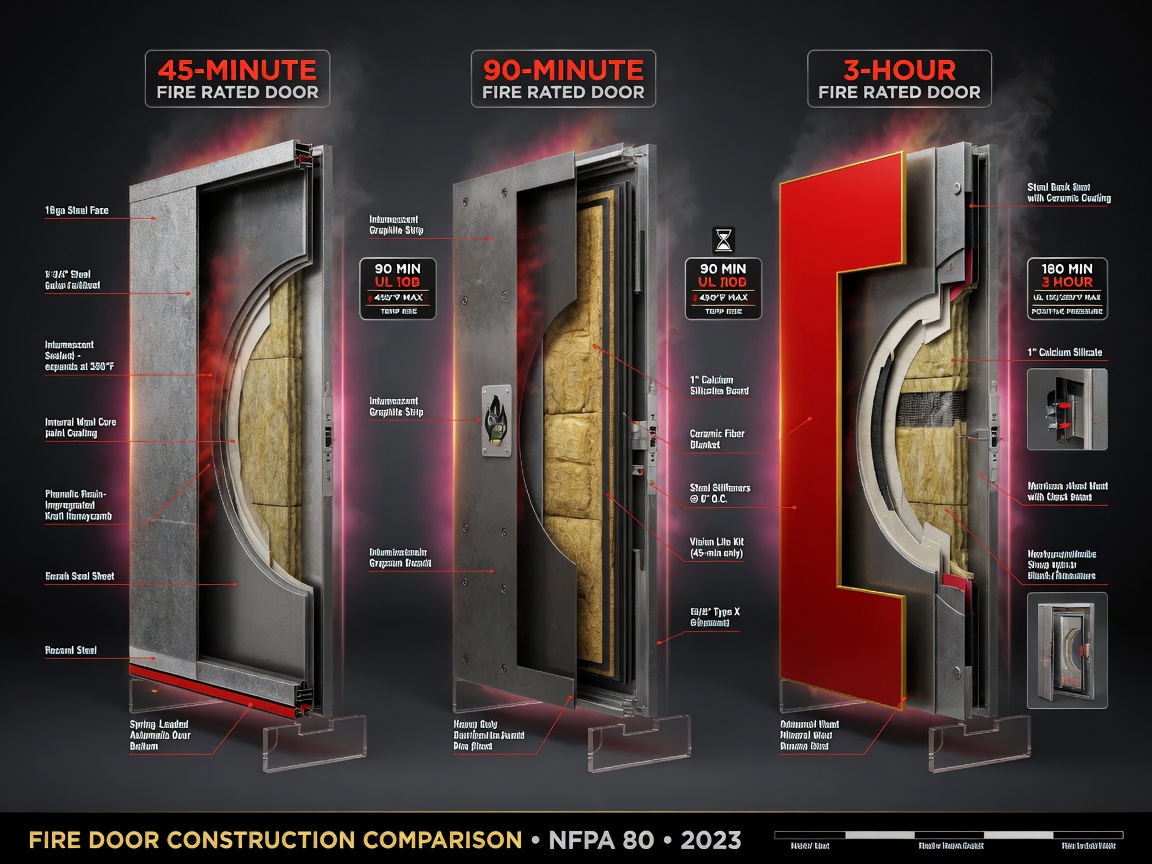
Fire-rated doors are among the most strictly regulated elements in commercial buildings. According to the NYC Fire Code and Chapter 7 of the Building Code, commercial doors in rated assemblies must meet specific fire-protection ratings.
Image Grid 2
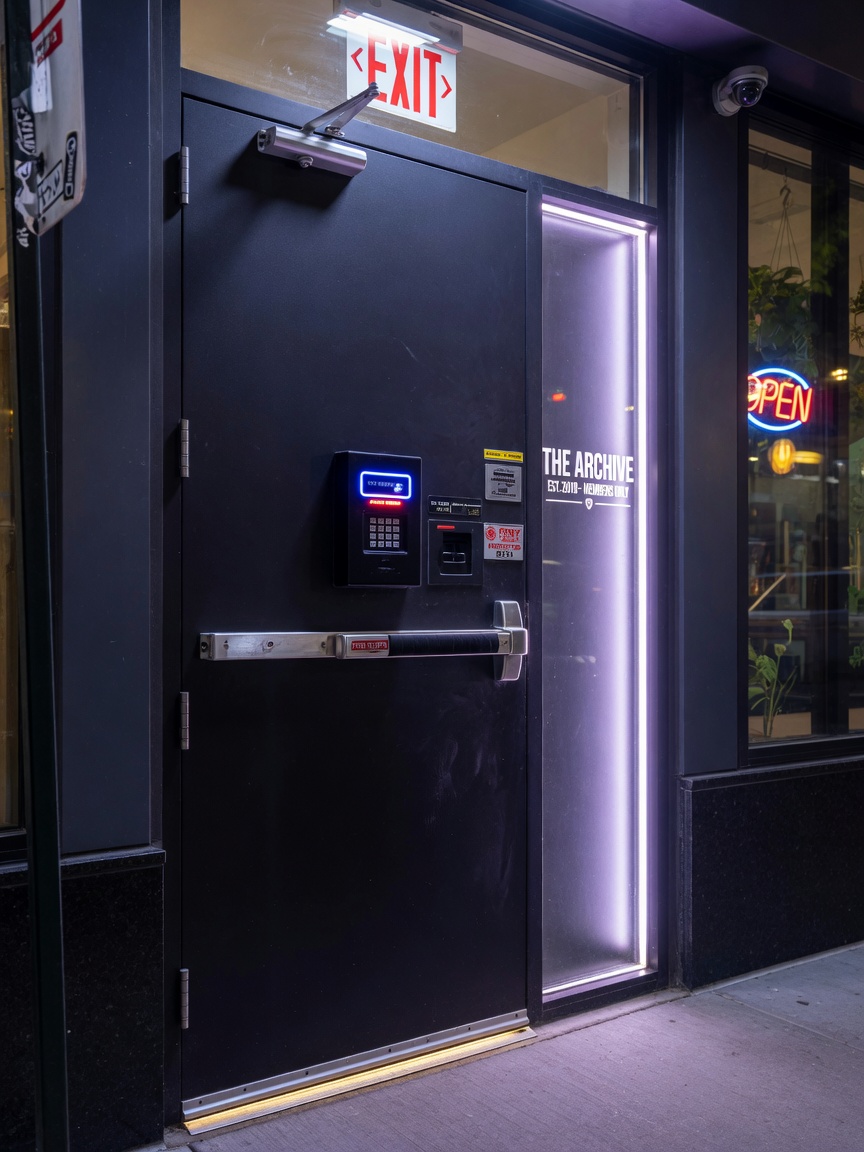
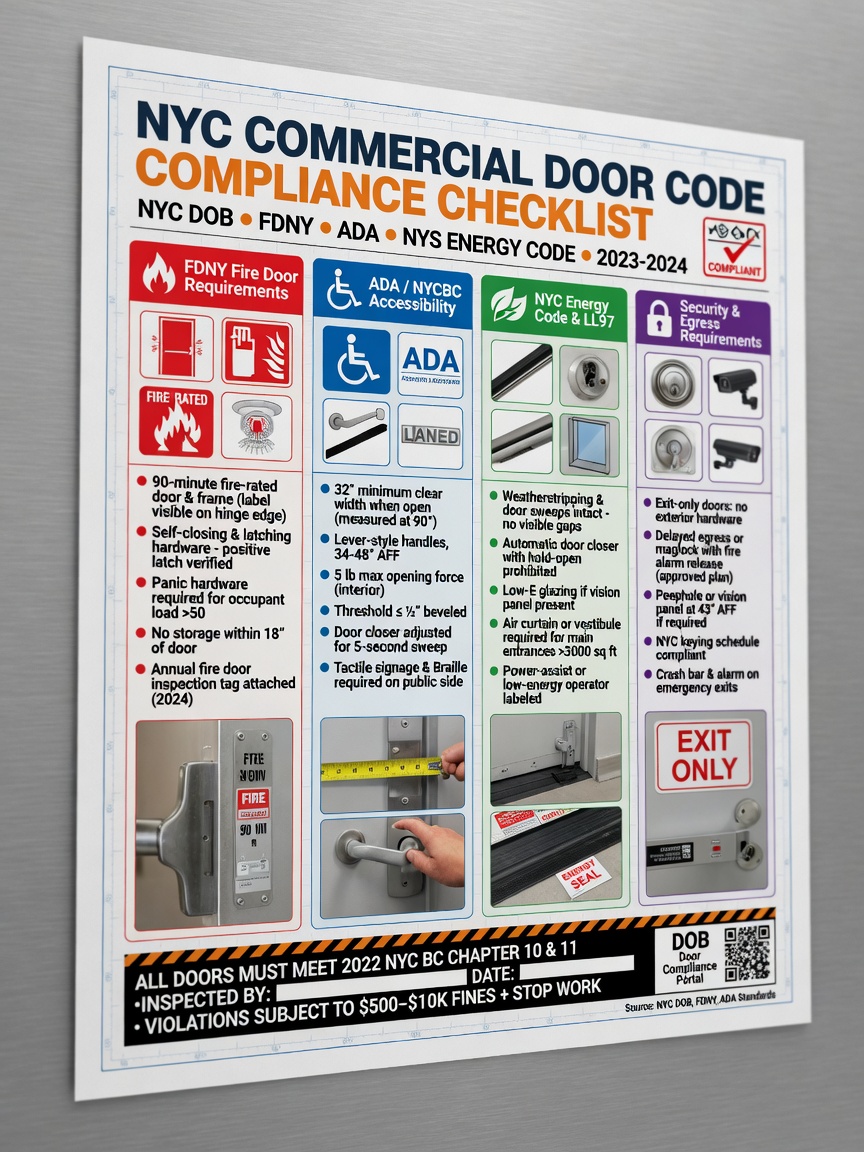

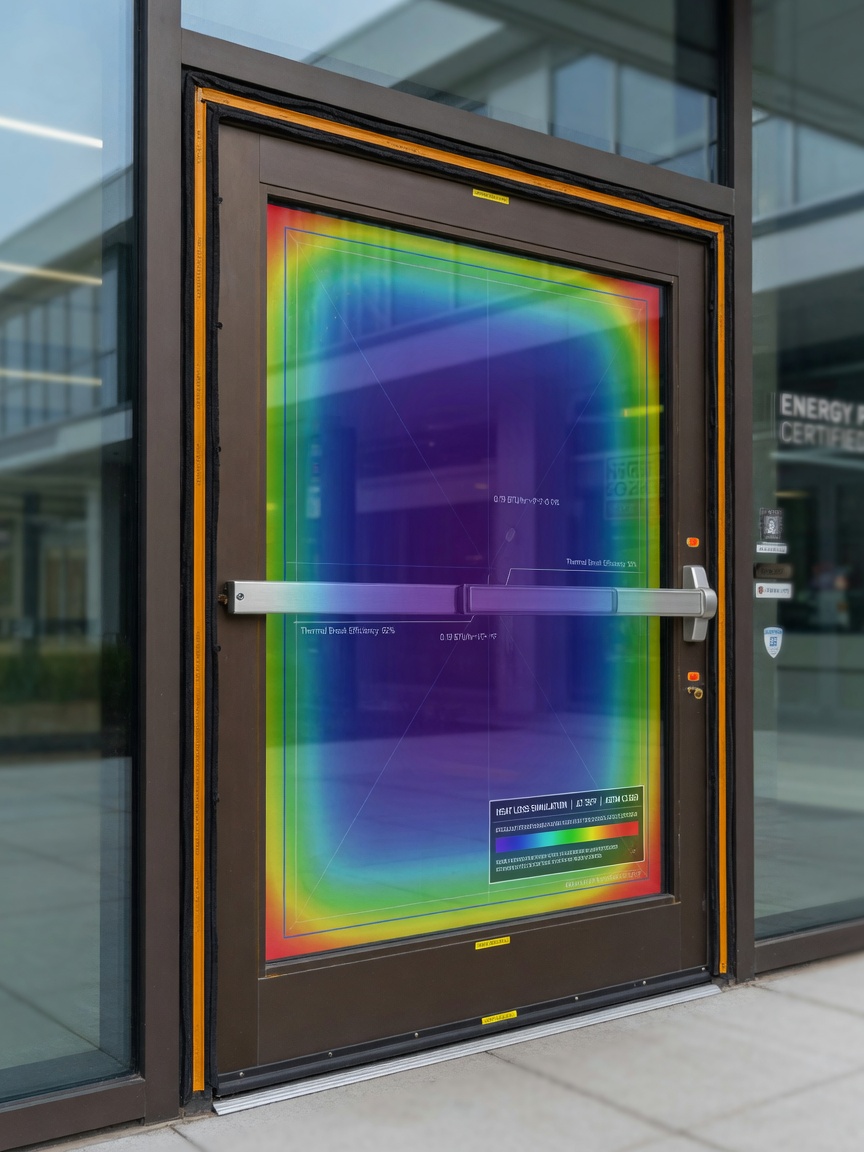
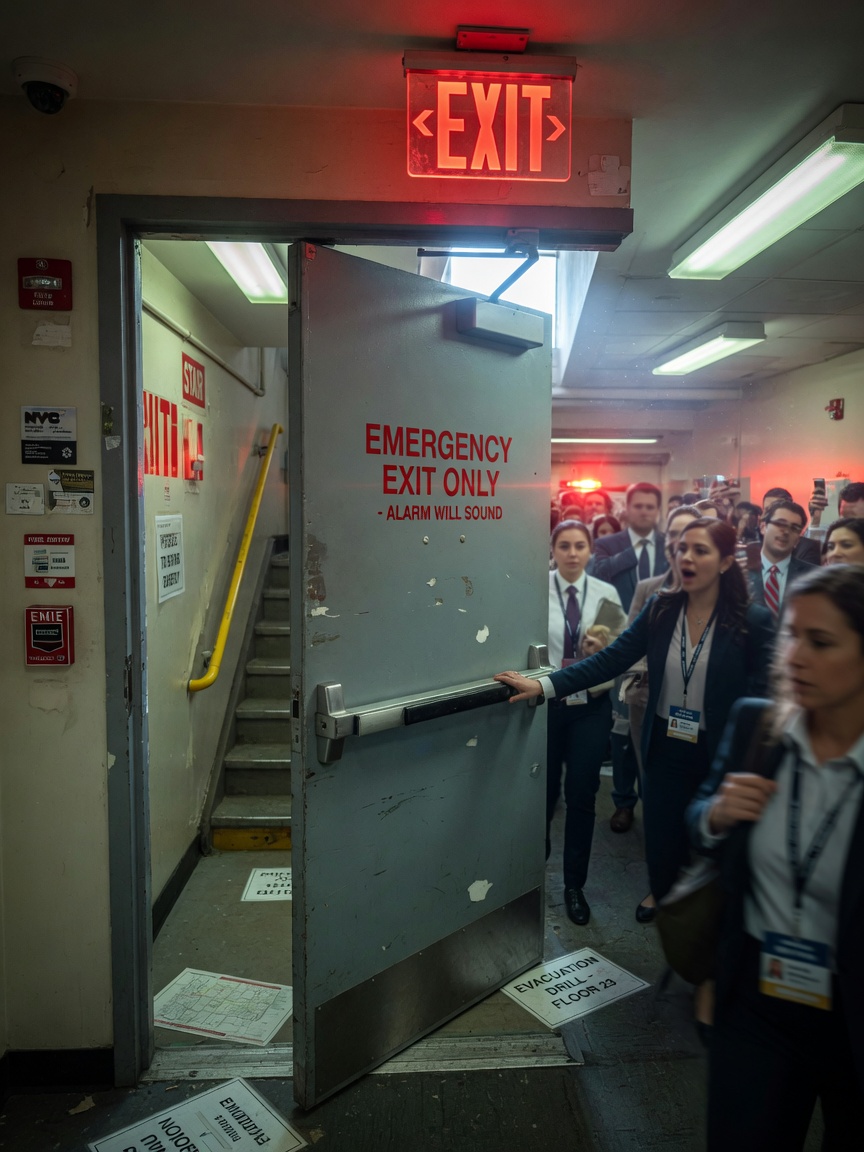
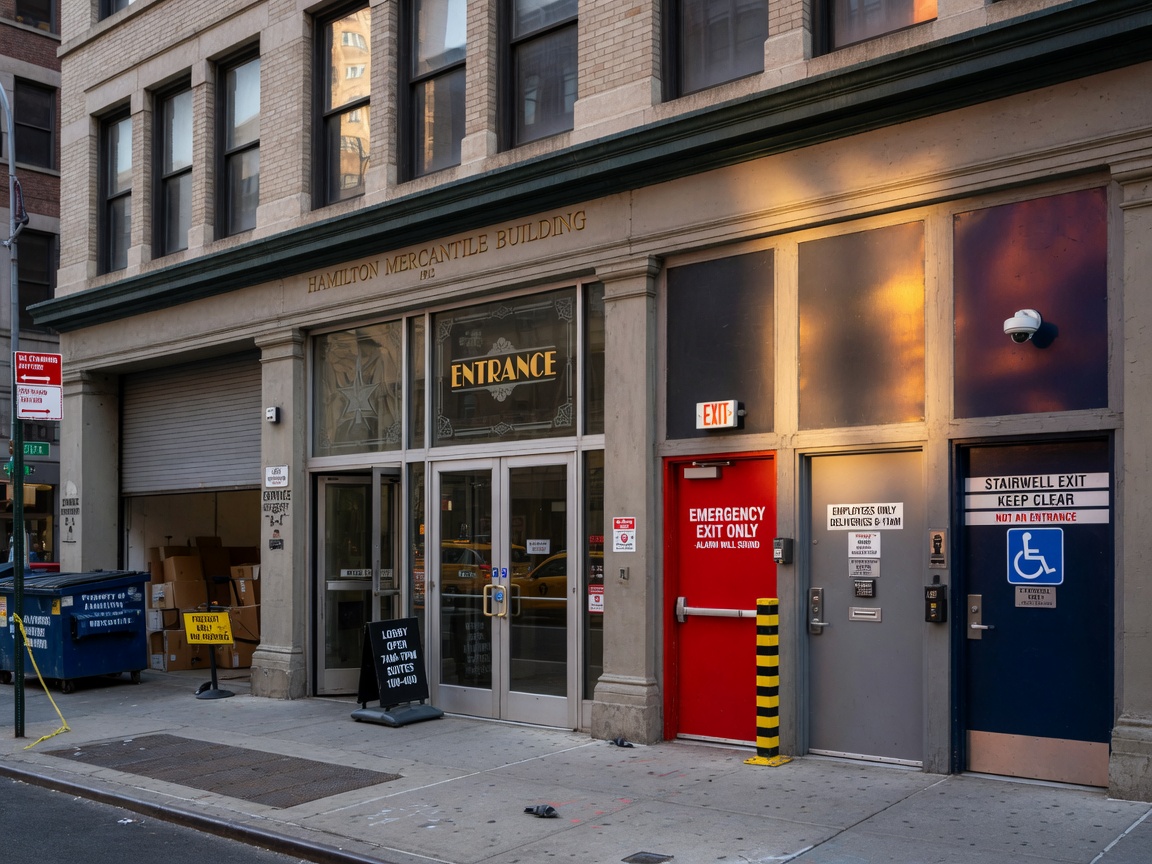
- Doors in 1-hour fire-rated walls require a minimum 45-minute fire-protection rating.
- Doors in 2-hour or 3-hour rated walls typically require 90-minute or 3-hour ratings respectively.
- All fire doors must be self-closing and self-latching with approved hardware.
- Fire door assemblies must include listed smoke seals and intumescent materials where required.
- Annual fire door inspections are mandatory under NFPA 80 as adopted by NYC.
2026 Update: Increased emphasis on smoke control and coordinated fire door assemblies with building fire alarm systems.
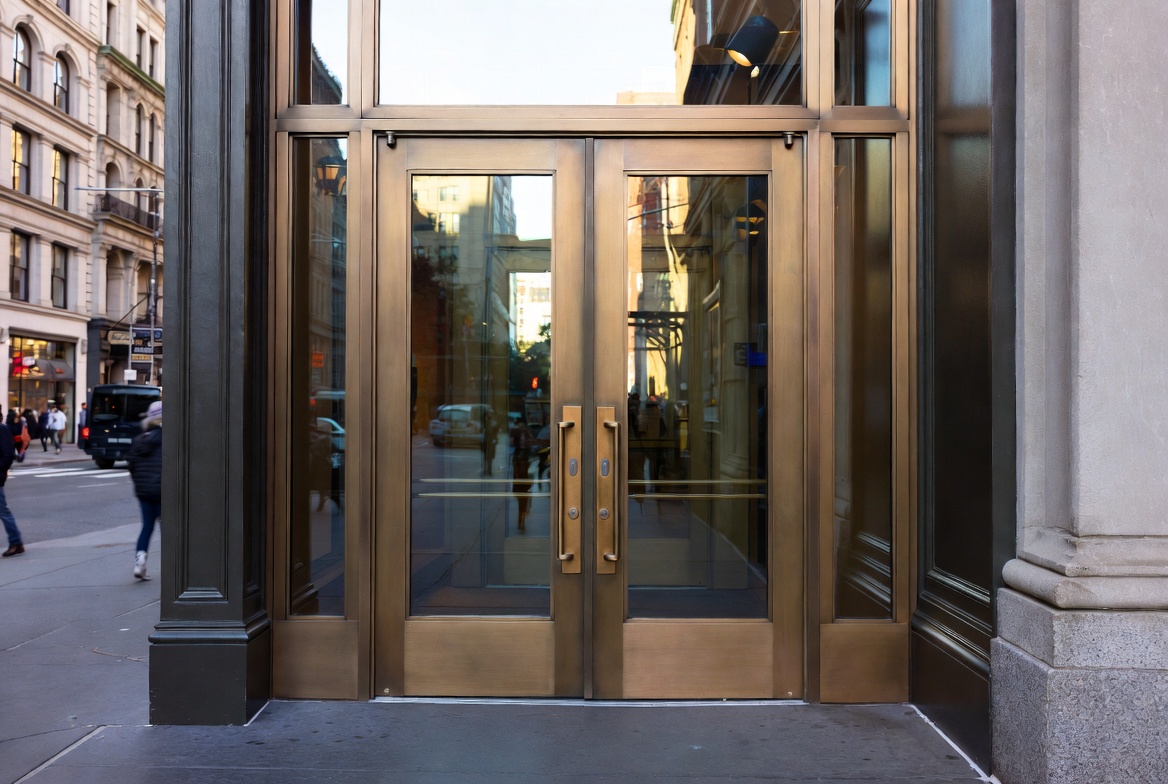
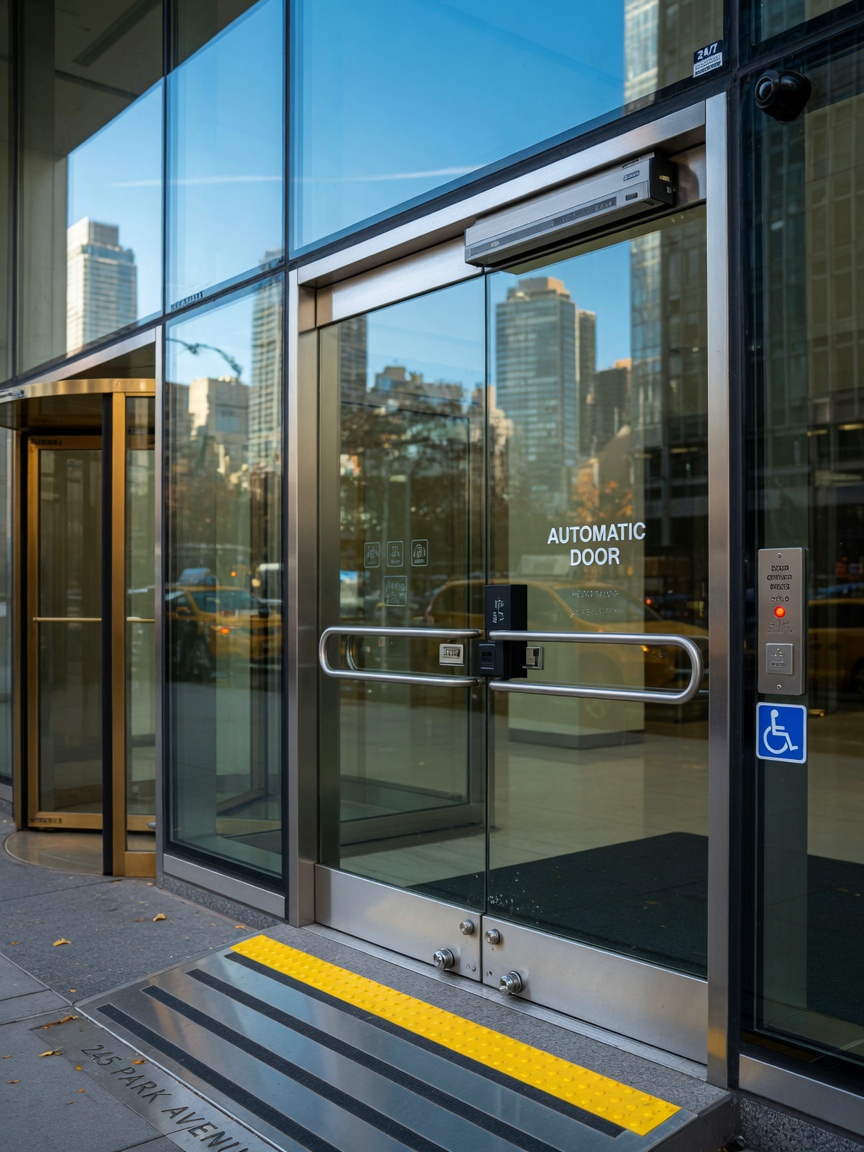
2. Accessibility Standards (ADA & NYC Accessibility Code)
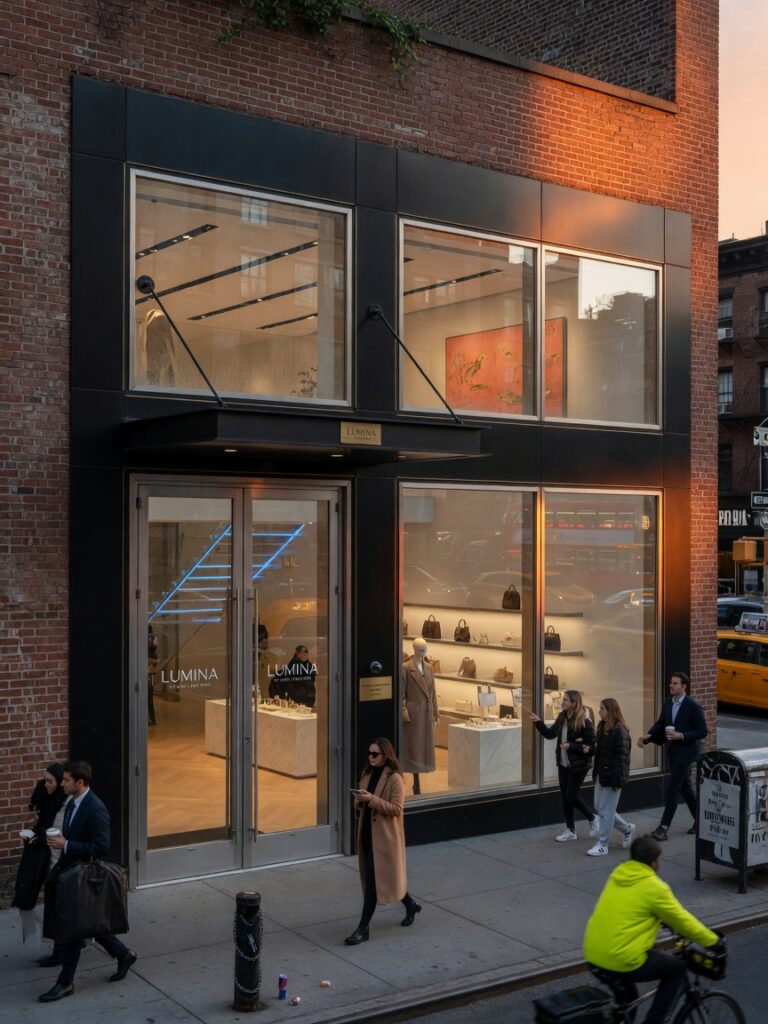
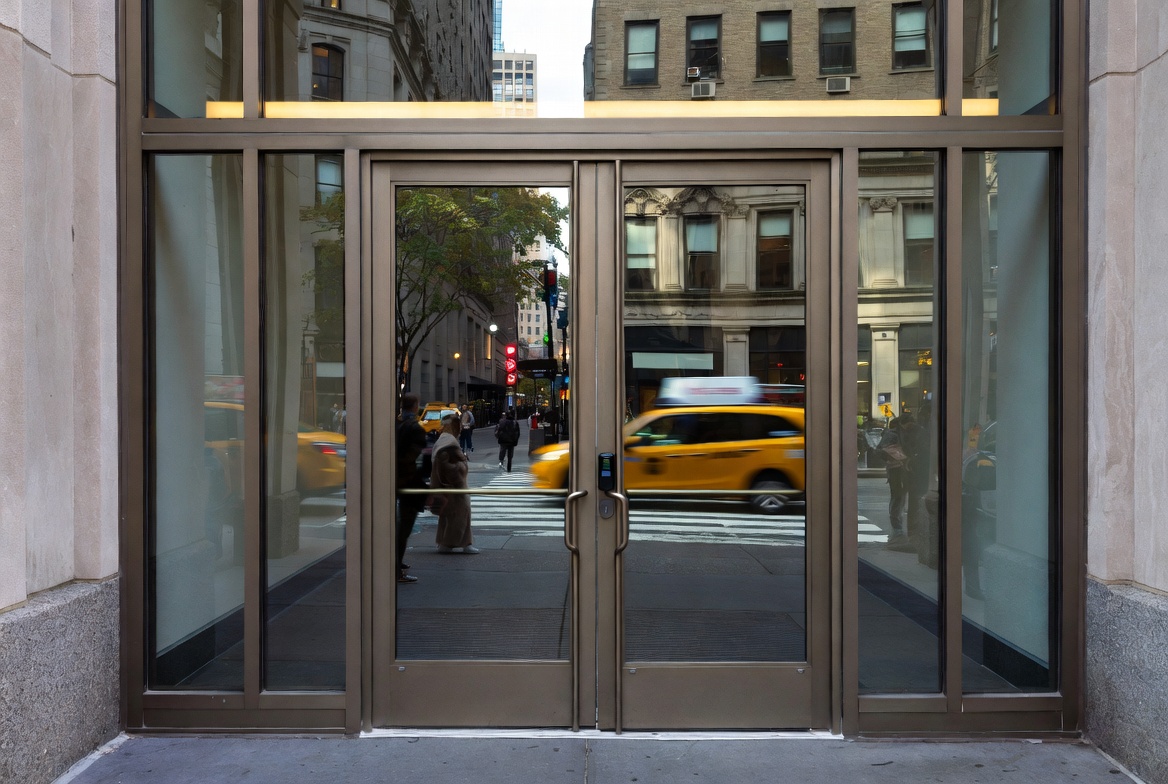
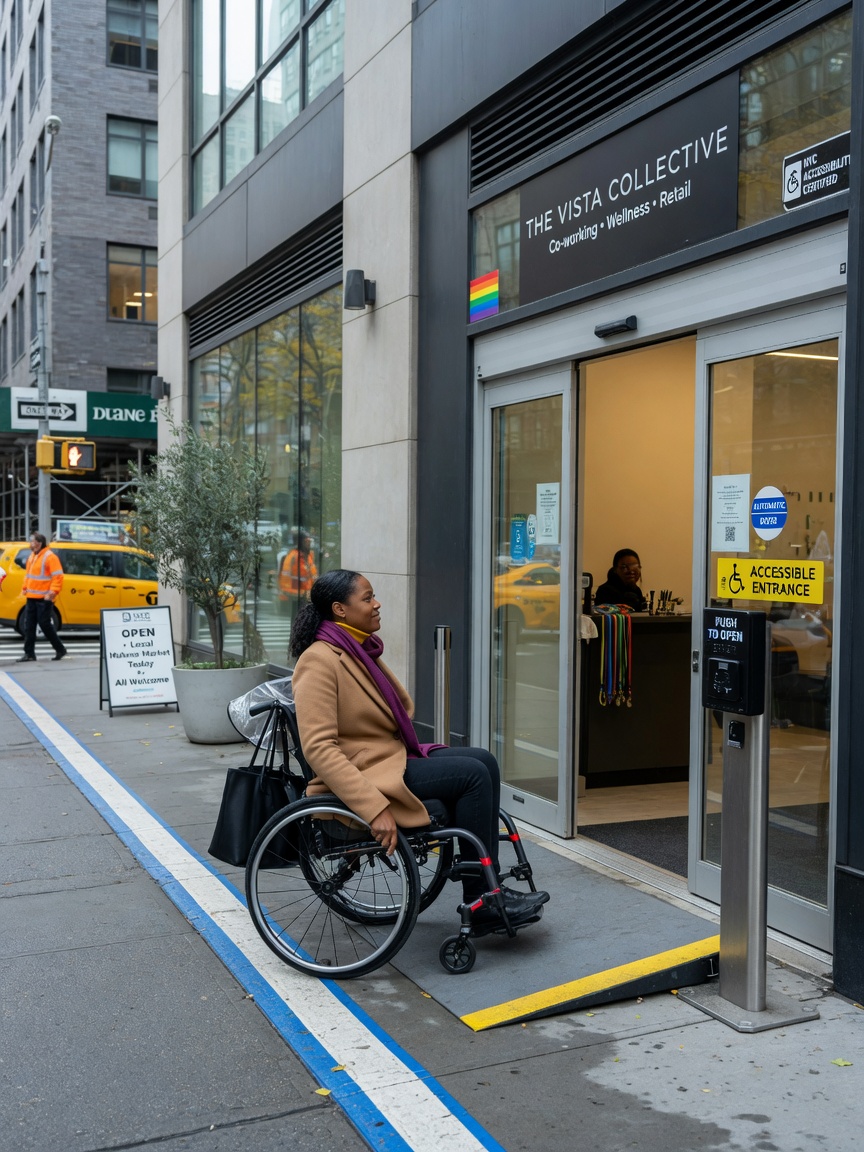
Commercial entrance doors must comply with both the Americans with Disabilities Act (ADA) and the more stringent NYC Accessibility Code (Chapter 11 of the Building Code).
- Minimum clear width of 32 inches when door is open 90 degrees.
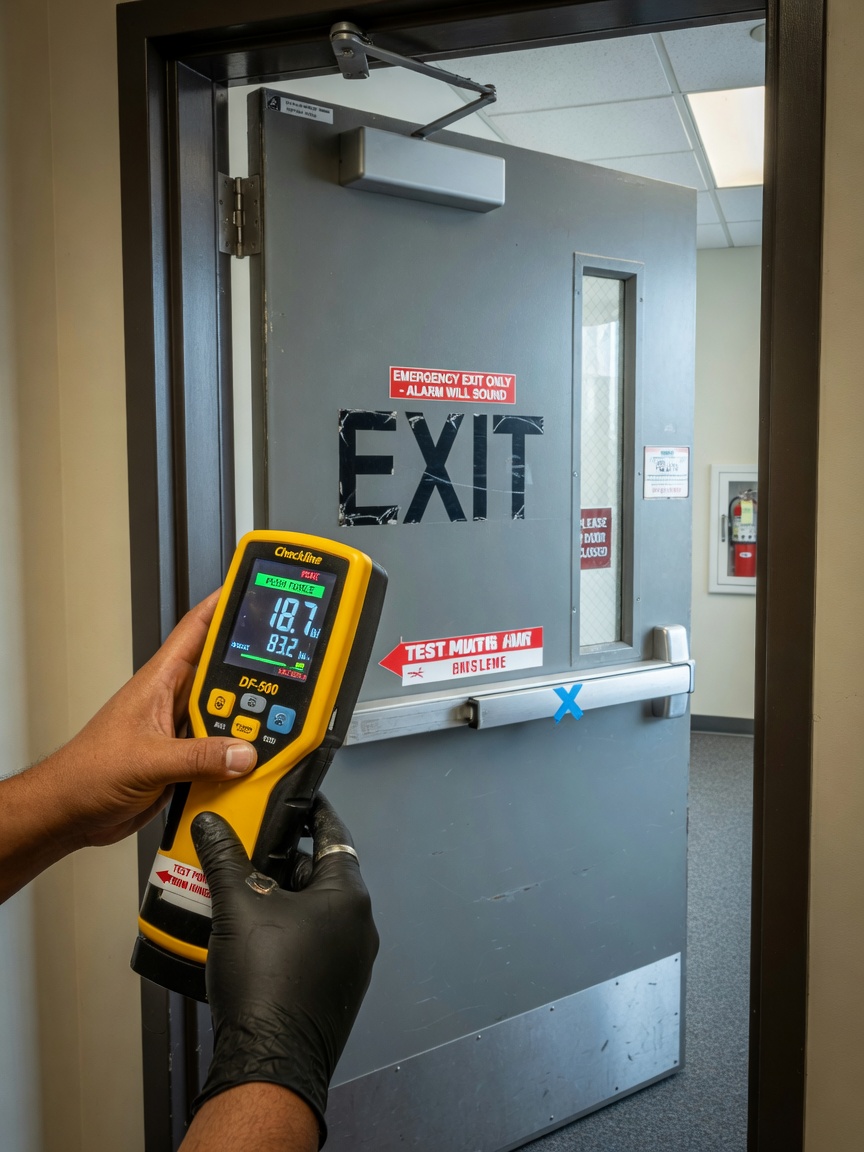
- Maximum opening force of 5 lbf for interior doors and 15 lbf for exterior doors (with exceptions).
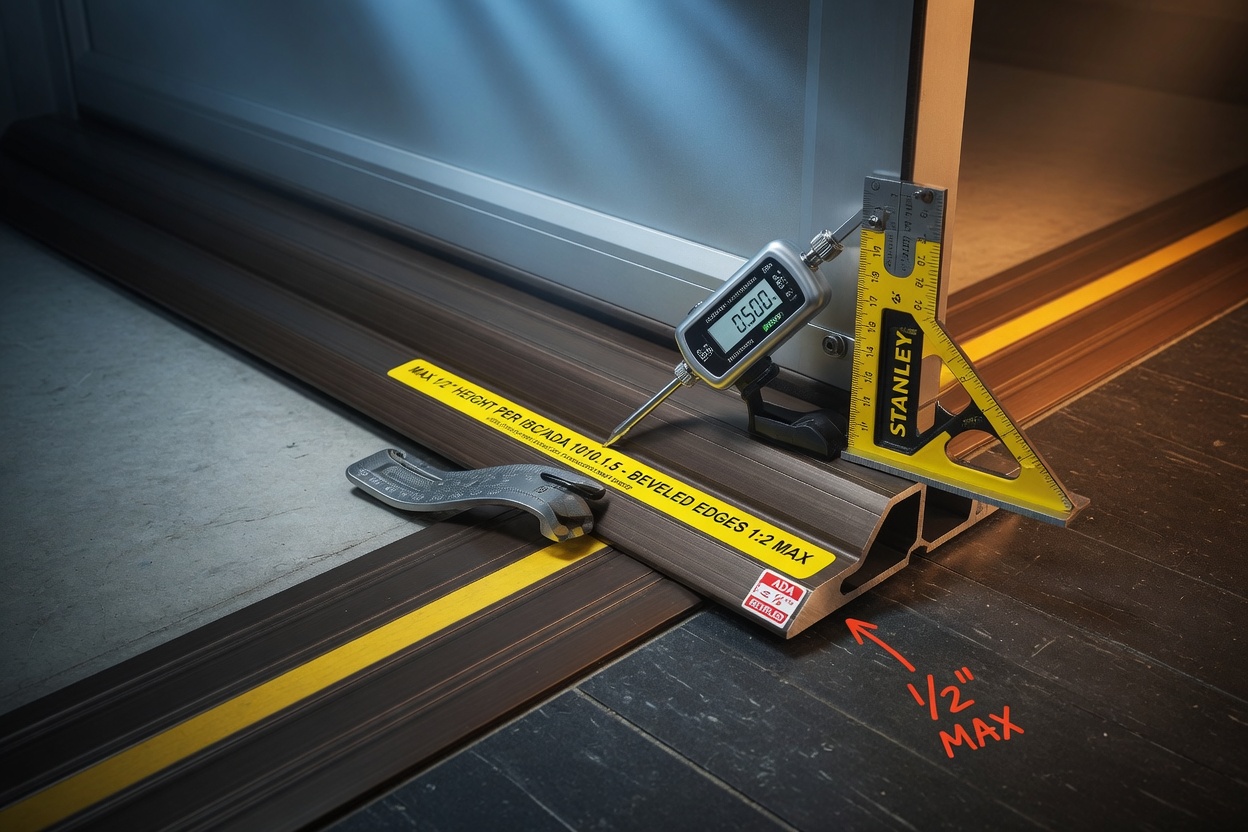
- Threshold height limited to ½ inch maximum (beveled on both sides if over ¼ inch).
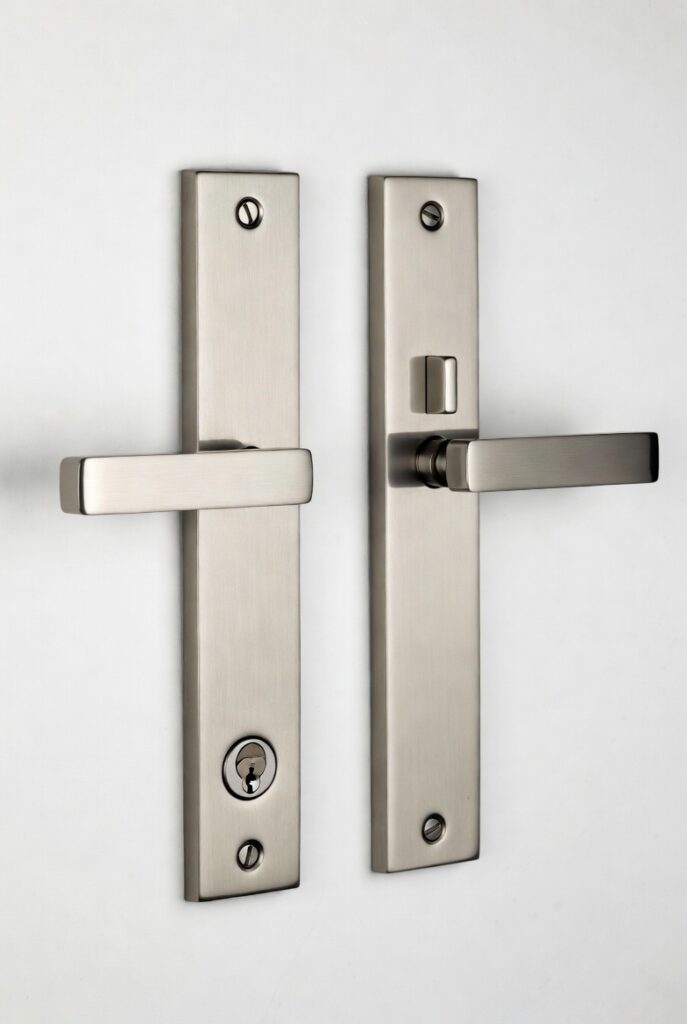
- Door hardware must be operable with one hand and without tight grasping, pinching, or twisting.
- Automatic door operators required at primary entrances of certain occupancy types and when door opening force exceeds limits.
3. Local Law 75 of 2015 – Revolving Door Compliance & Safety
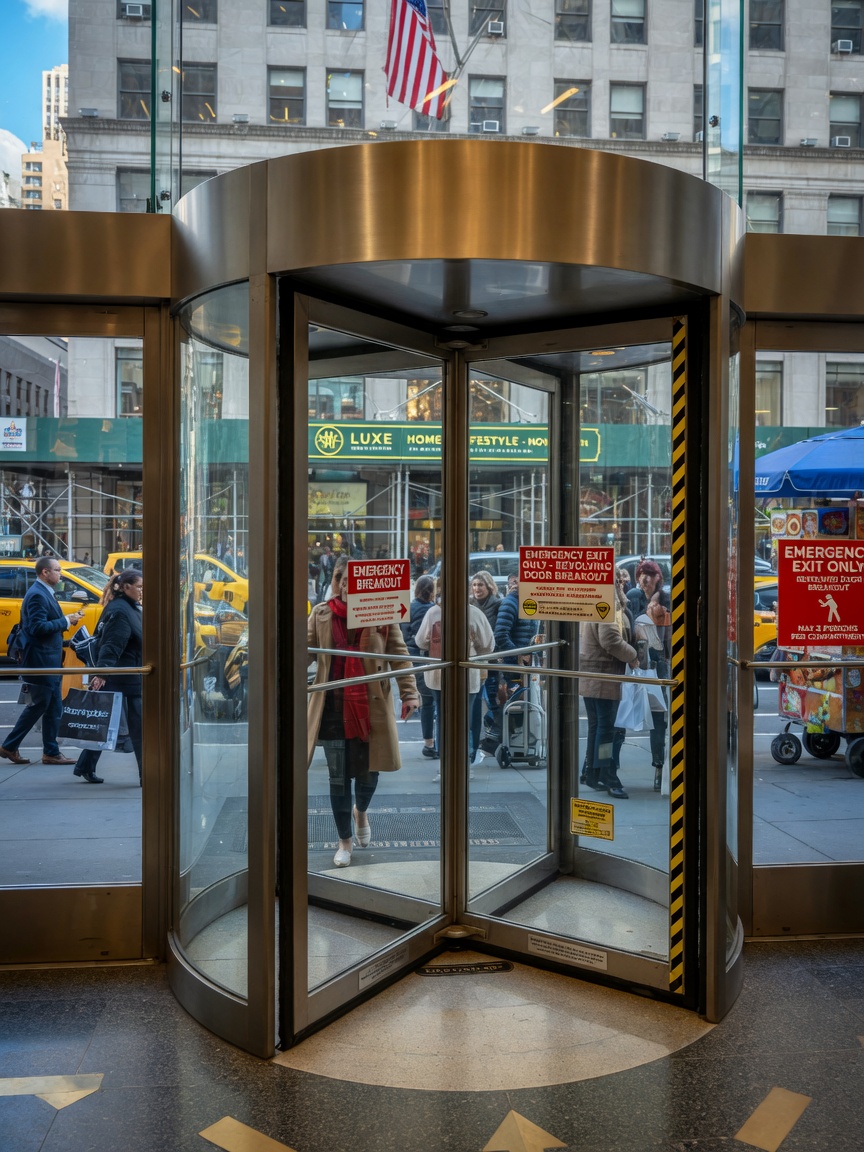
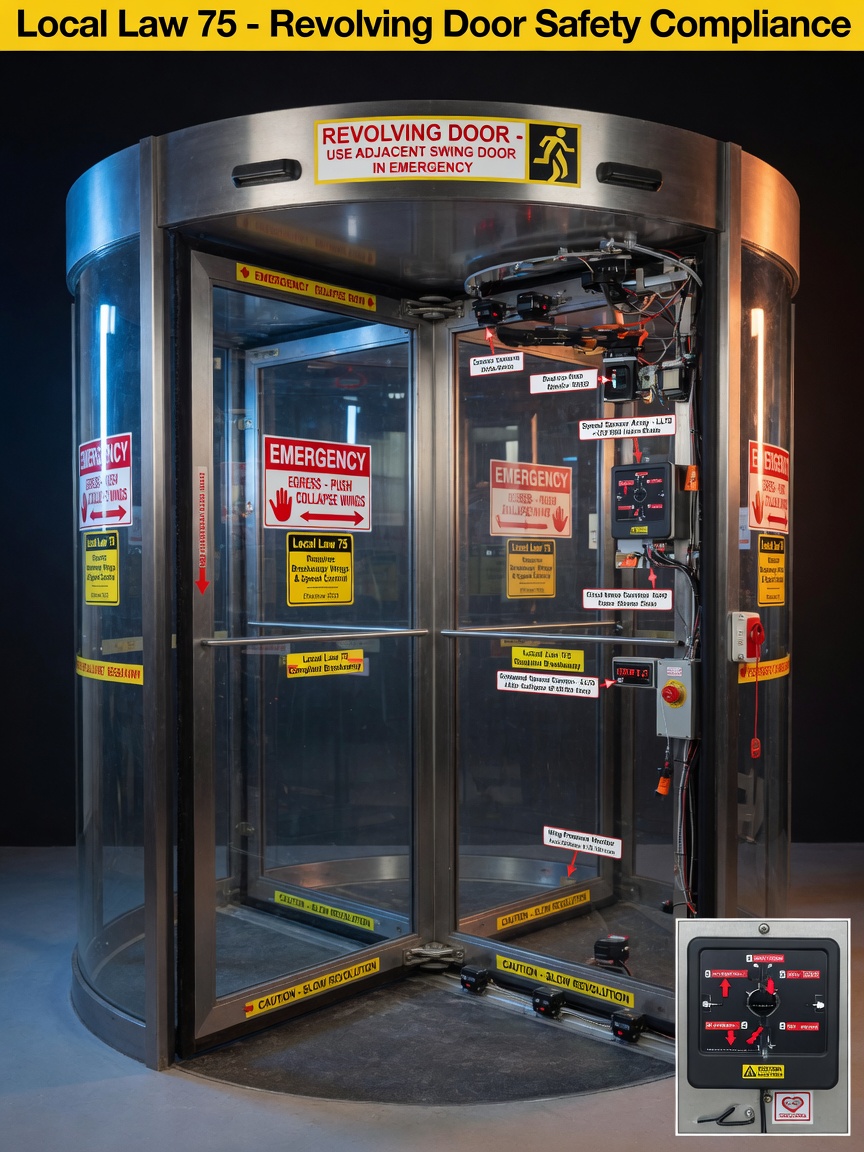
Local Law 75 specifically addresses revolving doors in commercial buildings. The law mandates safety upgrades and operational standards that remain in full effect through 2026 and beyond.
- Revolving doors must have emergency breakout features allowing wings to collapse into a parallel position during emergencies.
- Speed control devices and presence sensors are mandatory.
- Signage requirements for emergency operation are strictly enforced.
- Annual inspection and maintenance documentation must be maintained on site.
Businesses with non-compliant revolving doors face accelerated compliance deadlines in 2026, particularly in high-traffic locations such as retail and transit facilities.
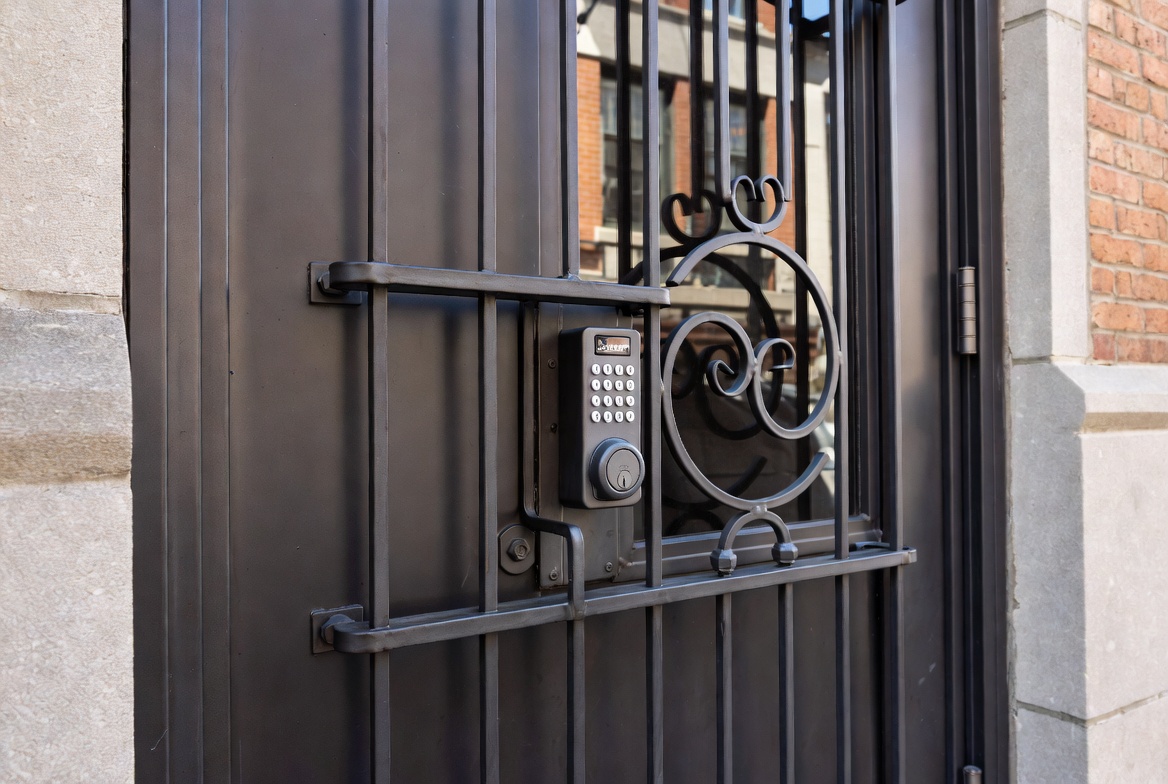
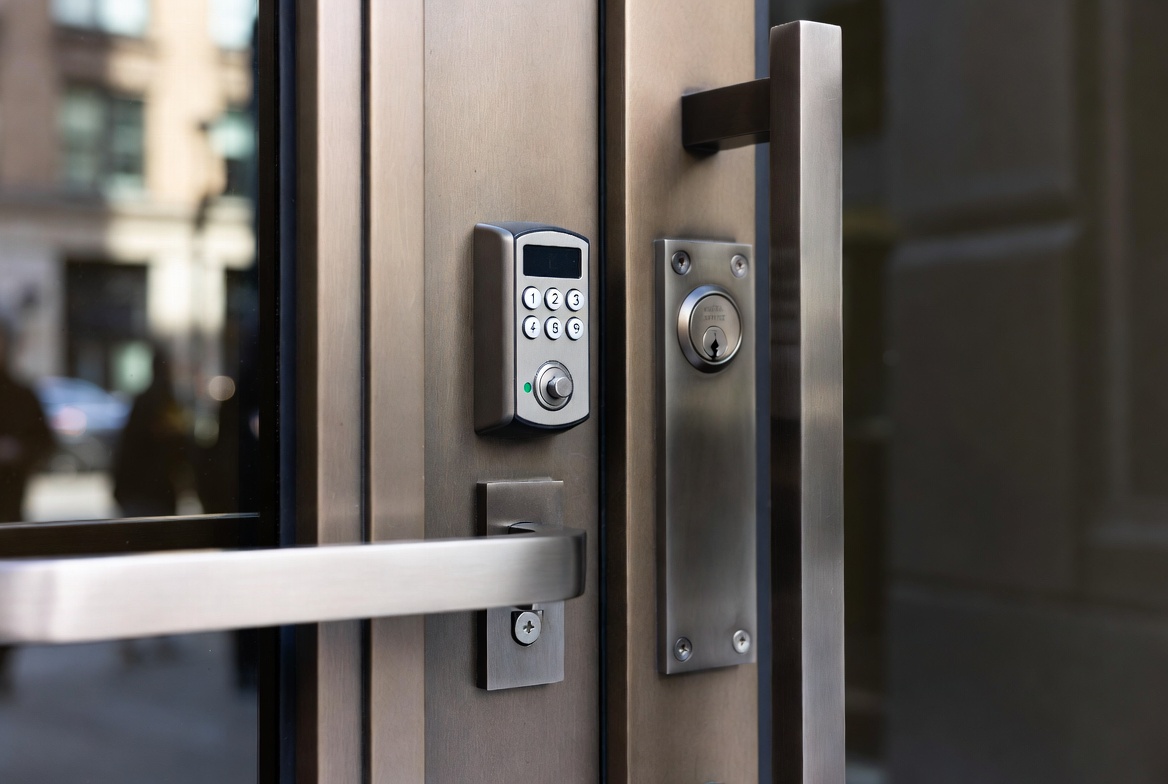
4. Security and Locking Requirements
NYC Building Code Section 1010 and the Fire Code impose strict rules on locking and egress hardware:
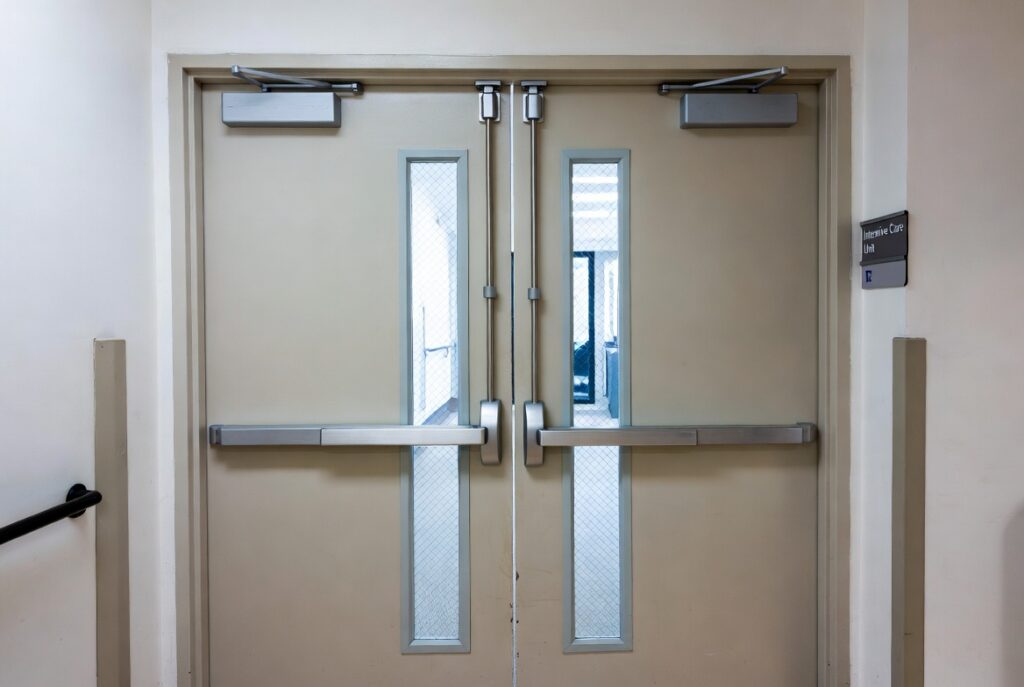
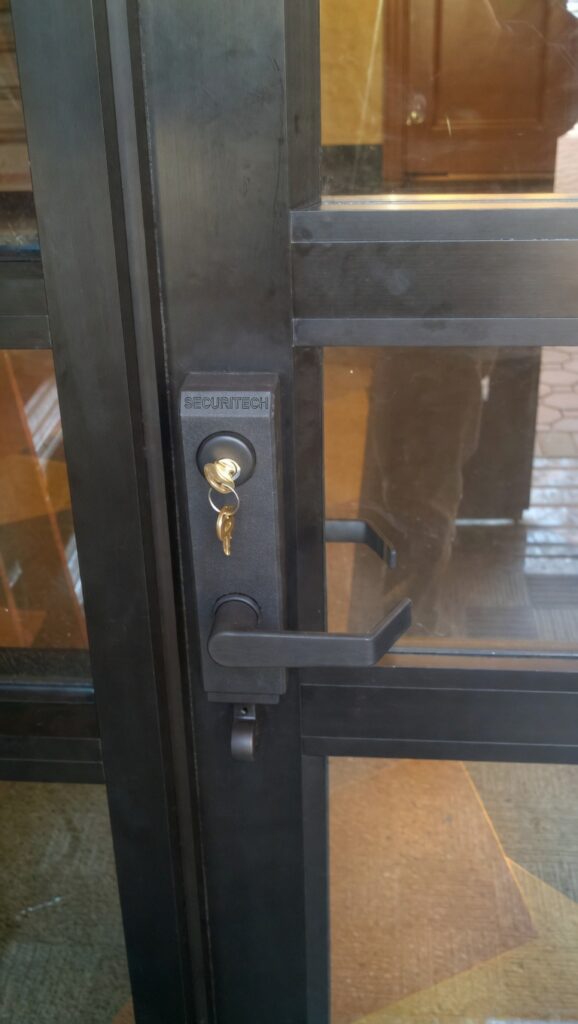
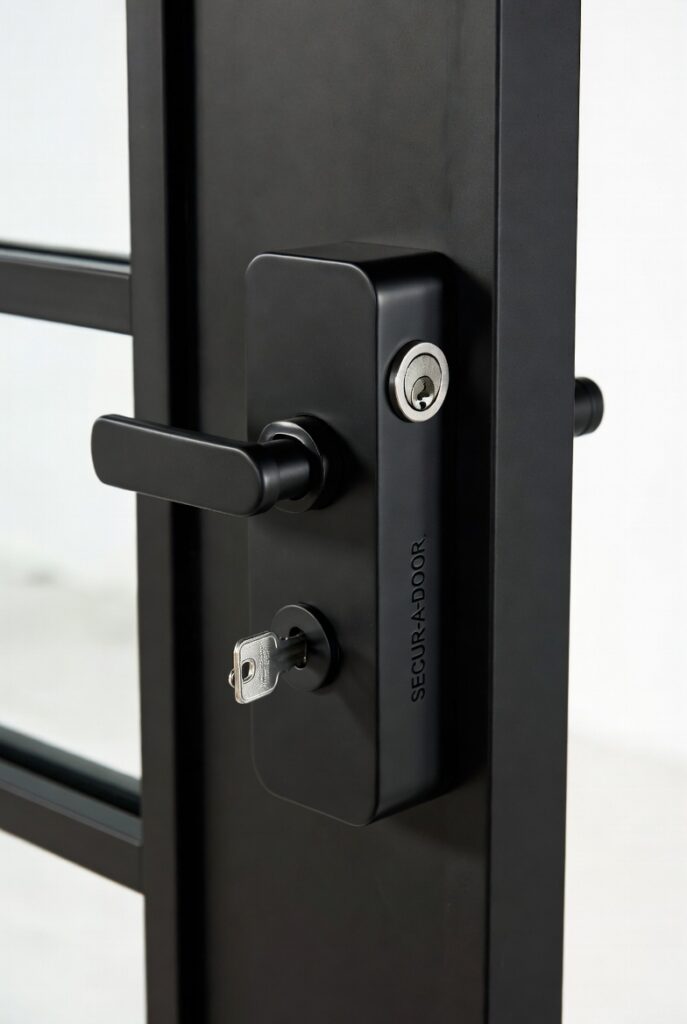
- Egress doors must be openable from the inside without keys, special knowledge, or effort.
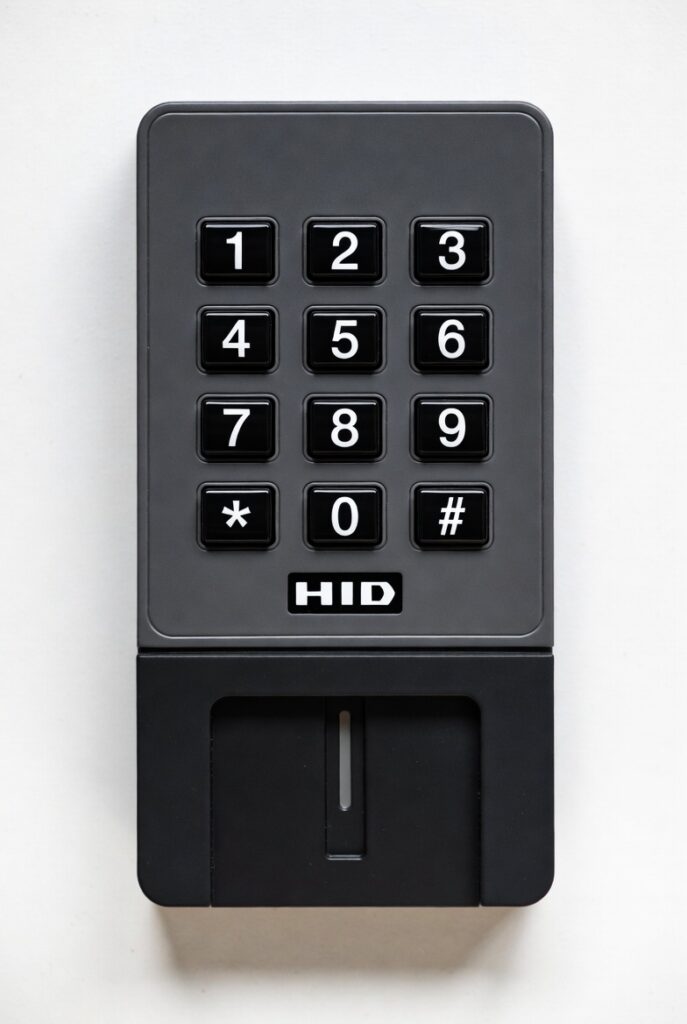
- Electromagnetic locks (maglocks) permitted only with approved fire alarm release and fail-safe operation.
- Delayed egress and controlled egress systems allowed only in specific occupancies with Fire Department approval.
- High-security locking systems must not impede required egress time.
5. Energy Code Compliance (NYC Energy Conservation Code)
Commercial doors contribute significantly to a building’s energy performance. The 2020 NYC Energy Code (with 2026 amendments pending) sets strict U-factor and air leakage requirements:
- Maximum allowable air infiltration rates for exterior doors.
- Thermal transmittance (U-factor) limits for glazed and opaque doors.
- Requirements for weatherstripping and automatic door closers.
- Consideration of vestibules in certain building types and climate zones.
Enforcement Timelines for 2026
The NYC Department of Buildings (DOB) and Fire Department of New York (FDNY) have published a phased enforcement schedule:
- January 1, 2026: Full enforcement of Local Law 75 revolving door safety upgrades for high-occupancy locations.
- March 2026: Mandatory fire door inspection compliance for buildings over 6 stories.
- June 2026: Increased accessibility audits during Certificate of Occupancy renewals.
- September 2026: Energy Code compliance checks integrated into annual boiler and HVAC inspections.
Violation Penalties and Consequences
NYC takes commercial door code violations seriously. Current penalty ranges include:
- Immediate hazard violations (blocked egress, non-functional fire doors): up to $25,000 per occurrence plus daily accrual.
- Accessibility violations: $5,000–$15,000 per door with possible civil rights complaints.
- Failure to maintain fire door inspection records: $1,500–$10,000 per door.
- Local Law 75 revolving door violations: escalating fines starting at $5,000 with possible occupancy restrictions.
Repeated violations can lead to stop-work orders, revoked permits, increased insurance premiums, and personal liability for building owners and managers.
Self-Audit Checklist: Are Your Commercial Doors Compliant?
Use this practical checklist to evaluate your properties:
- Are all required fire-rated doors properly labeled and intact?
- Do all fire doors close and latch automatically without obstruction?
- Do entrance doors provide minimum 32-inch clear width?
- Is door opening force within allowable limits (test with a force gauge)?
- Are panic hardware, exit devices, and closers properly installed and functioning?
- Do revolving doors (if present) have documented annual maintenance per Local Law 75?
- Are electromagnetic locks tied to fire alarm systems with approved fail-safe operation?
- Are weather seals intact and thresholds compliant?
- Do you maintain current inspection records on site?
- Have you documented any approved variances or alternative compliance methods?
When Should You Upgrade Your Commercial Doors?
Beyond compliance, strategic door upgrades often deliver multiple returns on investment:
- Improved energy efficiency reducing utility costs.
- Enhanced security reducing theft and vandalism.
- Better first impressions for customers and tenants.
- Reduced maintenance expenses through modern hardware.
- Future-proofing against tightening code requirements.
Professional door consultants can help prioritize upgrades based on risk, cost-benefit analysis, and building usage patterns.
Working With NYC Code Experts
Navigating these overlapping requirements is complex. Partnering with licensed architects, engineers, and specialized commercial door contractors familiar with DOB and FDNY procedures can save significant time and money. Look for professionals who maintain current certifications and have proven experience securing approvals for similar properties in your occupancy class.
Conclusion: Compliance as Smart Business Strategy
NYC commercial door code requirements represent more than regulatory hurdles—they are fundamental components of building safety, accessibility, and performance. By understanding and addressing these requirements proactively before 2026 enforcement deadlines, business owners protect themselves from penalties while creating safer, more efficient, and more valuable commercial spaces.
Don’t wait for a violation notice. Schedule a professional door assessment today and transform compliance into a competitive advantage for your New York City business.
SecuraDoor specializes in helping NYC businesses achieve full compliance with all commercial door codes while maximizing security, accessibility, and energy performance. Contact our code compliance specialists for a no-obligation property assessment.